Pearson+ LogoPearson+ Logo
Ch. 43 - Animal Nervous Systems
Freeman - Biological Science 7th Edition
Freeman7th EditionBiological ScienceISBN: 9783584863285Not the one you use?Change textbook
Chapter 43, Problem 13c

Certain species of frogs in the genus Phyllobates have a powerful defensive adaptation—their skin can secrete a milky fluid that contains an extremely toxic compound called batrachotoxin (BTX). These frogs, which are found in Colombia, are known as poison dart frogs because some indigenous Colombian hunters coat the tips of their blowgun darts with the frogs' skin secretions. An animal hit by one of these darts dies quickly.
What is the mechanism of action of BTX? As the graph in Question 11 shows, BTX depolarizes the membrane and prevents repolarization.
What effect would this have on electrical signaling by the nervous system?

Verified step by step guidance
1
Begin by understanding the basic concept of membrane potential in neurons. Neurons communicate through electrical signals, which are generated by the movement of ions across the cell membrane. This movement creates a difference in charge between the inside and outside of the cell, known as the membrane potential.
Next, consider the process of depolarization and repolarization. Depolarization occurs when the membrane potential becomes less negative, typically due to the influx of sodium ions (Na⁺) into the neuron. Repolarization is the process by which the membrane potential returns to its resting state, usually through the efflux of potassium ions (K⁺).
Understand the role of batrachotoxin (BTX) in this process. BTX affects the voltage-gated sodium channels in the neuron membrane. It binds to these channels and keeps them open, allowing continuous influx of Na⁺ ions, which leads to sustained depolarization.
Consider the consequences of sustained depolarization. If the neuron cannot repolarize, it cannot reset its membrane potential to the resting state. This means the neuron is unable to generate new action potentials, effectively blocking electrical signaling.
Finally, reflect on the impact of this mechanism on the nervous system. The inability to generate action potentials disrupts communication between neurons, leading to paralysis and potentially fatal outcomes, as the nervous system cannot control muscles or relay sensory information.

Verified video answer for a similar problem:

This video solution was recommended by our tutors as helpful for the problem above.
Video duration:
1m
Was this helpful?

Key Concepts

Here are the essential concepts you must grasp in order to answer the question correctly.

Batrachotoxin (BTX)

Batrachotoxin (BTX) is a potent toxin found in certain species of poison dart frogs, particularly in the genus Phyllobates. It functions by binding to voltage-gated sodium channels in nerve cells, causing them to remain open. This disrupts normal nerve function by preventing the repolarization of the cell membrane, leading to continuous depolarization and paralysis.

Depolarization and Repolarization

Depolarization is the process by which the cell membrane's potential becomes less negative, typically due to the influx of sodium ions. Repolarization follows, restoring the membrane potential to its resting state by allowing potassium ions to exit the cell. BTX interferes with repolarization, causing prolonged depolarization, which disrupts normal electrical signaling in neurons.
Recommended video:
Guided course
09:55
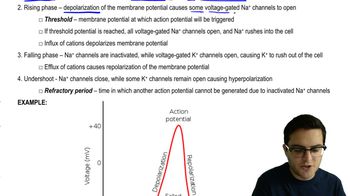
Action Potential

Electrical Signaling in the Nervous System

Electrical signaling in the nervous system involves the transmission of action potentials along neurons. These signals are crucial for communication between neurons and for initiating responses in muscles and glands. BTX's effect on depolarization prevents neurons from resetting, halting the propagation of action potentials, leading to paralysis and potentially fatal outcomes.
Recommended video:
Guided course
07:36
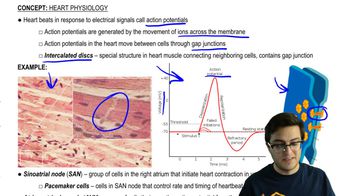
Electrical Signals of the Heart
Related Practice
Textbook Question

Alzheimer's disease is a common form of dementia affecting millions of people, especially the elderly. Two regions of the brain are particularly affected, often shrinking dramatically and accumulating large deposits of extracellular material. Based on your knowledge of memory, what two brain regions do you think these are? Explain.

704
views
Textbook Question

Certain species of frogs in the genus Phyllobates have a powerful defensive adaptation—their skin can secrete a milky fluid that contains an extremely toxic compound called batrachotoxin (BTX). These frogs, which are found in Colombia, are known as poison dart frogs because some indigenous Colombian hunters coat the tips of their blowgun darts with the frogs' skin secretions. An animal hit by one of these darts dies quickly.

What is the mechanism of action of BTX? The graph here shows the effect of BTX on the membrane potential of a squid giant axon.

Which of the following is the most likely explanation for the effect of BTX on the squid giant axon?

a. Inactivation of Na+/K+-ATPase

b. Closing of sodium channels

c. Opening of sodium channels

d. Opening of potassium channels

854
views
Textbook Question

Certain species of frogs in the genus Phyllobates have a powerful defensive adaptation—their skin can secrete a milky fluid that contains an extremely toxic compound called batrachotoxin (BTX). These frogs, which are found in Colombia, are known as poison dart frogs because some indigenous Colombian hunters coat the tips of their blowgun darts with the frogs' skin secretions. An animal hit by one of these darts dies quickly.

What is the mechanism of action of BTX?

Identify a research technique that could be used to discover how BTX affects specific membrane proteins.

Based on the graph in Question 11, what would you expect this technique to show?

615
views
Textbook Question

Certain species of frogs in the genus Phyllobates have a powerful defensive adaptation—their skin can secrete a milky fluid that contains an extremely toxic compound called batrachotoxin (BTX). These frogs, which are found in Colombia, are known as poison dart frogs because some indigenous Colombian hunters coat the tips of their blowgun darts with the frogs' skin secretions. An animal hit by one of these darts dies quickly.

What is the mechanism of action of BTX?

Like neurons, cells in skeletal and cardiac muscle also produce action potentials. Create a concept map showing how BTX could kill a mammal through its effects on nervous and muscle tissues.

696
views
Textbook Question

Certain species of frogs in the genus Phyllobates have a powerful defensive adaptation—their skin can secrete a milky fluid that contains an extremely toxic compound called batrachotoxin (BTX). These frogs, which are found in Colombia, are known as poison dart frogs because some indigenous Colombian hunters coat the tips of their blowgun darts with the frogs' skin secretions. An animal hit by one of these darts dies quickly.

What is the mechanism of action of BTX?

Predict the effects of each of the following on the membrane potential of a neuron simultaneously poisoned with BTX:

(a) Removing extracellular sodium ions;

(b) Increasing the intracellular potassium ion concentration;

(c) Adding tetrodotoxin from puffer fish.

583
views
Textbook Question

Certain species of frogs in the genus Phyllobates have a powerful defensive adaptation—their skin can secrete a milky fluid that contains an extremely toxic compound called batrachotoxin (BTX). These frogs, which are found in Colombia, are known as poison dart frogs because some indigenous Colombian hunters coat the tips of their blowgun darts with the frogs' skin secretions. An animal hit by one of these darts dies quickly.

What is the mechanism of action of BTX?

Although BTX is a powerful antipredator poison, one snake species in Colombia eats poison dart frogs. Suggest a hypothesis that might explain how the snake is resistant to the toxin.

700
views