Endothermic & Exothermic Reactions quiz #1 Flashcards
Endothermic & Exothermic Reactions quiz #1
You can tap to flip the card.
Control buttons has been changed to "navigation" mode.
1/40
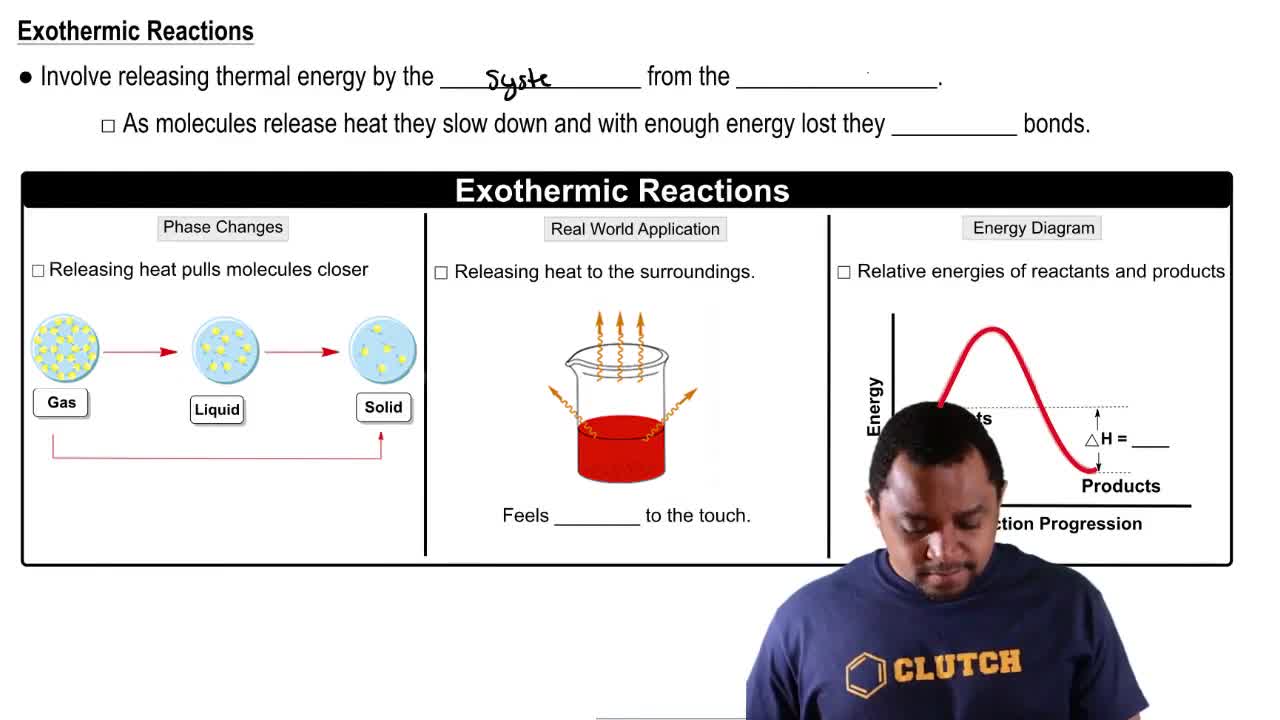
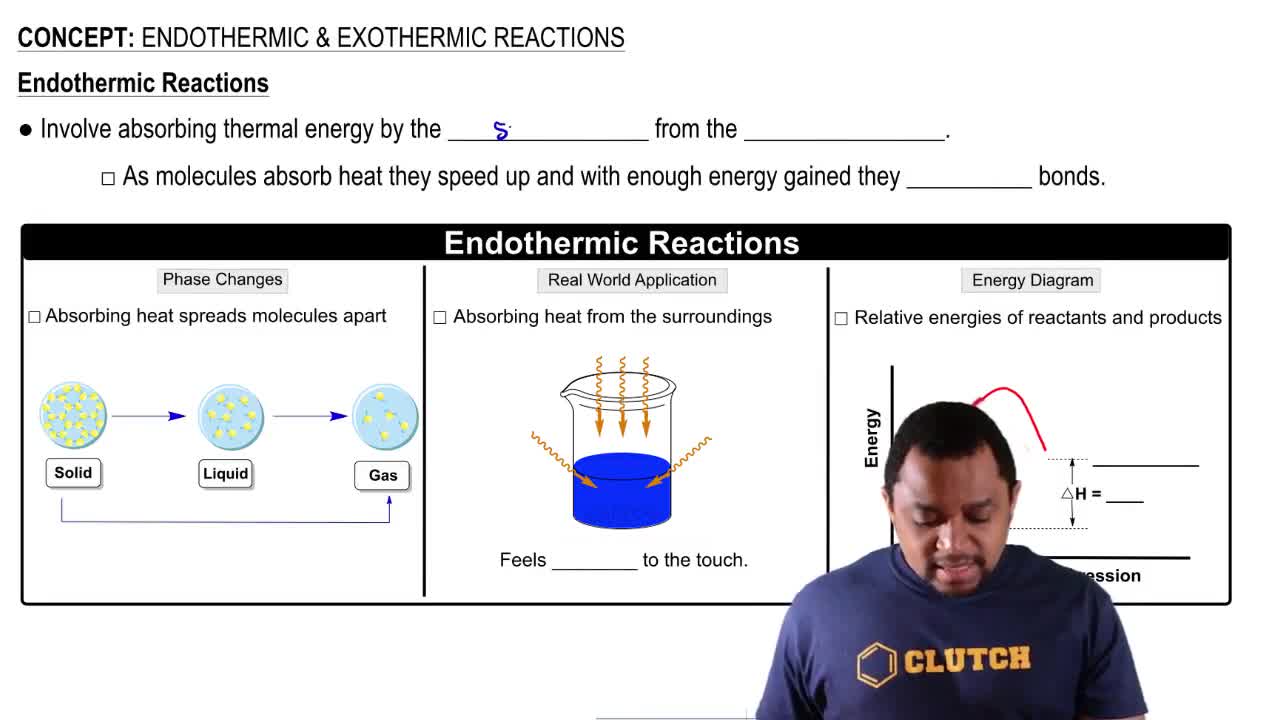
Which of the following reactions are exothermic?Reactions that release heat to the surroundings, such as combustion or freezing, are exothermic.Which of the following phase changes is endothermic?Melting, vaporization, and sublimation are endothermic phase changes.In what type of reaction or process does heat flow into the system?Heat flows into the system during an endothermic reaction or process.Which represents an endothermic reaction?A reaction where heat is absorbed and the products have higher energy than the reactants.Which one of the following processes is exothermic?Freezing, condensation, and deposition are exothermic processes.If a reaction is exothermic, what happens?The reaction releases heat to the surroundings and feels warm.Which of the following steps in solution formation is exothermic?The step where solute and solvent particles attract and form bonds, releasing energy.Which one of the following phase changes would be exothermic?Condensation, freezing, and deposition are exothermic phase changes.Which energy change occurs during boiling?Boiling is endothermic; energy is absorbed to convert liquid to gas.Which answer defines exothermic reaction?An exothermic reaction releases heat to the surroundings.Which phase change is exothermic?Freezing, condensation, and deposition are exothermic phase changes.Which example is an exothermic reaction?Combustion of fuels and freezing of water are exothermic reactions.What change takes place when a liquid absorbs heat energy without increasing its temperature?A phase change such as melting or boiling, where energy is used to break bonds.Which change of phase is exothermic?Condensation, freezing, and deposition are exothermic phase changes.Which event is endothermic?Melting ice or evaporating water are endothermic events.Which diagram represents the potential energy changes during an exothermic reaction?A diagram where products are at a lower energy than reactants, showing a negative ΔH.Which of the following processes is endothermic?Melting, vaporization, and sublimation are endothermic processes.In which reaction would the activation energy result in an endothermic reaction?A reaction where the energy required to break bonds is greater than the energy released.In which one of the following processes is the system endothermic?Processes like melting, boiling, or sublimation are endothermic.Which of the following processes is exothermic?Freezing, condensation, and deposition are exothermic processes.Which phase change involves the absorption of heat?Melting, vaporization, and sublimation involve absorption of heat.What type of reaction occurs in a hand warmer?An exothermic reaction occurs in a hand warmer, releasing heat.Which one of the equations below is an endothermic reaction?An equation where heat is a reactant, indicating absorption of energy.Which reaction is endothermic?A reaction that absorbs heat from the surroundings, such as photosynthesis.Which example is an endothermic reaction?Melting ice or evaporating water are examples of endothermic reactions.Which form of energy does an endothermic reaction use?Endothermic reactions use thermal energy absorbed from the surroundings.Which one of the following phase changes would be endothermic?Melting, vaporization, and sublimation are endothermic phase changes.Which process is endothermic?Processes like melting, boiling, and sublimation are endothermic.How do endothermic and exothermic reactions differ?Endothermic reactions absorb heat; exothermic reactions release heat.Is the reaction endothermic or exothermic?If heat is absorbed, it is endothermic; if released, it is exothermic.Which of these would you classify as an exothermic process?Freezing water or burning fuel are exothermic processes.Which one of the following is an endothermic process?Melting ice or boiling water are endothermic processes.Which of the following is an endothermic process?Sublimation, melting, and vaporization are endothermic processes.Which chemical reaction absorbs energy?Endothermic reactions absorb energy from the surroundings.What happens in an endothermic reaction?Heat is absorbed, causing molecules to gain energy and break bonds.Which equation represents an exothermic reaction at 298 K?An equation where heat is a product, indicating energy release.Which result occurs during an exothermic reaction?Heat is released and the surroundings become warmer.Which type of chemical reaction results in the absorption of energy?Endothermic reactions result in the absorption of energy.Which chemical or physical change is an endothermic process?Melting, boiling, and sublimation are endothermic changes.What happens in an exothermic reaction?Heat is released, molecules slow down, and bonds are formed.