Endothermic & Exothermic Reactions quiz #3 Flashcards

Endothermic & Exothermic Reactions quiz #3
Control buttons has been changed to "navigation" mode.
1/40
  • Which is an endothermic process?
    Boiling water is an endothermic process.
  • Why is cooking an endothermic process?
    Cooking absorbs heat to break chemical bonds in food.
  • Which of the following is an example of an endothermic reaction?
    Photosynthesis is an example of an endothermic reaction.
  • Which of the following changes of state releases thermal energy?
    Freezing, condensation, and deposition release thermal energy.
  • From where is the endothermic reaction getting its heat?
    From the surroundings.
  • What makes a chemical reaction endothermic?
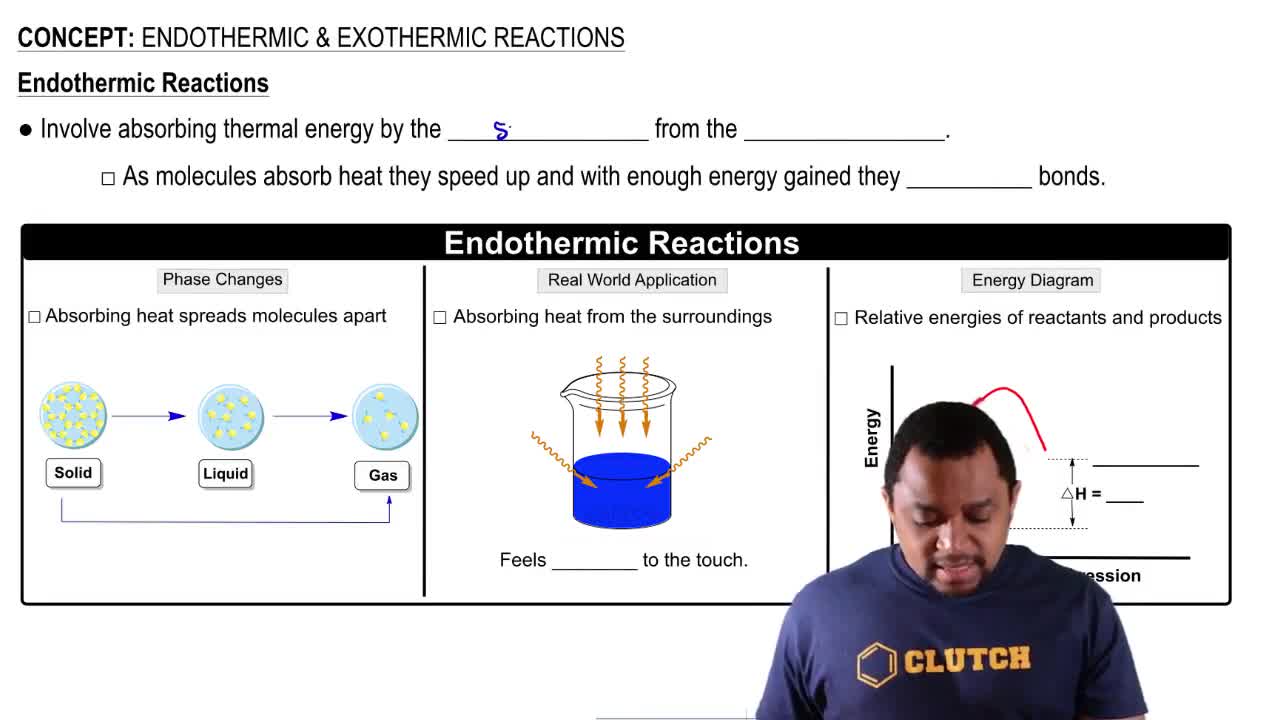
    It absorbs heat from the surroundings.
  • What must be true for any endothermic reaction?
    The system absorbs energy and ΔH is positive.
  • Which of the following changes is an endothermic chemical reaction?
    Decomposition reactions that absorb energy are endothermic.
  • Which statement is true about endothermic and exothermic reactions?
    Endothermic reactions absorb heat; exothermic reactions release heat.
  • What happens to energy in an endothermic reaction?
    Energy is absorbed from the surroundings.
  • Which of the following happens during an exothermic chemical change?
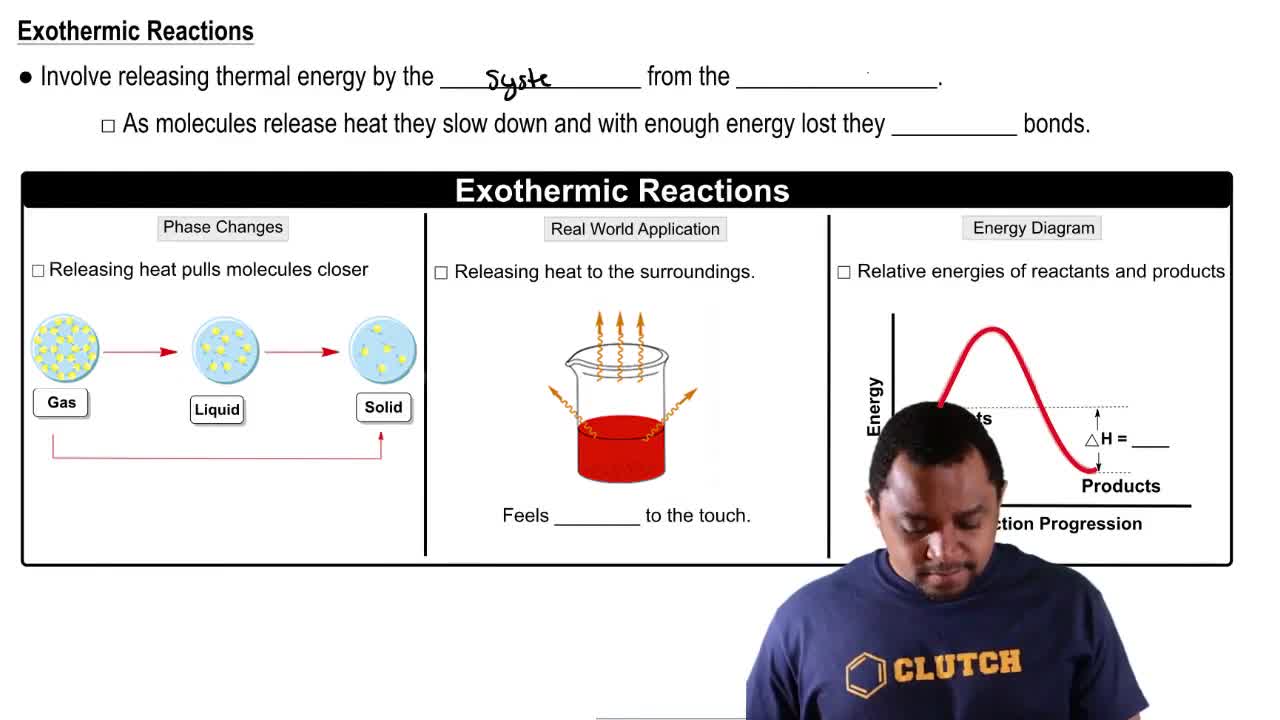
    Heat is released and the surroundings become warmer.
  • What happens to the energy release of an exothermic reaction?
    Energy is released to the surroundings.
  • What is true of endothermic reactions?
    They absorb heat and have a positive ΔH.
  • What is an endothermic change?
    A change where heat is absorbed, such as melting or boiling.
  • Which of the following happens during an endothermic chemical change?
    Heat is absorbed and the system's energy increases.
  • Which change happens in an endothermic chemical process?
    Energy is absorbed and bonds are broken.
  • Which of the following processes would release energy?
    Freezing, condensation, and combustion release energy.
  • What is a chemical reaction that absorbs heat called?
    An endothermic reaction.
  • What happens to the temperature during an endothermic reaction?
    The temperature of the surroundings decreases.
  • What happens to the energy released by an exothermic reaction?
    It is transferred to the surroundings as heat.
  • Where does the energy come from which is needed for an endothermic reaction?
    From the surroundings.
  • What happens during the exothermic reaction?
    Heat is released and the surroundings become warmer.
  • Which of the following takes place as an ice cube cools a drink?
    Heat is absorbed by the ice (endothermic for the ice).
  • What is happening during evaporation?
    Heat is absorbed, causing molecules to escape as gas (endothermic).
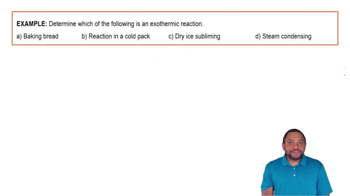
  • Which of the following is an example of an exothermic reaction?
    Combustion of wood is an exothermic reaction.
  • What happens when you pull heat out of a substance?
    The substance cools and may undergo an exothermic phase change.
  • What happens when heat is added to a substance?
    The substance absorbs energy and may undergo an endothermic phase change.
  • Which of the following is typical of an endothermic reaction?
    Absorption of heat and a positive ΔH.
  • In which of the following is heat released to the environment?
    Exothermic reactions release heat to the environment.
  • Which of the following is a description of an exothermic reaction?
    A reaction that releases heat and has a negative ΔH.
  • Which graph represents an exothermic reaction?
    A graph where products are at a lower energy than reactants.
  • Which statement best describes the difference between endothermic and exothermic reactions?
    Endothermic reactions absorb heat; exothermic reactions release heat.
  • Which describes the enthalpy change associated with an endothermic reaction?
    Endothermic reactions have a positive ΔH.
  • Which is true for the endothermic reaction 2 SO₂(g) → 2 SO₃(g) + O₂(g)?
    Heat is absorbed and the products have higher energy than reactants.
  • Which one of the equations below is an exothermic reaction?
    An equation where heat is a product, indicating energy release.
  • Jan is holding an ice cube. What causes the ice to melt?
    Heat from Jan's hand is absorbed by the ice (endothermic).
  • What would likely happen if you were to touch a flask where an exothermic reaction were occurring?
    The flask would feel warm due to heat release.
  • Which statement correctly describes an endothermic chemical reaction?
    An endothermic reaction absorbs heat from the surroundings.
  • What is an exothermic reaction?
    A reaction that releases heat to the surroundings.
  • Which of the following options correctly describes an exothermic reaction?
    A reaction that releases heat and has a negative ΔH.