Periodic Trend: Atomic Radius quiz #2 Flashcards

Periodic Trend: Atomic Radius quiz #2
Control buttons has been changed to "navigation" mode.
1/40
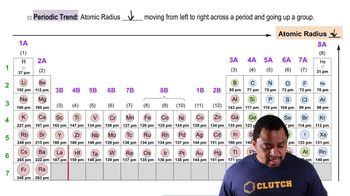
  • What trend in atomic radius occurs across the periodic table? What causes this trend?

    Atomic radius decreases across a period due to increased nuclear charge.
  • Why does atomic radius increase as you move down a group?

    Atomic radius increases down a group because more electron shells are added.
  • What is the trend in atomic radius from top to bottom down a group?

    Atomic radius increases from top to bottom down a group.
  • Which of the following species has the largest radius?

    Neutral atoms are larger than their cations; for example, K is larger than K+.
  • What trend in atomic radius occurs down a group on the periodic table?

    Atomic radius increases down a group.
  • Which atom has the smallest atomic radius?

    Helium has the smallest atomic radius.
  • Why does atomic radius increase as you go down a group?

    Atomic radius increases due to the addition of electron shells.
  • What is the trend for atomic radius?

    Atomic radius increases down a group and decreases across a period.
  • Which of the following elements has the largest covalent radius?

    Francium has the largest covalent radius among naturally occurring elements.
  • Which best describes what tends to occur in groups that results in an increase in atomic radius?

    Addition of electron shells increases atomic radius down a group.
  • How does the atomic radius change as you go from the top to the bottom of a chemical family?

    Atomic radius increases from top to bottom in a chemical family.
  • Why does atomic size increase as you go down a grouping in the table?

    Atomic size increases due to more electron shells being added.
  • Which has the smallest atomic radius?

    Helium has the smallest atomic radius.
  • What happens to the size of an atom as you move down a group?

    The size of an atom increases as you move down a group.
  • Which element has the smallest radius?

    Helium has the smallest radius.
  • Why does atomic radius generally increase down a group on the periodic table?

    Atomic radius increases down a group because more electron shells are added.
  • Which of the following atoms has the smallest atomic radius?

    Helium has the smallest atomic radius.
  • Which of the following has the smallest radius?

    Helium has the smallest radius.
  • Which element has the smallest covalent radius on the periodic table?

    Helium has the smallest covalent radius.
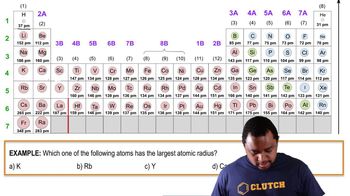
  • Which of the following atoms has the largest atomic radius?

    Francium has the largest atomic radius among naturally occurring elements.
  • Why does the atomic radius increase as you go down a group?

    Atomic radius increases due to the addition of electron shells.
  • What trend is observed among the atomic radii of main-group elements across a period?

    Atomic radii decrease across a period.
  • Which has the largest atomic radius?

    Francium has the largest atomic radius.
  • What trend is observed among the atomic radii of main-group elements down a group?

    Atomic radii increase down a group.
  • How does atomic size vary within a group of the periodic table?

    Atomic size increases within a group from top to bottom.
  • Why do atoms get larger as you move down a group?

    Atoms get larger due to the addition of electron shells.
  • Consider the alkali metals in the periodic table. Which element has the smallest atomic radius?

    Lithium has the smallest atomic radius among the alkali metals.
  • An atom of which element has the largest atomic radius?

    Francium has the largest atomic radius.
  • Which of these alkali metals has the largest atomic radius?

    Francium has the largest atomic radius among alkali metals.
  • Why do both atomic size and ionic size increase as you move down a group?

    Both increase due to the addition of electron shells.
  • How do you think the atomic radii will change as electrons are added to a shell?

    Adding electrons to a shell increases electron-electron repulsion, slightly increasing atomic radius.
  • How does atomic radius change across a period?

    Atomic radius decreases across a period.
  • What happens to atomic size (radius) as you move down the periodic table?

    Atomic size increases as you move down the periodic table.
  • Which of the following atoms is the smallest?

    Helium is the smallest atom.
  • Which reason explains why atomic radius increases as you go down a group?

    Atomic radius increases because more electron shells are added.
  • Which of the following properties decreases from left to right across a period?

    Atomic radius decreases from left to right across a period.
  • Which of the following atoms is the largest?

    Francium is the largest atom.
  • Why does the atomic radius decrease moving left to right across a period?

    Increasing nuclear charge pulls electrons closer, decreasing atomic radius.
  • Which of these elements has the largest atomic radius?

    Francium has the largest atomic radius.
  • Why do atoms get smaller as you move across a period?

    Atoms get smaller due to increased nuclear charge pulling electrons closer.