Periodic Trend: Atomic Radius quiz #3 Flashcards

Periodic Trend: Atomic Radius quiz #3
Control buttons has been changed to "navigation" mode.
1/40
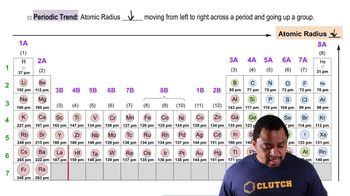
  • Where do you find the atoms with the largest atomic radius on the periodic table?

    Atoms with the largest atomic radius are found at the bottom left of the periodic table.
  • What is meant by atomic radius?

    Atomic radius is the distance from the nucleus to the outermost electron shell.
  • Which one of the following has the smallest atomic radius?

    Helium has the smallest atomic radius.
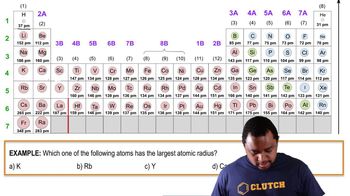
  • Which one of the following atoms has the largest radius?

    Francium has the largest atomic radius.
  • What happens to the atomic radius as the atomic number increases within a period?

    Atomic radius decreases as atomic number increases within a period.
  • What appears to be the trend in atomic radius as you move from left to right in a row?

    Atomic radius decreases from left to right in a row.
  • Which of the following transition metals would be expected to have the smallest atomic radius?

    Transition metals further to the right in a period, such as nickel, have smaller atomic radii.
  • What distance is measured for an atomic radius?

    The distance from the nucleus to the outermost electron shell is measured.
  • Which of the following atoms would have the largest atomic radius?

    Francium would have the largest atomic radius.
  • Which of these describes a tendency for atomic radii as displayed on the periodic chart?

    Atomic radii increase down a group and decrease across a period.
  • Which of the atoms listed below has the largest radius?

    Francium has the largest radius.
  • In which of the following atoms is the 3s orbital closest to the nucleus?

    The 3s orbital is closest to the nucleus in atoms with higher nuclear charge, such as argon.
  • What is the relationship between atomic radius and ionization energy?

    Smaller atomic radius generally corresponds to higher ionization energy.
  • Which of the following atoms would you expect to have the largest atomic radius?

    Francium would be expected to have the largest atomic radius.
  • Why do atomic radii generally increase down a group on the periodic table?

    Atomic radii increase down a group due to the addition of electron shells.
  • Which of these elements would have the largest atomic radius?

    Francium would have the largest atomic radius.
  • Which of the following metals would be expected to have the smallest atomic radius?

    Metals at the top right of the periodic table, such as aluminum, have smaller atomic radii.
  • Which element would have the largest atomic radius?

    Francium would have the largest atomic radius.
  • What is the general trend in the atomic radius of atoms within the same group?

    Atomic radius increases as you move down the group.
  • Which statement explains the trend in atomic radius on the periodic table?

    Atomic radius increases down a group and decreases across a period due to electron shells and nuclear charge.
  • For which of these properties does lithium have a larger value than potassium?

    Lithium has a larger ionization energy than potassium, but a smaller atomic radius.
  • What is the trend of atomic radius?

    Atomic radius increases down a group and decreases across a period.
  • What is the overall trend (direction) for which atomic radius increases?

    Atomic radius increases as you move down and to the left on the periodic table.
  • Which element has the largest radius?

    Francium has the largest radius.
  • Which of the following atoms has the largest radius?

    Francium has the largest atomic radius.
  • How does the size of a metal atom relate to the reactivity of the atom?

    Larger metal atoms tend to be more reactive due to lower ionization energy.
  • Which atom has a larger atomic radius?

    Atoms lower and to the left on the periodic table have larger atomic radii.
  • What happens to the atomic radius as you go down a group?

    Atomic radius increases as you go down a group.
  • How does the atomic radius change from top to bottom in a group in the periodic table?

    Atomic radius increases from top to bottom in a group.
  • Why does atomic size generally increase down a group on the periodic table?

    Atomic size increases due to the addition of electron shells.
  • What does the atomic radius of an atom depend on?

    Atomic radius depends on the number of electron shells and nuclear charge.
  • Which periodic trend measures the size of the atom from the nucleus to the outermost electron?

    Atomic radius measures the size from the nucleus to the outermost electron.
  • Which neutral atom below has the largest atomic radius?

    Francium has the largest atomic radius among neutral atoms.
  • Which color stars have the coolest surface temperature?

    This question is unrelated to atomic radius; in chemistry, atomic radius is not related to star color.
  • Which element has the largest atomic radius?

    Francium has the largest atomic radius.
  • Which element has the smallest atomic radius: calcium, potassium, scandium, or titanium?

    Titanium has the smallest atomic radius among calcium, potassium, scandium, and titanium.
  • Which of the following elements has the smallest atomic radius?

    Helium has the smallest atomic radius.
  • Which atom or ion is the largest: K, K+, Ca, Ca2+, or Li?

    K (potassium atom) is the largest among the listed species.
  • Which of the following metals would be predicted to have the smallest atomic radius?

    Metals at the top right of the periodic table, such as aluminum, have the smallest atomic radius.
  • Which element in the 8th column of the periodic table (shown below) has the largest radius?

    The element at the bottom of the 8th column (group 18), such as radon, has the largest radius in that group.