Physical & Chemical Changes quiz #1 Flashcards

Physical & Chemical Changes quiz #1
Control buttons has been changed to "navigation" mode.
1/40
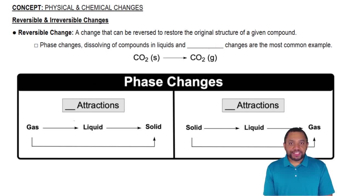
  • Are chemical changes reversible?
    Most chemical changes are irreversible under normal conditions because they form new substances with different chemical compositions.
  • Which of these is an example of a physical change?
    Crushing a can is an example of a physical change.
  • Which is an example of a chemical change?
    Rusting of iron is an example of a chemical change.
  • During which changes of state does the motion of the atoms decrease?
    Motion of atoms decreases during freezing, condensation, and deposition.
  • Which of the following is a chemical change?
    Burning wood is a chemical change.
  • Which of the following is not an example of a physical change?
    Burning a match is not a physical change; it is a chemical change.
  • What happens to water when it freezes?
    Water changes from a liquid to a solid, forming ice, but its chemical composition remains the same.
  • Which is the process by which a gas changes to a solid: deposition, evaporation, freezing, or sublimation?
    Deposition is the process by which a gas changes directly to a solid.
  • What is the difference between a physical change and a chemical change?
    A physical change alters the state or appearance without changing composition, while a chemical change forms new substances with different chemical properties.
  • What happens when a substance undergoes a physical change?
    The substance changes its physical state or appearance, but its chemical identity remains the same.
  • What happens to elements and compounds that are dissolved in a solution when the water evaporates?
    The dissolved elements and compounds remain as residues after the water evaporates.
  • Water freezing and becoming ice is an example of what type of change?
    It is an example of a physical change.
  • What is the difference between a chemical change and a physical change?
    A chemical change creates new substances, while a physical change does not alter the chemical identity.
  • Which sentence describes an example of sublimation?
    Dry ice (solid CO2) turning directly into carbon dioxide gas is an example of sublimation.
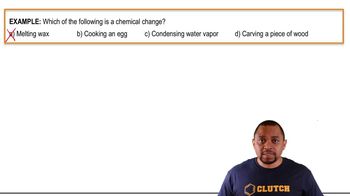
  • Which of the following is an example of a chemical change?
    Baking a cake is an example of a chemical change.
  • If a substance changes color, what type of change might have occurred?
    A color change can indicate a chemical change has occurred.
  • Which statement describes all chemical changes?
    All chemical changes result in the formation of new substances with different chemical properties.
  • How is a chemical change different from a physical change?
    A chemical change alters the chemical composition, while a physical change only affects physical properties.
  • When does a physical change occur?
    A physical change occurs when a substance changes its state or appearance without changing its chemical identity.
  • Which of the following is a physical change?
    Melting ice is a physical change.
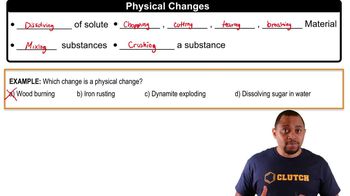
  • Which of the following is an example of a physical change?
    Chopping onions is an example of a physical change.
  • Which of these observations is an indication that a chemical reaction has occurred?
    Formation of a gas or a color change indicates a chemical reaction.
  • When you melt an ice cube, what type of change occurs?
    Melting an ice cube is a physical change.
  • What are the 5 ways to identify if a chemical reaction happened?
    Indicators include color change, gas production, temperature change, formation of a precipitate, and odor change.
  • Which sign is not for a chemical change?
    A change in shape is not a sign of a chemical change.
  • Which process represents a chemical change?
    Burning a match represents a chemical change.
  • Which of the following is not an example of a chemical change?
    Melting butter is not a chemical change; it is a physical change.
  • What is the difference between physical and chemical changes?
    Physical changes do not alter chemical composition; chemical changes create new substances.
  • Which is a chemical change?
    Frying an egg is a chemical change.
  • Which of the following is an example of condensation in the water cycle?
    Water vapor forming droplets on a cold surface is condensation.
  • What is it called when water is heated and changes from a liquid to a gas?
    This process is called evaporation or vaporization.
  • How can you tell if a chemical change has occurred?
    Signs include color change, gas production, temperature change, precipitate formation, or odor change.
  • Which example illustrates a chemical change?
    Burning sugar illustrates a chemical change.
  • What is the difference between a chemical and physical change?
    Chemical changes form new substances; physical changes do not.
  • What happens during a physical change?
    The substance changes its physical state or appearance, but its chemical identity remains unchanged.
  • How can you cause a physical change?
    By changing temperature, pressure, or physically manipulating the substance (e.g., cutting, melting).
  • Why is the melting of ice a physical change?
    Because the chemical composition of water remains the same; only its state changes.
  • How are chemical changes different from physical changes?
    Chemical changes create new substances; physical changes do not.
  • What type of change has occurred when a nail rusts?
    Rusting is a chemical change.
  • Which of the following is usually an indication of a chemical change?
    Formation of a new substance is an indication of a chemical change.