Solubility Rules definitions Flashcards
Solubility Rules definitions
1 student found this helpful You can tap to flip the card.
Control buttons has been changed to "navigation" mode.
1/15
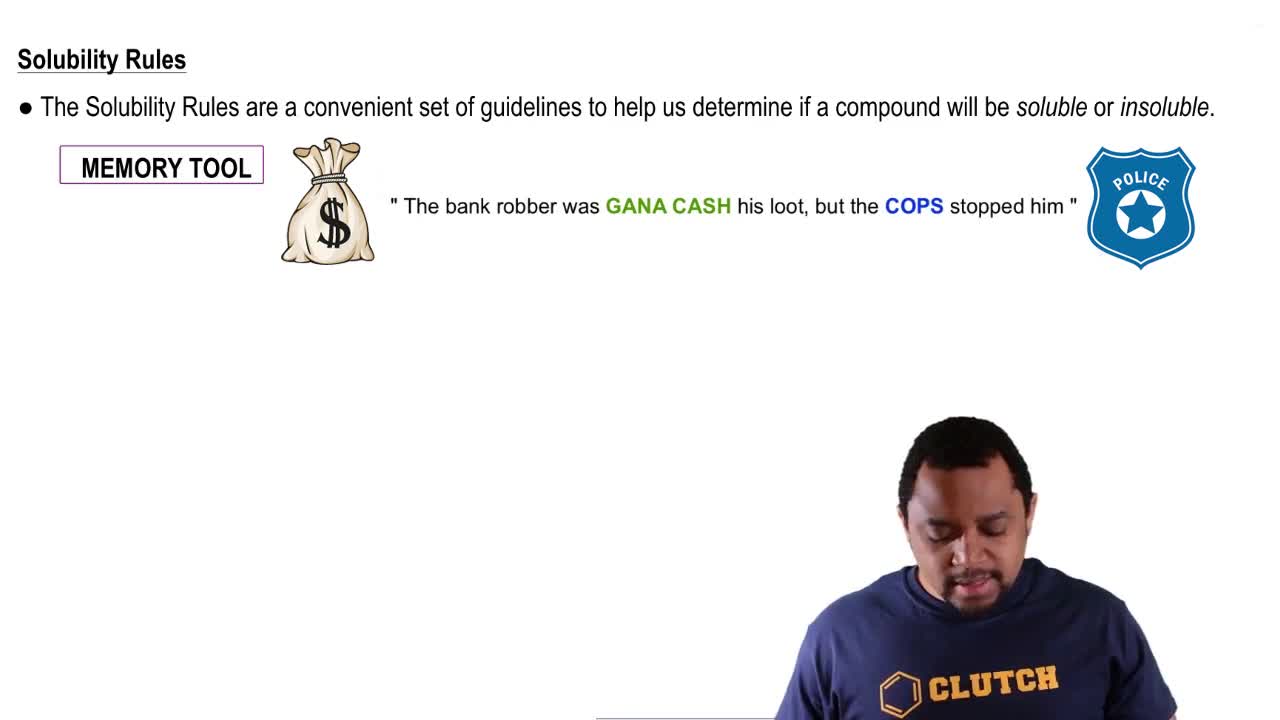
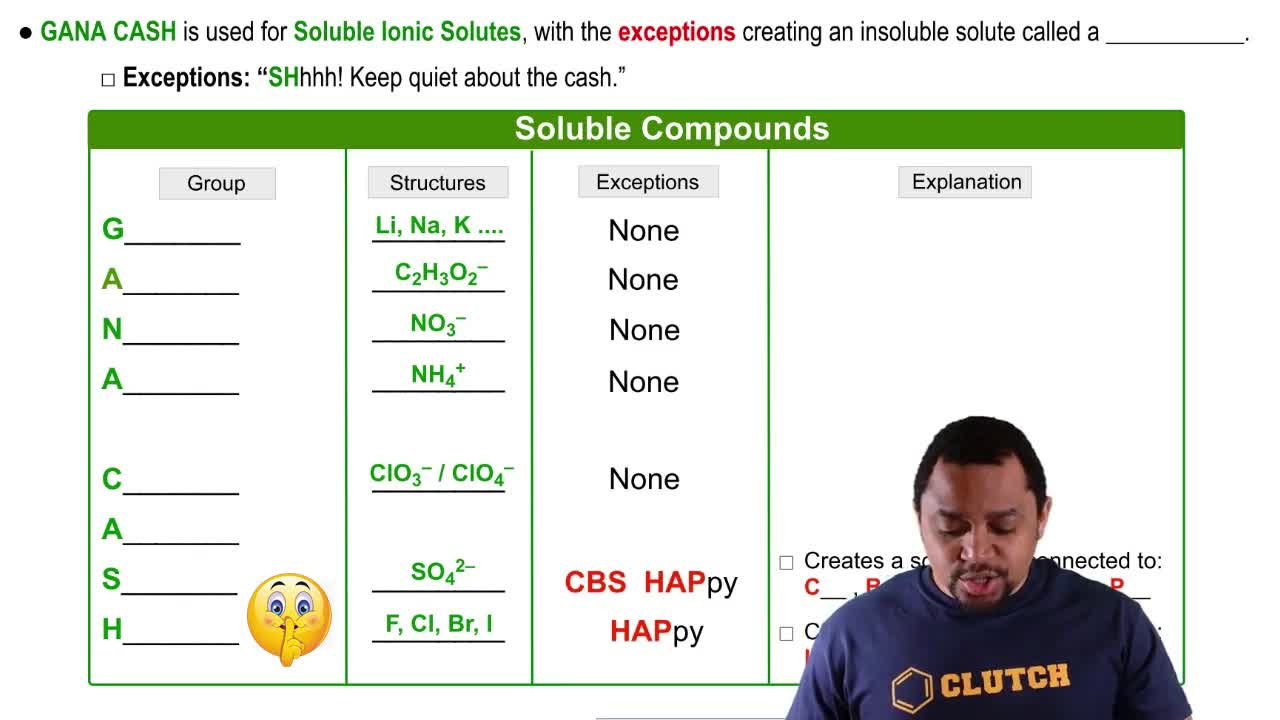
SolubilityA chemical property indicating a solute's ability to dissolve in a solvent, forming a solution.SolubleDescribes a solute that dissolves in a solvent, forming aqueous ions.InsolubleDescribes a solute that does not dissolve in a solvent, remaining intact.Aqueous IonAn ion surrounded by water molecules, indicating it is dissolved in water.PrecipitateA solid formed from a solution when a solute is insoluble in the solvent.Group 1A ElementsElements like hydrogen, lithium, sodium, and potassium, always forming soluble compounds.Acetate IonAn ion that, when part of a compound, ensures the compound is soluble.Nitrate IonAn ion that guarantees solubility of the compound it is part of.Ammonium IonAn ion that makes any compound it is part of soluble.Chlorate IonAn ion that, along with perchlorate, ensures compound solubility.SulfateGenerally soluble, except when paired with ions like calcium, barium, or lead.HalogensGroup 7A elements, soluble unless paired with mercury, silver, or lead.Carbonate IonAn ion that forms insoluble compounds unless exceptions apply.OxideAn ion that forms insoluble compounds, except with calcium, barium, or strontium.Phosphate IonAn ion that typically forms insoluble compounds without exceptions.