Which type of gene transcribes the bicoid gene during early animal development?
The bicoid gene is transcribed by maternal effect genes, which are genes provided by the mother and present in the egg before the embryo's own genes are activated.
What is a homeotic gene and what is its role in development?
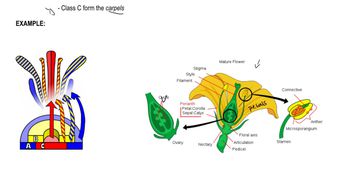
A homeotic gene, such as a Hox gene, is a gene that contains a homeobox sequence and acts as a transcription factor to control the development of specific body segments and features. In animals, Hox genes define structures like antennae and legs, while in plants, they determine floral organ identity.
What scientific terms are used to describe the front, back, top, and bottom of an organism?
The terms are anterior for the front, posterior for the back, dorsal for the top, and ventral for the bottom. These terms help define body orientation during development.
How do concentration gradients of maternal effect genes influence early embryonic development?
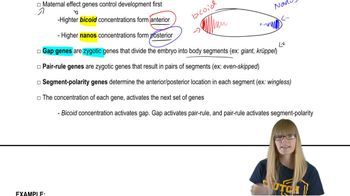
Concentration gradients of genes like bicoid and nanos determine the anterior and posterior regions of the embryo. These gradients guide the activation of subsequent segmentation genes.
What is the sequence of gene activation from maternal effect genes to segment polarity genes in animal development?
Maternal effect genes activate gap genes, which then activate pair-rule genes, followed by segment polarity genes. Each gene class triggers the next in a developmental cascade.
What is the function of the homeobox sequence found in Hox genes?
The homeobox is a 180 base pair DNA sequence that encodes a homeodomain in the protein. This domain allows Hox proteins to bind DNA and regulate gene expression.
How do the two Hox gene clusters in fruit flies differ in their developmental roles?
The antennapedia cluster controls head and thorax development, while the bithorax cluster controls the posterior thorax and abdomen. Each cluster contains specific genes for segment identity.
Why are Hox genes considered highly conserved across species?
Hox genes are found in nearly all animals and have similar functions in segment and organ development. Their conservation suggests a fundamental role in body plan organization.
In Arabidopsis, which floral organs are formed by the expression of both Class B and Class C Hox genes?
The stamen is formed when both Class B and Class C genes are expressed. This combination specifies the development of male reproductive structures in flowers.
What happens to organism development if segmentation genes are disrupted during early embryogenesis?
Disruption of segmentation genes can lead to incorrect segment formation, resulting in severe developmental defects. Such defects often prevent the organism from surviving.
 Back
Back
 11:19
11:19