 Back
Bacterial Genome Replication and Expression: Study Notes for Genetics Students
Study Guide - Smart Notes
 Tailored notes based on your materials, expanded with key definitions, examples, and context.
Bacterial DNA Replication
Overview of DNA Replication
DNA replication is a fundamental process in bacteria, ensuring the accurate transmission of genetic information to daughter cells. The process is semi-conservative, meaning each daughter cell receives one old and one new DNA strand.
Proteins ensure accuracy during replication.
Each DNA strand serves as a template for synthesis of a complementary strand.
Replication is semi-conservative.
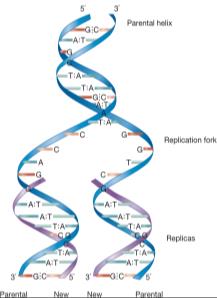
Patterns of DNA Synthesis
Bacterial DNA is typically circular and undergoes bidirectional replication from a single origin.
Replication fork: Site where DNA is unwound.
Replicon: Portion of DNA replicated as a unit (entire genome in bacteria).
Replication Machinery in E. coli
The replication machinery consists of multiple proteins, each with a specific function in the replication process.
DNA polymerase: Catalyzes synthesis of complementary DNA strand in the 5’ to 3’ direction, forming phosphodiester bonds.
Requires a template, primer, and dNTPs (deoxynucleotide triphosphates).
E. coli has five DNA polymerases, with polymerase III playing the major role.
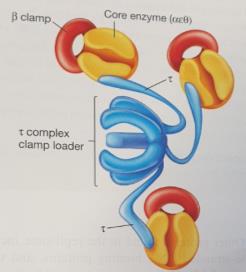
DNA polymerase III holoenzyme is a complex of 10 proteins, with three core enzymes for synthesis and proofreading.
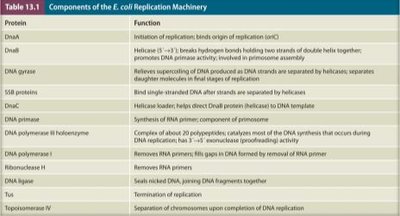
Protein | Function |
|---|---|
DnaA | Initiation of replication; binds origin of replication (oriC) |
DnaB | Helicase; unwinds DNA strands |
DNA gyrase | Relieves supercoiling; introduces negative supercoiling |
SSB proteins | Bind single-stranded DNA; keep strands apart |
DnaC | Helicase loader; helps DnaB bind to DNA template |
DNA primase | Synthesizes RNA primer |
DNA polymerase III holoenzyme | Main DNA synthesis and proofreading |
DNA polymerase I | Removes RNA primers; fills gaps |
Ribonuclease H | Removes RNA primers |
DNA ligase | Links DNA fragments |
Topoisomerase IV | Separates chromosomes after replication |
Events at the Replication Fork
Replication fork dynamics involve several proteins and steps:
DnaA binds oriC, causing strand separation.
DnaB and helicases separate strands; SSBs attach.
Primase synthesizes RNA primer.
Lagging and leading strands are synthesized.
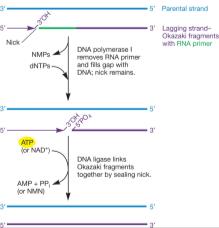
DNA polymerase I removes RNA primers and fills gaps.
DNA ligase joins Okazaki fragments.
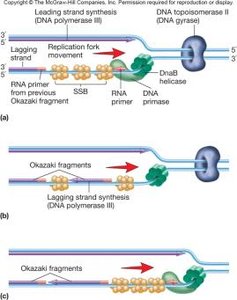
Okazaki Fragments and DNA Ligase
The lagging strand is synthesized in short fragments called Okazaki fragments, each requiring a new primer. DNA ligase forms a phosphodiester bond between fragments.
Proofreading
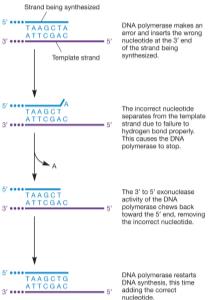
DNA polymerase III carries out proofreading by removing mismatched bases from the 3’ end of the growing strand via exonuclease activity. This ensures high fidelity but is not 100% efficient.
Termination of Replication
Replication stops when the replisome reaches the termination site (ter). Catenanes may form if daughter chromosomes do not separate, requiring topoisomerases and recombinases.
Gene Structure and Expression
Gene Structure
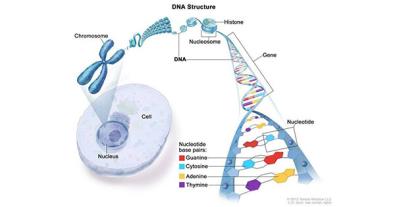
A gene is the basic unit of genetic information, consisting of a nucleic acid sequence coding for a polypeptide, tRNA, or rRNA. Genes have a fixed start and end point, and codons in mRNA code for single amino acids.
Protein-Coding Genes
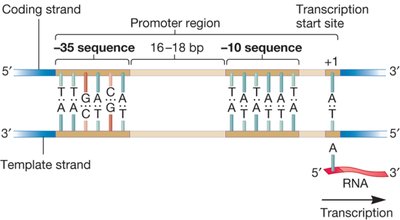
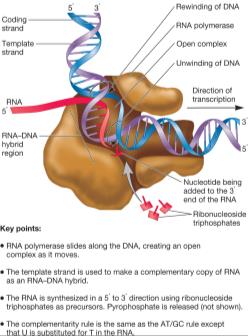
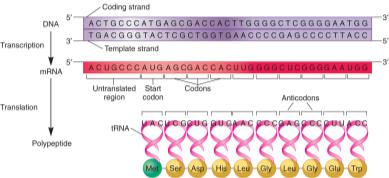
The template strand of DNA directs RNA synthesis, read in the 3’ to 5’ direction. The coding strand has the same sequence as mRNA (except thymine).
Promoter and Regulatory Sequences
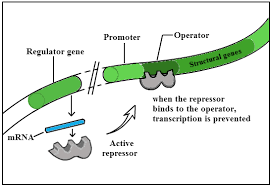
The promoter is located at the start of the gene and serves as the recognition/binding site for RNA polymerase. Regulatory sequences control gene expression and may be located upstream or downstream of the gene.
Transcription
Transcription in Bacteria
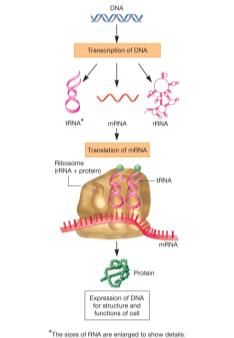
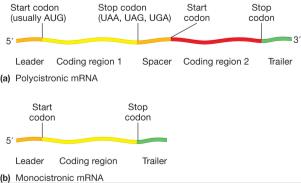
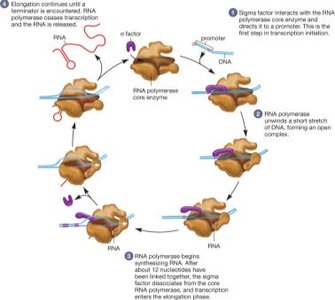
Transcription is the synthesis of RNA under the direction of DNA. Three types of RNA are produced: mRNA, tRNA, and rRNA. Polycistronic mRNA is common in bacteria, containing directions for multiple polypeptides.
RNA Polymerase Structure
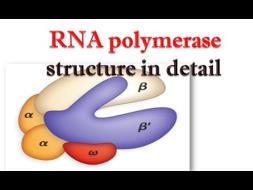
Bacterial RNA polymerase consists of a core enzyme (β', β, α, α, ω) and a sigma (σ) factor. The holoenzyme (core + sigma) initiates transcription.
Transcription Initiation
Initiation occurs at the promoter, which contains specific sequences (e.g., Pribnow box) recognized by RNA polymerase. Only a short segment of DNA is transcribed.
Transcription Elongation
RNA polymerase unwinds DNA, forming a transcription bubble. A temporary RNA:DNA hybrid is formed, and the sigma factor dissociates.
Transcription Termination
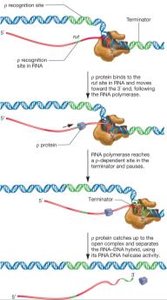
Termination occurs when RNA polymerase dissociates from DNA. Some terminators require the rho factor, which has helicase activity.
Translation and the Genetic Code
The Genetic Code
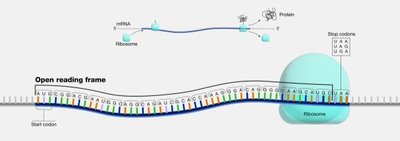
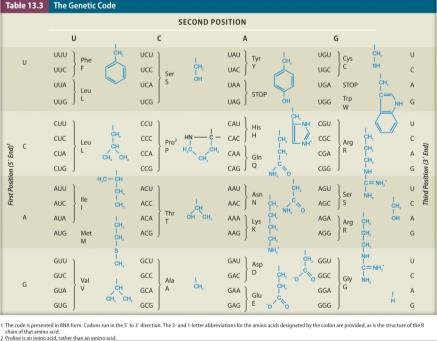
The genetic code consists of codons, each specifying an amino acid. The code is degenerate, with multiple codons for some amino acids. The start codon is always AUG, and stop codons are UAA, UGA, and UAG.
Amino Acid | Abbreviation (3 Letters) | Abbreviation (1 Letter) |
|---|---|---|
Alanine | Ala | A |
Arginine | Arg | R |
Asparagine | Asn | N |
Aspartic Acid | Asp | D |
Cysteine | Cys | C |
Glutamic Acid | Glu | E |
Glutamine | Gln | Q |
Glycine | Gly | G |
Histidine | His | H |
Isoleucine | Ile | I |
Leucine | Leu | L |
Lysine | Lys | K |
Methionine | Met | M |
Phenylalanine | Phe | F |
Proline | Pro | P |
Serine | Ser | S |
Threonine | Thr | T |
Tryptophan | Trp | W |
Tyrosine | Tyr | Y |
Valine | Val | V |
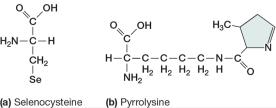
Exceptions to the Genetic Code
Some organisms use alternative codons or incorporate rare amino acids such as selenocysteine and pyrrolysine.
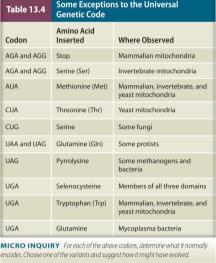
Codon | Amino Acid Inserted | Where Observed |
|---|---|---|
AGA and AGG | Stop | Mammalian mitochondria |
AGA and AGG | Serine | Invertebrate mitochondria |
AUA | Methionine | Mammalian, invertebrate, and yeast mitochondria |
CUA | Threonine | Yeast mitochondria |
CUG | Serine | Some fungi |
UAA and UAG | Glutamine | Some protists |
UAG | Pyrrolysine | Some methanogens and bacteria |
UGA | Selenocysteine | Members of all three domains |
UGA | Tryptophan | Mammalian, invertebrate, and yeast mitochondria |
UGA | Glutamine | Mycoplasma bacteria |
Translation
Translation Process
Translation is the synthesis of polypeptides directed by the sequence of nucleotides in mRNA. It occurs at the ribosome and involves tRNA and rRNA.
Direction: N-terminal to C-terminal
Polyribosome: Complex of mRNA with several ribosomes
tRNA Structure and Function
tRNA has a tertiary structure due to base pairing, with an anticodon complementary to the mRNA codon and a 3’ end that binds the amino acid.
Amino Acid Activation
Amino acids are attached to tRNA by aminoacyl-tRNA synthetases, each specific for a single amino acid and its cognate tRNAs.
Ribosome Structure
Bacterial ribosomes are 70S, composed of 30S and 50S subunits. The translational domain is responsible for translation.
tRNA Binding Sites
A site: Binds incoming aminoacyl-tRNA
P site: Binds initiator tRNA or tRNA attached to growing polypeptide
E site: Briefly binds empty tRNA before it leaves
Role of rRNA in Translation
16S rRNA: Binds Shine-Dalgarno site for initiation
23S rRNA: Catalyzes peptide bond formation (peptidyl transferase)
Initiation of Protein Synthesis
Initiation involves ribosome subunits, initiator tRNA (N-formylmethionine in bacteria), and initiation factors. The Shine-Dalgarno sequence aligns with 16S rRNA.
Elongation and Termination
Elongation: Sequential addition of amino acids via aminoacyl-tRNA binding, transpeptidation, and translocation.
Termination: Occurs at stop codons (UAA, UAG, UGA) with the aid of release factors and GTP hydrolysis.
Protein Maturation and Secretion
Protein Folding and Chaperones
Protein function depends on proper folding, often assisted by molecular chaperones (e.g., heat-shock proteins).
Protein Splicing
Inteins are removed from polypeptides before folding; exteins remain in the protein.
Protein Translocation and Secretion
Proteins are translocated across membranes via Sec and Tat systems. Secretion systems (Type I-VI) are used for exporting proteins, including virulence factors.
Sec-Dependent Pathway
Major pathway for transporting proteins across plasma membrane
Secreted proteins synthesized as pre-proteins with signal peptide
Chaperone proteins (SecB) keep pre-proteins unfolded
secY, secE, secG form membrane channel; secA translocates pre-protein
Tat System
Twin arginine translocase; moves folded proteins with twin arginine residues
Works with Type II secretion system
Other Secretion Pathways
Type I: Related to ABC transporters; secretes toxins, proteases
Type IV: Secretes proteins and DNA during conjugation
Type II, III, V, VI: Unique to Gram-negative bacteria; transport virulence factors
Summary Table: Key Steps in Bacterial Genome Replication and Expression
Process | Key Proteins/Enzymes | Function |
|---|---|---|
DNA Replication | DNA polymerase III, DnaA, DnaB, SSB, DNA gyrase, primase, ligase | Synthesis and proofreading of DNA |
Transcription | RNA polymerase (core + sigma), promoter, terminator | Synthesis of RNA from DNA template |
Translation | Ribosome, tRNA, rRNA, aminoacyl-tRNA synthetase | Synthesis of polypeptide from mRNA |
Protein Secretion | Sec, Tat, Type I-VI systems | Translocation and secretion of proteins |
Example: E. coli uses DNA polymerase III for replication, RNA polymerase holoenzyme for transcription, and ribosomes for translation. Sec and Tat systems are used for protein secretion.
Additional info: Academic context was added to clarify the roles of enzymes, the structure of genes, and the mechanisms of transcription and translation, as well as the significance of protein secretion pathways in bacteria.
