 Back
Beyond Mendelian Genetics: Extensions and Complexities in Allelic Interactions
Study Guide - Smart Notes
 Tailored notes based on your materials, expanded with key definitions, examples, and context.
Beyond Mendel: Extensions to Mendelian Inheritance
Non-Mendelian Alleles and Phenotypes
While Mendel's laws describe inheritance patterns for simple dominant and recessive alleles, many genes exhibit more complex behaviors. These include multiple alleles, incomplete dominance, co-dominance, lethal alleles, variable penetrance and expressivity, gene-environment interactions, pleiotropy, and epigenetic effects.
Allele Nomenclature and Classification
Alleles are variants of a gene, and their nomenclature reflects dominance and function:
Dominant alleles: Uppercase letters (e.g., A)
Recessive alleles: Lowercase letters (e.g., a)
Wild type: Often denoted with a superscript + (e.g., a+)
Multiple alleles: Indicated with subscripts or superscripts (e.g., a1, a2)
Genotype notation: AA or A/A, slash indicates homologous chromosomes
Classification of Mutation Impact on Gene Function
Mutations in alleles can affect gene function in several ways:
Loss of function (amorph/null): No functional product is produced.
Reduction of function (hypomorph): Partial activity remains.
Dominant negative (antimorph): Mutant allele interferes with wildtype allele function.
Gain of function: Increased activity (hypermorph) or new function (neomorph).
Loss of Function (Null) Alleles
Haplosufficiency vs. Haploinsufficiency
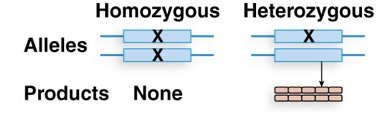
Loss of function alleles (amorphs) produce no functional protein. The phenotype of heterozygotes depends on whether one wildtype allele is sufficient for normal function (haplosufficient) or not (haploinsufficient).
Haplosufficiency: One wildtype allele is enough for normal phenotype.
Haploinsufficiency: One wildtype allele is not enough; mutant phenotype appears.
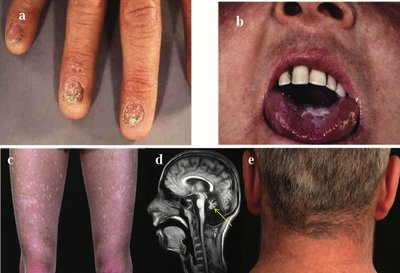
Example: Dyskeratosis Congenita
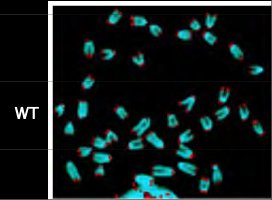
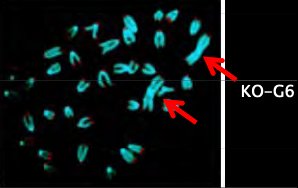
Dyskeratosis congenita is a disorder where one wildtype allele of telomerase is insufficient to maintain telomere length, leading to haploinsufficiency. It can be inherited in a dominant or recessive manner depending on the allele involved.
Reduction of Function (Hypomorphic Alleles)
Hypomorphic Alleles
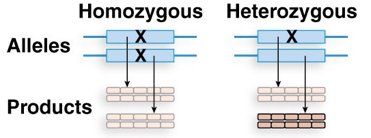
Hypomorphic alleles produce reduced levels of functional protein. The phenotype depends on the required activity for normal function.
Dominant Negative (Antimorph) Alleles
Antimorphs and Their Effects
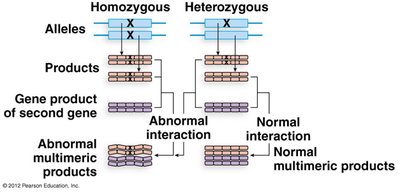
Dominant negative alleles interfere with the function of the wildtype allele, often resulting in a mutant phenotype even in heterozygotes.
Example: Marfan Syndrome
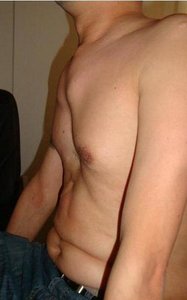
Marfan syndrome is caused by a dominant negative mutation in the fibrillin gene, disrupting microfibrils in extracellular tissue and affecting intercellular signaling.
From Genotype to Phenotype: Thresholds and Protein Levels
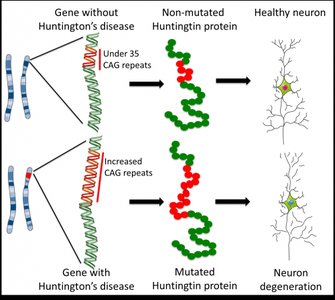
The relationship between genotype and phenotype often depends on thresholds of functional protein required for normal function. Different combinations of alleles (null, hypomorph, hypermorph, antimorph) produce varying protein levels and phenotypes.
Complex Allelic Interactions
Types of Complex Interactions
Incomplete dominance: Heterozygotes have a phenotype intermediate between homozygotes.
Co-dominance: Both alleles are fully expressed in heterozygotes.
Multiple alleles: More than two alleles affect a phenotype.
Lethal alleles: Homozygous recessive individuals cannot survive.
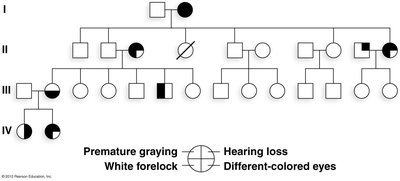
Penetrance and expressivity: Variability in phenotype expression.
Environmental factors: Genetically identical individuals show different phenotypes due to environment.
Pleiotropy: One gene affects multiple phenotypic traits.
Epigenetics: Heritable changes not due to DNA sequence.
Incomplete Dominance
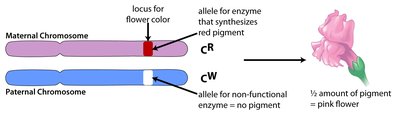
In incomplete dominance, the heterozygote phenotype is intermediate between the two homozygotes. For example, in flower color, a cross between red (CR/CR) and white (CW/CW) produces pink (CR/CW) flowers.
Co-dominance
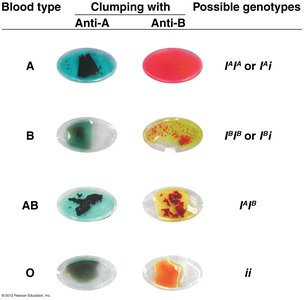
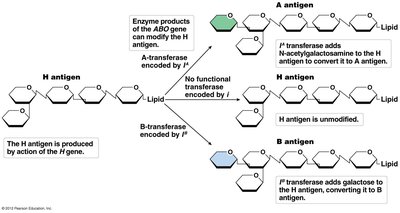
Co-dominance occurs when both alleles are fully expressed in the heterozygote. The classic example is human ABO blood types, where IA and IB alleles are co-dominant.
Dominance Depends on Phenotype
Some alleles show different dominance relationships depending on the phenotype measured. For example, the sickle cell anemia allele is recessive for disease presence, co-dominant for globin production, and incompletely dominant for oxygen carrying capacity.
Lethal Alleles
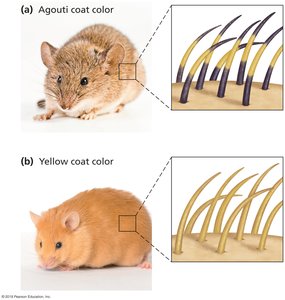
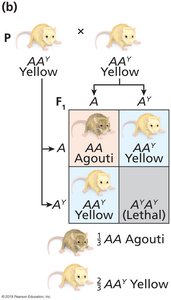
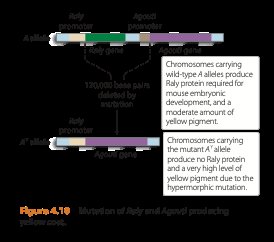
Lethal alleles cause death in homozygous individuals, often resulting in altered Mendelian ratios. For example, the AY allele in mice is lethal when homozygous.
Penetrance and Expressivity
Variable Penetrance
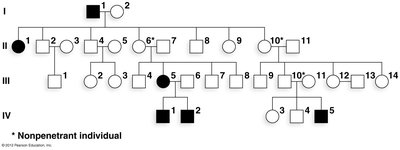
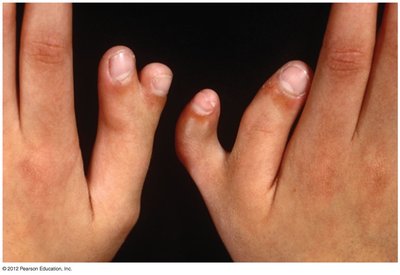
Penetrance refers to the proportion of individuals with a genotype who express the expected phenotype. Some traits, like polydactyly, show partial penetrance.
Variable Expressivity
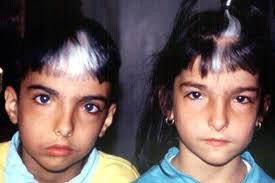
Expressivity describes the degree or intensity of phenotype expression among individuals with the same genotype. Waardenburg syndrome is an example, with multiple symptoms variably expressed.
Gene-Environment Interactions
Influence of Environment on Phenotype
Genes alone do not account for all variation; environmental factors can modify gene expression and phenotype. Phenylketonuria (PKU) is a classic example where diet can greatly affect disease severity.
Phenylketonuria (PKU)
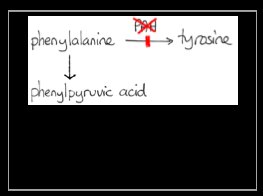
PKU is an autosomal recessive disorder caused by the absence of an enzyme for phenylalanine breakdown. Early diagnosis and dietary management can prevent severe symptoms.
Incidence: 1 in 25,000 births
Symptoms: Toxicity to developing neurons if untreated
Treatment: Low phenylalanine diet and supplements
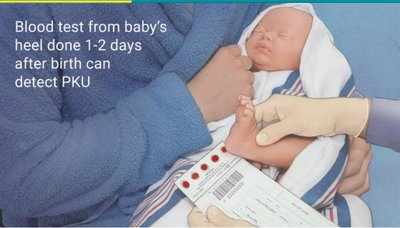
Screening: Routine in infants
Epigenetics
Heritable Gene Silencing
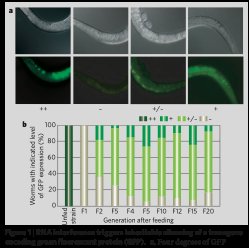
Epigenetics involves heritable changes in gene expression not due to DNA sequence. Silencing of genes can persist across generations, and environmental factors such as maternal diet can modulate these states.
Metastable Agouti allele: Expression depends on methylation of a retro-transposon.
Heritable modulation: Diet can affect methylation and phenotype.
Summary Table: Types of Allelic Effects
Type | Definition | Example |
|---|---|---|
Null/Amorph | No function | Nonsense mutation early in gene |
Hypomorph | Reduced function | Partial loss-of-function mutation |
Antimorph | Dominant negative | Marfan syndrome |
Hypermorph | Increased function | Oncogene overexpression |
Neomorph | New function | Novel protein activity |
Additional info: Academic context was added to clarify definitions, examples, and mechanisms for each allelic effect and complex interaction. Images were included only when directly relevant to the explanation of the paragraph.
