 Back
BackBiotechnology and Genetic Engineering: Principles and Applications
Study Guide - Smart Notes
 Tailored notes based on your materials, expanded with key definitions, examples, and context.
Biotechnology and Genetic Engineering
Introduction to Biotechnology
Biotechnology is the application of biological systems, organisms, or derivatives to develop products and processes for scientific, medical, agricultural, or industrial use. When this field involves the direct manipulation of genetic material, it is often referred to as genetic engineering or molecular biology. Modern biotechnology is grounded in genetics and molecular biology, utilizing knowledge from model organisms to drive innovation.
Genetic engineering is the precise modification of an organism's genome by human intervention.
Applications include medicine, agriculture, environmental science, and industry.
Areas of Biotechnology
Medical biotechnology: Drug and vaccine production, genetic testing, pharmacogenomics, gene therapy, stem cell technology, and cloning.
Agricultural biotechnology: Creation of genetically modified (GM) animals and plants for improved traits.
Environmental biotechnology: Use of organisms for bioremediation to clean up pollutants.
Genetic modification of humans: An emerging area with significant ethical considerations.
The biotechnology industry is multidisciplinary, involving biology, chemistry, computer science, engineering, law, and business.
Genetically Modified Organisms (GMOs)
Definition and Historical Context
A genetically modified organism (GMO) is any organism whose genome has been altered by human intervention. Traditional selective breeding (e.g., domestication of corn, wheat, cows, and dogs) has been practiced for millennia, but modern GMOs are created using precise molecular techniques.
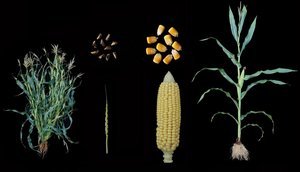
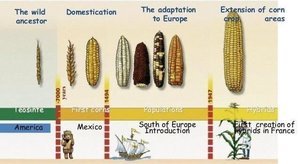
Modern genetic modification includes gene deletion, modification, replacement, or addition (from the same or different species—transgenic organisms).
Purposes of Creating GMOs
Production of large quantities of proteins or drugs in bacteria, animals, or plants.
Modification of phenotypes in animals or plants for desirable traits.
Treatment of human diseases (e.g., gene therapy).
Functional genomics: Knocking out or modifying genes to study their roles.
Recombinant DNA Technology
Drug Production in Genetically Modified Organisms
The first biotechnology company, Genentech, pioneered gene cloning techniques. In 1977, the human insulin gene was cloned, leading to the production of Humulin (human insulin) in bacteria, approved in 1982. This innovation replaced the need to purify insulin from animal sources.
Principles of Recombinant DNA Technology
To express a human protein in bacteria, the gene of interest is placed downstream of a strong, inducible bacterial promoter (e.g., the lac promoter).
DNA from different organisms is combined, hence the term recombinant DNA.
Plasmids as Vectors
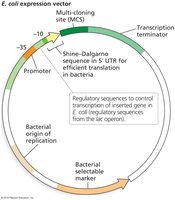
Plasmids are small, circular, extrachromosomal DNA molecules found naturally in bacteria. They can replicate independently and often carry antibiotic resistance genes. In recombinant DNA technology, plasmids are engineered to carry foreign genes for expression in bacteria.
Essential features of plasmid vectors:
Small size (1–5 kb)
Bacterial origin of replication (ori)
Selectable marker (e.g., antibiotic resistance gene)
Unique restriction sites for DNA insertion
Inducible promoter for gene expression
Restriction Enzymes and DNA Cloning
Restriction enzymes are proteins from bacteria that cut DNA at specific palindromic sequences (usually 4–8 base pairs). They are named after the organisms from which they were isolated (e.g., EcoRI from E. coli).
They cut the sugar-phosphate backbone, producing either blunt ends or sticky ends (overhangs).
Fragments with compatible ends can be joined by DNA ligase.
Restriction enzymes protect bacteria from foreign DNA, while their own DNA is protected by methylation at recognition sites.
Steps in Cloning a Gene
Isolate the gene of interest (e.g., human insulin cDNA, which lacks introns).
Add restriction sites to the ends of the gene using linker DNA.
Cut both the gene and plasmid vector with the same restriction enzyme.
Mix and ligate the DNA fragments to form recombinant plasmids.
Transform bacteria with the recombinant plasmid.
Select for bacteria containing the plasmid using antibiotic resistance.
Selection and Screening of Recombinant Bacteria
After transformation, bacteria are plated on media containing antibiotics. Only those with the plasmid survive. Additional screening (e.g., blue/white screening with X-gal and the lacZ gene) can distinguish recombinant from non-recombinant colonies.
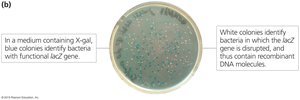
Blue colonies: Functional lacZ gene (no insert).
White colonies: Disrupted lacZ gene (contain recombinant DNA).
Applications of Recombinant DNA Technology
Production of therapeutic proteins (e.g., insulin, growth hormone, clotting factors).
Recombinant vaccines.
Industrial enzymes for brewing, baking, and bioremediation.
Summary Table: Key Features of Plasmid Vectors
The following table summarizes the essential features of plasmid vectors used in recombinant DNA technology:
Feature | Function |
|---|---|
Origin of replication (ori) | Allows plasmid replication in bacteria |
Selectable marker | Enables selection of transformed cells (e.g., antibiotic resistance) |
Multiple cloning site (MCS) | Contains unique restriction sites for DNA insertion |
Inducible promoter | Controls expression of inserted gene |
Conclusion
Biotechnology and recombinant DNA technology have revolutionized genetics, medicine, and agriculture. By understanding and manipulating genetic material, scientists can produce valuable proteins, improve crops, and address environmental challenges. Mastery of these techniques is foundational for modern genetics and molecular biology.
