 Back
BackCancer Genetics: Mechanisms, Genes, and Environmental Factors
Study Guide - Smart Notes
 Tailored notes based on your materials, expanded with key definitions, examples, and context.
Cancer Genetics
Introduction to Cancer Genetics
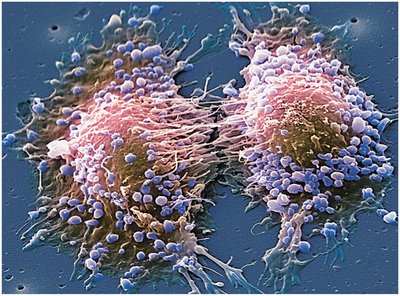
Cancer is a genetic disease characterized by uncontrolled cell proliferation and the ability to invade other tissues (metastasis). Unlike many genetic disorders, cancer often arises from the accumulation of multiple mutations in somatic cells, although hereditary predispositions exist. The study of cancer genetics explores the molecular and cellular mechanisms underlying tumor development, progression, and inheritance.
Oncology: The scientific study of cancer.
Neoplasia: The process of new, abnormal growth (tumor formation).
Benign vs. Malignant: Benign tumors do not invade other tissues, while malignant tumors are invasive and can metastasize.
Transformation: Cellular changes leading to malignancy, often induced by carcinogens.
Carcinogenesis (Tumorigenesis): The multistep process of developing a malignant tumor.
Apoptosis: Programmed cell death, a key process often disrupted in cancer cells.
All cancer cells share two fundamental properties: (1) unregulated cell proliferation and (2) metastasis.
Genetic Basis of Cancer
Cancer is primarily a genetic disease, but it differs from classical Mendelian disorders in several ways:
Most cancers arise from somatic mutations (not inherited), though some predispositions are hereditary.
Multiple mutations (often 6–12 or more) are typically required for full malignant transformation.
Inherited cancer-susceptibility genes usually require additional somatic mutations to trigger cancer ("two-hit hypothesis").
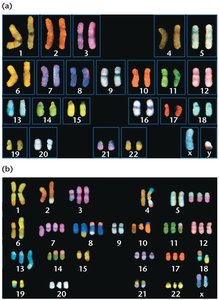
Chromosomal abnormalities such as translocations, deletions, and aneuploidy are common in cancer cells.
Multistep Development of Cancer
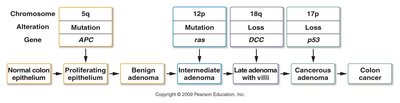
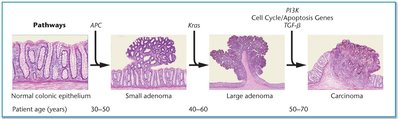
The development of cancer is a multistep process involving the sequential accumulation of mutations in key genes. This process is age-related, as mutations accumulate over time.
Mutations in multiple genes are required to fully express the cancer phenotype.
Colon cancer is a well-studied example of multistep carcinogenesis, involving mutations in genes such as APC, ras, DCC, and p53.
Cell Cycle Regulation and Checkpoints
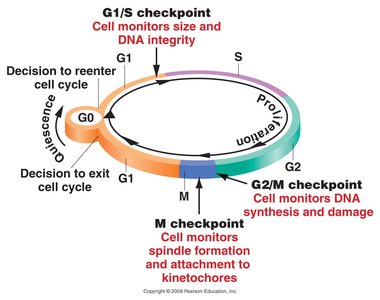
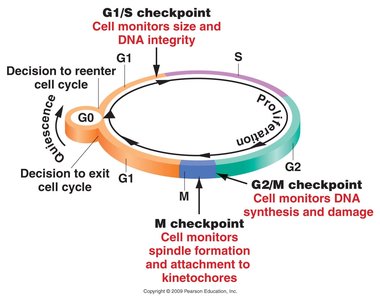
Normal cell growth and division are tightly regulated by the cell cycle and its checkpoints. Cancer cells often have mutations in genes that control these checkpoints, leading to uncontrolled proliferation.
G1/S checkpoint: Monitors cell size and DNA integrity.
G2/M checkpoint: Monitors DNA synthesis and damage.
M checkpoint: Monitors spindle formation and chromosome attachment.
Cells can enter a quiescent state (G0) and re-enter the cycle in response to signals.
Types of Cancer-Related Genes
Three major classes of genes are involved in cancer development:
Tumor Suppressor Genes: Act as brakes on cell division; loss-of-function mutations lead to unchecked growth.
Oncogenes: Mutated or overexpressed forms of proto-oncogenes that drive cell proliferation; typically dominant mutations.
Stability Genes (Caretaker Genes): Maintain genomic integrity by repairing DNA; mutations increase the overall mutation rate.
Tumor Suppressor Genes
Tumor suppressor genes regulate cell cycle checkpoints and initiate apoptosis. When inactivated, cells fail to respond to growth control signals or undergo apoptosis when necessary.
p53: Mutated in over 50% of human cancers; encodes a transcription factor that regulates genes involved in cell cycle arrest, DNA repair, and apoptosis.
RB1 (Retinoblastoma 1): Controls the G1/S checkpoint; loss-of-function mutations are associated with several cancers.
Oncogenes
Oncogenes are mutated proto-oncogenes that promote cell growth and division. Only one allele needs to be affected for the oncogenic effect (dominant).
Proto-oncogenes encode growth factors, receptors, kinases, cyclins, and transcription factors.
Oncogenic viruses can introduce oncogenes into host cells.
Stability Genes (Caretaker Genes)
These genes are responsible for DNA repair mechanisms such as mismatch repair, nucleotide-excision repair, and base-excision repair. When inactivated, the mutation rate in other genes increases, accelerating cancer progression.
Driver and Passenger Mutations
Cancer cells contain thousands of somatic mutations, but only a subset (driver mutations) contribute to cancer development by conferring a growth advantage. The rest are passenger mutations with no direct effect on the cancer phenotype.
Environmental and Epigenetic Factors
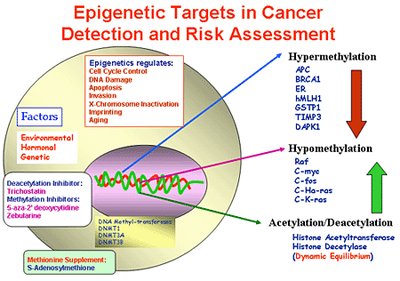
Environmental agents such as chemicals, radiation, viruses, and chronic infections can act as carcinogens by inducing mutations in proto-oncogenes or tumor suppressor genes. Epigenetic changes, including DNA methylation and histone modification, can also alter gene expression and contribute to tumor progression.
DNA repair genes such as MLH1 and BRCA1 can be transcriptionally silenced by epigenetic mechanisms in cancer cells.
Summary Table: Probability of Developing Invasive Cancers in the United States
The following table summarizes the probability of developing various invasive cancers by age and gender (data from the American Cancer Society, 2007):
Cancer Site | Gender | Birth to 39 | 40-59 | 60-69 | 70 and over | Birth-Death |
|---|---|---|---|---|---|---|
All sites | Male | 1 in 79 | 1 in 12 | 1 in 7 | 1 in 3 | 1 in 2 |
All sites | Female | 1 in 49 | 1 in 11 | 1 in 9 | 1 in 4 | 1 in 3 |
Breast | Female | 1 in 210 | 1 in 19 | 1 in 29 | 1 in 15 | 1 in 8 |
Prostate | Male | 1 in 10,000 | 1 in 39 | 1 in 14 | 1 in 7 | 1 in 6 |
Lung, bronchus | Male | 1 in 3146 | 1 in 67 | 1 in 24 | 1 in 10 | 1 in 13 |
Colon, rectum | Male | 1 in 1342 | 1 in 43 | 1 in 22 | 1 in 10 | 1 in 18 |
Colon, rectum | Female | 1 in 1469 | 1 in 41 | 1 in 24 | 1 in 12 | 1 in 20 |
Key Equations and Concepts
Two-Hit Hypothesis (Knudson): Both alleles of a tumor suppressor gene must be inactivated for cancer to develop.
Mutation Accumulation Model: Cancer risk increases with age due to the accumulation of mutations over time.
Example: In hereditary retinoblastoma, one defective RB1 allele is inherited (first hit), and the second allele is inactivated somatically (second hit), leading to tumor development.
Additional info: Epigenetic modifications such as DNA methylation and histone acetylation can silence tumor suppressor genes without altering the DNA sequence, contributing to cancer progression.
