 Back
BackChapter 11
Study Guide - Smart Notes
 Tailored notes based on your materials, expanded with key definitions, examples, and context.
Chromosome Aberrations and Transposition
Introduction to Chromosome Dynamics
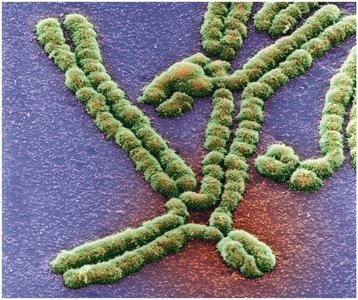
Chromosomes are dynamic structures that can undergo various alterations in number and structure, impacting heredity, development, and evolution. These changes can be visualized and studied using cytogenetic techniques and have profound consequences for organisms.
Changes in Chromosome Number
Aneuploidy and Euploidy
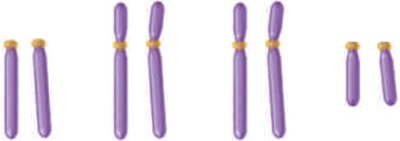
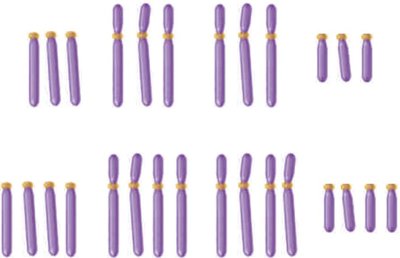
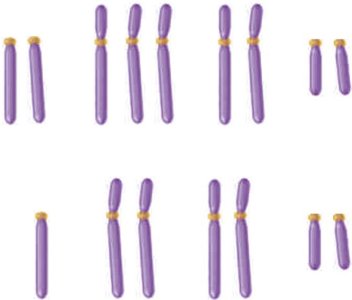
Alterations in chromosome number are classified as aneuploidy or euploidy, each with distinct genetic and phenotypic consequences.
Aneuploidy: The presence of an abnormal number of chromosomes (not a complete set). Examples include trisomy (2n+1) and monosomy (2n-1).
Euploidy: The presence of one or more complete sets of chromosomes. Examples include diploid (2n), triploid (3n), and tetraploid (4n).
Consequences of Aneuploidy
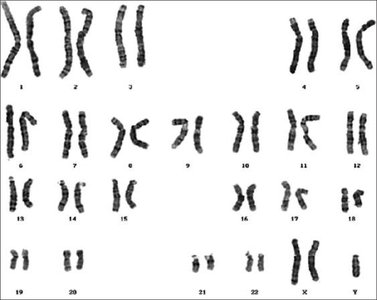
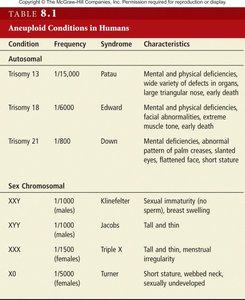
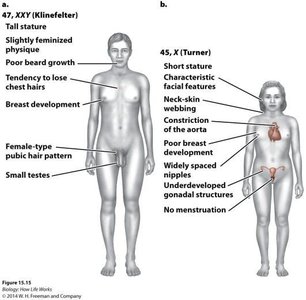
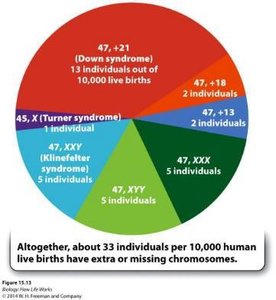
Aneuploidy can affect both autosomes and sex chromosomes, often resulting in severe genetic imbalances. In humans, common aneuploidies include Down syndrome (trisomy 21), Klinefelter syndrome (XXY), and Turner syndrome (XO).
Gene Dosage Effects: Extra or missing chromosomes alter the dosage of all genes on those chromosomes, leading to abnormal concentrations of gene products.
Human Health: Aneuploidy is a leading cause of congenital birth defects and miscarriages.
Mosaicism
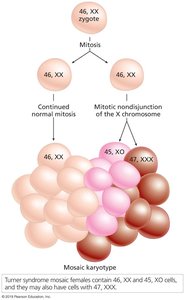
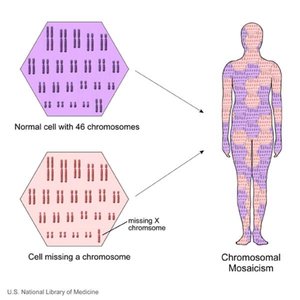
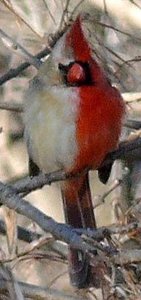
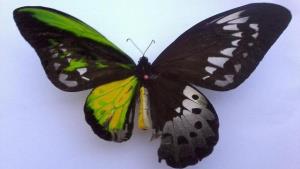
Mosaicism arises when an individual has two or more populations of cells with different genotypes, often due to mitotic nondisjunction early in development. This can result in a mix of normal and aneuploid cells.
Turner Syndrome: 25–30% of cases are mosaic, with cells of 45,XO, 46,XX, and sometimes 47,XXX.
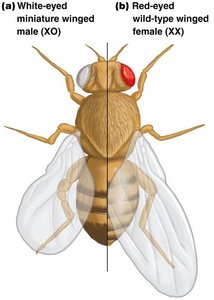
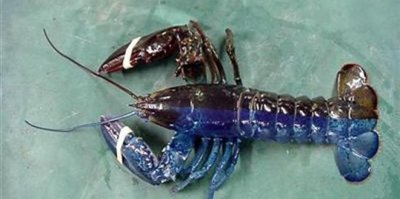
Gynandromorphs: In some species, mosaicism leads to individuals with both male and female characteristics.
Polyploidy
Definition and Occurrence
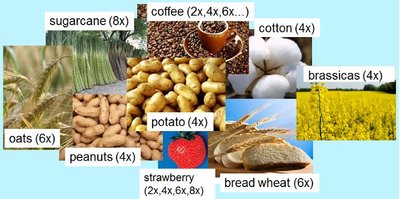
Polyploidy refers to the condition of having more than two complete sets of chromosomes. It is common in plants and some animals, but rare in mammals.
Autopolyploidy: Extra chromosome sets from the same species, often due to meiotic or mitotic nondisjunction.
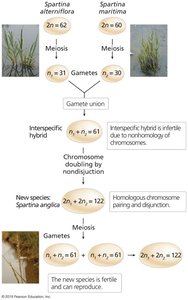
Allopolyploidy: Extra chromosome sets from different species, often resulting in new species after hybridization and chromosome doubling.
Allopolyploidy in Agriculture
Many important crop species are allopolyploids, such as wheat, which has undergone multiple rounds of hybridization and chromosome doubling.
Wheat Evolution: Modern bread wheat is a hexaploid (6n) derived from hybridization and polyploidization events.
Changes in Chromosome Structure
Banding and Visualization
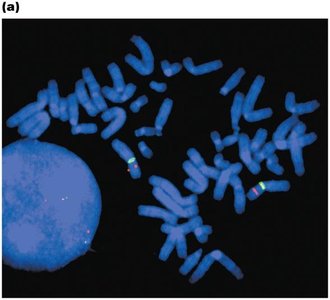
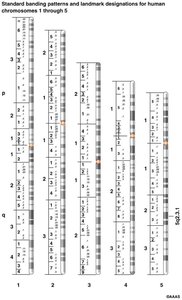
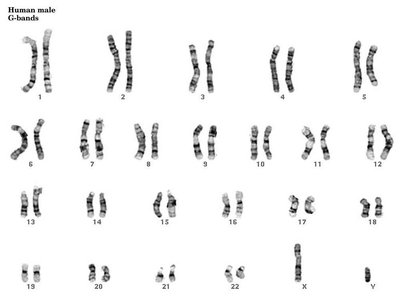
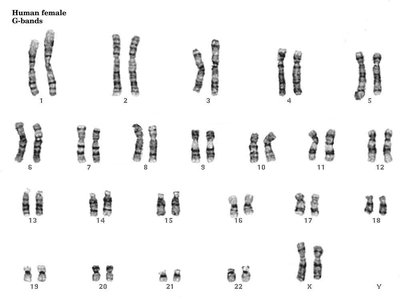
Chromosome structure can be visualized using staining techniques such as G-banding (Giemsa stain), which produces reproducible patterns for identifying chromosomal regions and abnormalities.
Deletions and Duplications
Structural changes include deletions (loss of chromosomal segments) and duplications (repetition of segments). These can be detected cytogenetically if large enough.
Terminal Deletion: Loss of an end segment; example: cri-du-chat syndrome (chromosome 5).
Interstitial Deletion: Loss of an internal segment; example: WAGR syndrome (chromosome 11).
Unequal Crossover: Can result in partial duplication on one homolog and partial deletion on the other.
Inversions and Translocations
Chromosome breakage can lead to inversions (reversal of a segment) or translocations (attachment to a nonhomologous chromosome). These can disrupt gene function or cause problems during meiosis.
Paracentric Inversion: Centromere is outside the inverted region.
Pericentric Inversion: Centromere is within the inverted region.
Translocations: Can be unbalanced, reciprocal balanced, or Robertsonian (chromosome fusion).
Transposable Elements
Definition and Mechanisms
Transposable elements (TEs) are DNA sequences that can move within the genome via transposition, often causing mutations or altering gene expression.
Class I (Retrotransposons): Move via an RNA intermediate ('copy and paste'). Examples: LINEs, SINEs.
Class II (DNA Transposons): Move via a DNA intermediate ('cut and paste'). Examples: Ac/Ds elements in maize.
Autonomous vs. Non-autonomous: Autonomous TEs encode the enzymes needed for their movement; non-autonomous rely on other TEs.
Evolutionary Consequences of Duplications
Gene Duplication and Genome Evolution
Gene duplication is a major driver of evolutionary innovation. Duplicated genes can accumulate mutations, leading to new functions (neo-functionalization) or division of labor (sub-functionalization). Many duplicated genes become pseudogenes.
Pseudogenes: Nonfunctional gene copies resulting from mutation accumulation.
Paralogs: Functional gene copies within the same genome, often with divergent roles.
Example: Vertebrate globin gene family arose from duplication and divergence of an ancestral gene.
