 Back
BackChromosome Aberrations and Transposition: Study Notes for Genetics Students
Study Guide - Smart Notes
 Tailored notes based on your materials, expanded with key definitions, examples, and context.
Chromosome Number and Structure: Aberrations and Transposition
Introduction
Chromosome aberrations involve changes in chromosome number and structure, which can have profound effects on phenotype, development, and evolution. This module covers the mechanisms and consequences of aneuploidy, euploidy, structural changes, and transposable elements, integrating key concepts from Chapters 10 and 11 of a genetics curriculum.
Change in Chromosome Number
Nondisjunction and Its Consequences
Nondisjunction is the failure of homologous chromosomes or sister chromatids to separate properly during cell division, resulting in daughter cells with abnormal chromosome numbers. This can occur in both mitosis and meiosis, leading to genetic disorders and variation.
Nondisjunction in Meiosis I: Homologous chromosomes fail to separate.
Nondisjunction in Meiosis II: Sister chromatids fail to separate.
Result: Gametes may have n+1 or n-1 chromosomes, leading to aneuploidy in offspring.
Aneuploidy
Definition and Types
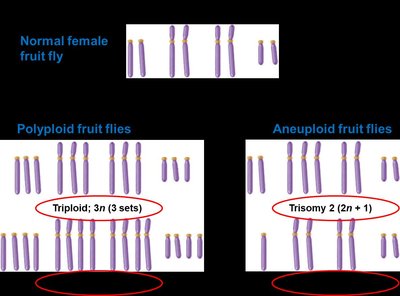
Aneuploidy refers to the presence of an abnormal number of chromosomes in a cell, differing by one or more chromosomes from the normal set. Common types include trisomy (three copies of a chromosome) and monosomy (one copy).
Trisomy: Example: Down syndrome (trisomy 21).
Monosomy: Example: Turner syndrome (XO).
Gene Dosage Effects: Altered gene dosage leads to abnormal phenotypes due to imbalance in gene products.
Phenotypic Effects and Examples
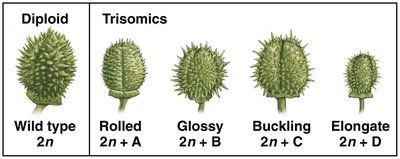
Aneuploidy can affect both autosomes and sex chromosomes, often resulting in severe genetic imbalance and abnormal phenotypes. Plants tolerate aneuploidy better than animals.
Human Aneuploidy: Leading cause of congenital birth defects and miscarriages.
Jimson Weed: Trisomics for each chromosome show distinct phenotypes.
Dosage Effects
Gene dosage is critical; missing chromosomes result in 50% of normal gene product concentration, while extra chromosomes result in 150%.
Survivable Human Aneuploidies
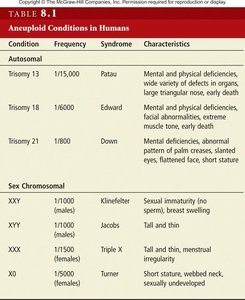
Some aneuploidies are survivable, such as Down syndrome, Klinefelter syndrome, and Turner syndrome. The frequency and characteristics of these conditions are summarized below.
Condition | Frequency | Syndrome | Characteristics |
|---|---|---|---|
Trisomy 13 | 1/15,000 | Patau | Mental and physical deficiencies, organ defects, early death |
Trisomy 18 | 1/6,000 | Edward | Mental and physical deficiencies, facial abnormalities, early death |
Trisomy 21 | 1/800 | Down | Mental deficiencies, abnormal palm creases, facial features |
XXY | 1/1,000 (males) | Klinefelter | Sexual immaturity, breast swelling |
XYY | 1/1,000 (males) | Jacobs | Tall and thin |
XXX | 1/1,000 (females) | Triple X | Tall and thin, menstrual irregularity |
XO | 1/2,000 (females) | Turner | Short stature, webbed neck, sexual underdevelopment |
Phenotypic Manifestations
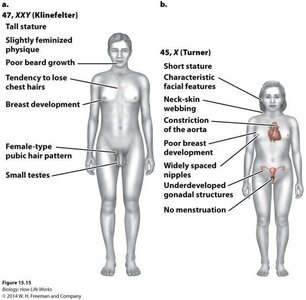
Physical characteristics of syndromes such as Klinefelter and Turner are illustrated below.
Population Frequency
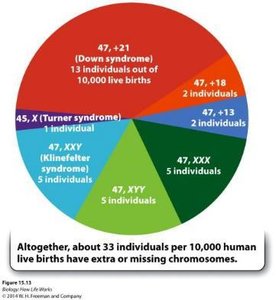
About 33 individuals per 10,000 live births have extra or missing chromosomes, with Down syndrome being the most common.
Mosaicism
Definition and Mechanism
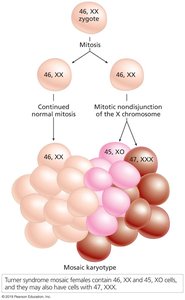
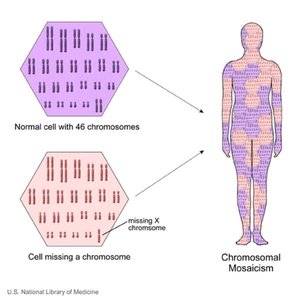
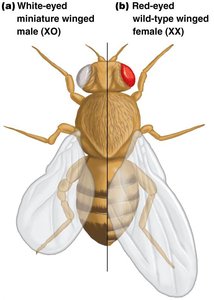
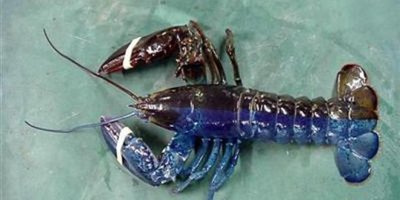
Mosaicism arises when mitotic nondisjunction occurs early in embryogenesis, resulting in an individual with two or more cell lines with different chromosome numbers. This is common in Turner syndrome and can lead to gynandromorphs in insects.
Turner Syndrome Mosaicism: Mix of 45 XO, 46 XX, and sometimes 47 XXX cells.
Gynandromorphs: Individuals with both male and female characteristics, often split bilaterally.


Euploidy and Polyploidy
Definition and Types
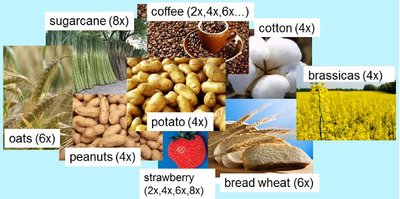
Euploidy refers to the presence of complete sets of chromosomes. Polyploidy is the condition of having more than two complete sets, common in plants and some animals.
Diploid (2n): Two complete sets.
Triploid (3n): Three complete sets.
Tetraploid (4n): Four complete sets.
Polyploidy: Most common in plants; rare in mammals.
Autopolyploidy
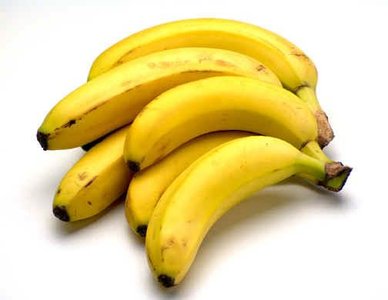
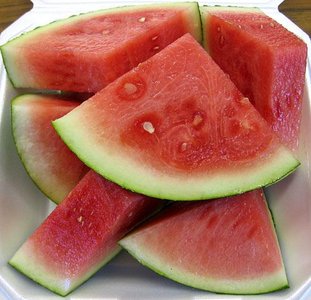
Autopolyploids arise from chromosome set duplications within a single species. Examples include tetraploid alfalfa, peanuts, potatoes, coffee, and triploid bananas and watermelons.
Mechanisms: Multiple fertilizations, meiotic or mitotic nondisjunction.
Allopolyploidy
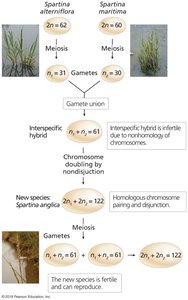
Allopolyploids result from hybridization between different species, followed by chromosome doubling. This process can create new species, as seen in cultivated wheat.
Initial Infertility: Due to non-homology of chromosomes.
Chromosome Doubling: Restores fertility by allowing homologous pairing.
Changes in Chromosome Structure
G-banding (Giemsa Banding)
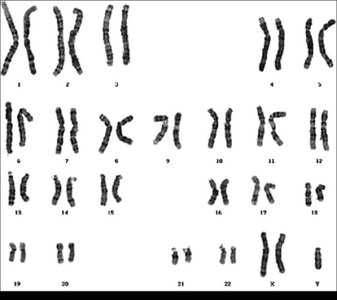
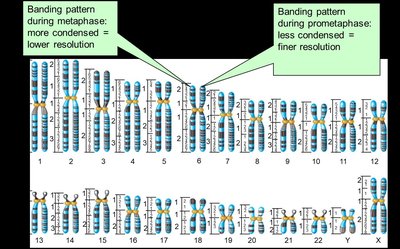
G-banding uses Giemsa stain to produce characteristic banding patterns on chromosomes, aiding in identification and detection of structural abnormalities.
Dark Bands (G-bands): Regions rich in AT base pairs.
Light Bands (R-bands): Regions rich in GC base pairs.
Band Numbering: Used to identify specific chromosome regions.
Deletions and Duplications
Chromosome breakage can lead to deletions (loss of segments) or duplications (gain of segments). Deletions can be terminal (end of chromosome) or interstitial (internal segment).
Partial Deletion Heterozygotes: One normal and one deleted chromosome.
Examples: Cri-du-chat syndrome (terminal deletion on chromosome 5), WAGR syndrome (interstitial deletion on chromosome 11).
Unequal Crossover
Unequal crossover between homologous chromosomes can result in partial duplication on one chromosome and partial deletion on the other, often involving repetitive regions.
Inversions and Translocations
Chromosome inversions and translocations are structural rearrangements resulting from breakage and incorrect reattachment.
Inversions: Paracentric (centromere outside inverted region), Pericentric (centromere within inverted region).
Translocations: Reciprocal balanced, unbalanced, and Robertsonian (chromosome fusion).
Consequences: May cause semi-sterility due to abnormal segregation during meiosis.
Transposable Elements
Definition and Mechanism
Transposable elements (TEs) are DNA sequences capable of moving within the genome via transposition, often disrupting gene function. They are classified by mechanism and autonomy.
Class I (Retrotransposons): Copy-and-paste mechanism via RNA intermediate.
Class II (DNA Transposons): Cut-and-paste mechanism, no RNA intermediate.
Autonomous vs. Non-autonomous: Autonomous TEs can move independently; non-autonomous require other TEs.
Bacterial Transposable Elements
Bacterial transposons are mostly Class II, carrying transposase genes. Simple transposons (insertion sequences) and composite transposons (with additional genes, often antibiotic resistance) are common.
Eukaryotic Transposable Elements
Eukaryotes carry both Class I and II TEs, with extensive proliferation in larger genomes. LINEs and SINEs are major contributors to the human genome.
Maize Transposable Elements (Ds and Ac)
Barbara McClintock discovered transposable elements in maize, showing how Ac activates Ds transposition, leading to chromosome breakage and phenotypic variation.
Evolutionary Consequences of Duplications
Gene Duplication and Divergence
Gene duplication can occur via nondisjunction, repetitive region replication, or transposable elements. Duplicated genes may become pseudogenes or acquire new functions (neo-functionalization) or divided functions (sub-functionalization).
Pseudogenes: Nonfunctional gene copies.
Paralogs: Functional gene copies within the same genome.
Example: Vertebrate globin gene family, arising from duplication and divergence.
Summary
Chromosome number and structure are dynamic and subject to change.
Aneuploidy and polyploidy have significant effects on phenotype and evolution.
Structural changes and transposable elements contribute to genetic diversity and genome evolution.
