 Back
BackChromosome Mapping in Eukaryotes: Principles, Methods, and Applications
Study Guide - Smart Notes
 Tailored notes based on your materials, expanded with key definitions, examples, and context.
Chromosome Mapping in Eukaryotes
Introduction to Chromosome Mapping
Chromosome mapping is a fundamental technique in genetics that determines the relative positions of genes on chromosomes. It relies on the principles of linkage and recombination, which are observed during meiosis. Mapping helps understand gene inheritance, genetic variation, and the basis of many genetic disorders.
Genes on the same chromosome usually segregate together unless separated by crossing over.
Crossing over during meiosis provides a way to measure the distance between genes.
Multiple crossovers are analyzed to determine gene order and map accuracy.
Modern mapping uses DNA markers for precise gene localization.
Chromosomes as Units of Inheritance
Chromosomes, not individual genes, are the primary units passed on during meiosis. Linked genes on the same chromosome do not assort independently, affecting inheritance patterns.
Linked genes are inherited together unless crossing over occurs.
Chromosome maps show the relative positions of genes based on recombination frequencies.
Linkage, Crossing Over, and Mapping
Linkage and crossing over are key concepts in chromosome mapping. Linked genes are close together on the same chromosome and tend to be inherited together. Crossing over between homologous chromosomes during meiosis produces recombinant genotypes, which are used to estimate gene distances.
Independent assortment: Genes on different chromosomes segregate independently, producing a full mix of possible gametes.
Complete linkage: Genes very close together on the same chromosome do not undergo crossing over, resulting in only parental gametes.
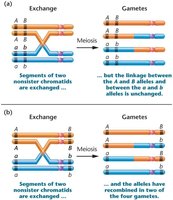
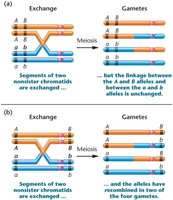
Linkage with crossing over: Occurs between nonsister chromatids, producing both parental and recombinant gametes.
Recombination frequency: Reflects the distance between genes; higher frequency indicates greater distance.
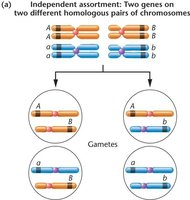
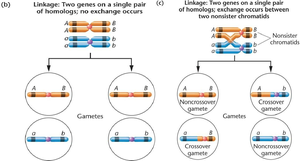
Meiotic Consequences: Complete Linkage and Crossing Over
Meiotic processes such as independent assortment and crossing over determine genetic variation in offspring. The type and frequency of gametes produced help map the relative positions of genes.
Complete linkage: No crossing over; only parental gametes produced.
Linkage with crossing over: Both parental and recombinant gametes produced.
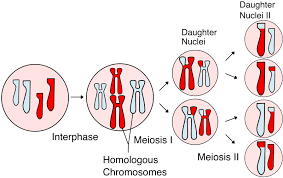
Crossing Over as the Basis for Chromosome Mapping
Crossing over creates recombinant gametes, and the frequency of recombination reflects the distance between genes. Chiasmata are X-shaped intersections where genetic exchange occurs between non-sister chromatids.
Chiasmata: Sites of genetic exchange during meiosis.
Recombination frequency: Used to build chromosome maps; higher frequency means genes are farther apart.
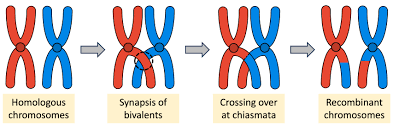
Map Units and Recombination Frequency
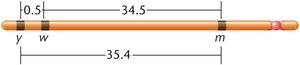
Map units (mu or cM) measure the recombination frequency between genes. One map unit equals 1% recombination, indicating relative distance on a chromosome.
Map units: 1% recombination = 1 map unit (centiMorgan).
Gene proximity: Map units indicate how close genes are, not their exact physical distance.
Single Crossovers (SCO)
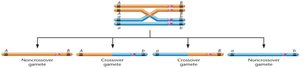
Single crossovers occur between two non-sister chromatids during meiosis, producing both parental and recombinant gametes. The frequency of single crossovers helps estimate gene distances.
Single crossover: Produces 2 parental and 2 recombinant gametes.
Linked genes: If close, single crossover rarely separates them; mostly parental gametes produced.
Distant genes: If far apart, most tetrads experience crossing over, increasing genetic variation.
Multiple Crossovers and Gene Sequence Determination
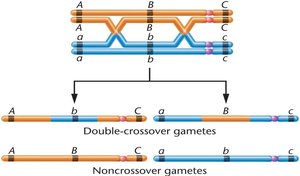
Multiple crossovers, such as double crossovers (DCO), involve two separate exchanges of genetic material. DCOs help determine the order and distances of three linked genes on a chromosome.
Double crossover: Rare, produces the smallest proportion of offspring.
Noncrossover phenotypes: Most common, reflect parental gene combinations.
Gene Distance, Mapping Accuracy, and Interference
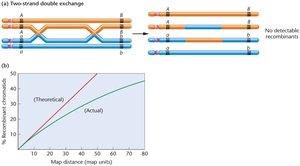
As the distance between two genes increases, the chance of multiple crossovers rises, making mapping estimates less accurate. Interference occurs when a crossover in one region inhibits another nearby crossover.
Undetected crossovers: Far-apart genes may undergo crossovers that cancel each other, hiding recombination events.
Interference: Reduces multiple crossover events; measured by the coefficient of coincidence (C).
Coefficient of coincidence (C):
Interference (I):
Complete interference: No double crossovers occur.
Positive interference: Fewer double crossovers than expected (I > 0).
Negative interference: More double crossovers than expected (I < 0).
Modern Chromosome Mapping: DNA Markers and Databases
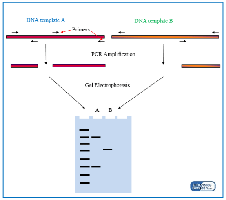
Modern chromosome mapping uses DNA markers and annotated computer databases for precise gene localization. DNA markers are short, known DNA sequences used as landmarks.
RFLPs (Restriction Fragment Length Polymorphisms): DNA segments cut by restriction enzymes; variations used to track inheritance.
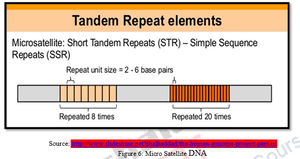
Microsatellites: Short, repeated DNA sequences; highly variable, useful as genetic landmarks.
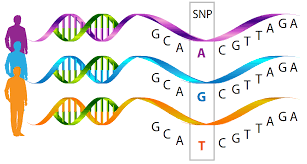
SNPs (Single-Nucleotide Polymorphisms): Single base changes; common, used to identify genes and study inheritance.
Applications: Identify gene locations, study genetic relationships, screen for diseases.
Example: Mapping the Cystic Fibrosis Gene
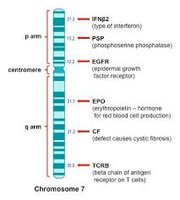
Cystic fibrosis is a life-shortening autosomal recessive disorder. The gene responsible was located on chromosome 7 using DNA markers, demonstrating the power of modern mapping techniques.
Example: Bloom Syndrome and Chromosome Mapping
Chromosome mapping identified the BLM gene as responsible for Bloom syndrome, a human genetic disorder caused by mutations in the BLM gene on chromosome 15. Symptoms include growth retardation, excessive sister chromatid exchanges (SCEs), and chromosomal translocations. The BLM gene encodes DNA helicase, essential for DNA replication.
Chromosome-damaging agents: Increase SCEs, especially frequent in Bloom syndrome.
Summary Table: Types of DNA Markers
Marker Type | Description | Application |
|---|---|---|
RFLP | Restriction sites cut by enzymes; polymorphisms tracked | Gene mapping, inheritance studies |
Microsatellite | Short, repeated DNA sequences | Genetic landmarks, population studies |
SNP | Single base changes in DNA | Gene identification, disease screening |
Key Equations
Coefficient of coincidence:
Interference:
Conclusion
Chromosome mapping is essential for understanding gene inheritance, genetic variation, and the basis of genetic disorders. Modern techniques using DNA markers have revolutionized gene localization and disease gene identification. Study chromosome mapping principles, recombination frequencies, and marker types for a comprehensive understanding of genetic analysis in eukaryotes.
