Back
BackChromosome Mutations: Variation in Number and Arrangement
Study Guide - Smart Notes
 Tailored notes based on your materials, expanded with key definitions, examples, and context.
Chromosome Mutations: Variation in Number and Arrangement
Introduction to Chromosomal Modifications
Phenotypic variations in organisms can result from modifications at the chromosome level. These chromosomal aberrations include changes in chromosome number, deletions or duplications of genes or chromosome segments, and rearrangements of genetic material within or among chromosomes. Such changes can lead to phenotypic variation and may sometimes be lethal.
Variation in Chromosome Number
Aneuploidy, Euploidy, and Polyploidy
Aneuploidy: The gain or loss of one or more chromosomes, but not a complete set. Examples include monosomy (2n - 1) and trisomy (2n + 1).
Euploidy: The presence of complete haploid sets of chromosomes (multiples of n).
Polyploidy: More than two sets of chromosomes are present (e.g., triploidy 3n, tetraploidy 4n).
Term | Explanation |
|---|---|
Aneuploidy | 2n plus or minus x chromosomes |
Monosomy | 2n - 1 |
Disomy | 2n |
Trisomy | 2n + 1 |
Tetrasomy, pentasomy, etc. | 2n + 2, 2n + 3, etc. |
Euploidy | Multiples of n |
Diploidy | 2n |
Polyploidy | 3n, 4n, 5n, ... |
Autopolyploidy | Multiples of the same genome |
Allopolyploid (amphidiploid) | Multiples of closely related genomes |
Monosomy
Loss of one chromosome (2n - 1) can have severe phenotypic effects.
Monosomy for the X chromosome occurs in humans (Turner syndrome).
Monosomy for autosomes is usually not tolerated in humans and animals but is better tolerated in plants.
Haploinsufficiency: A single copy of a recessive gene is insufficient to provide life-sustaining function.
Trisomy
Trisomy (2n + 1) is generally more viable than monosomy, especially if the extra chromosome is small.
Trisomic plants are viable but may show altered phenotypes (e.g., Datura, rice).
Down Syndrome: Trisomy 21
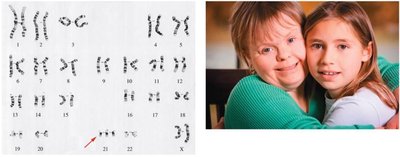
Down syndrome (47, 21+) is caused by trisomy of chromosome 21.
Individuals express 6–8 out of 12–14 possible characteristics, including a prominent epicanthic fold, flat face, short stature, cognitive disabilities, and poor muscle tone.
Average life span is about 50 years.
Down Syndrome Critical Region (DSCR)
DSCR is a region on chromosome 21 containing dosage-sensitive genes responsible for many Down syndrome phenotypes.
Extra copy of DSCR1 is associated with decreased risk of some cancers due to suppression of vascular endothelial growth factor (VEGF) and inhibition of angiogenesis.
Origin of the Extra Chromosome in Down Syndrome
Most cases result from nondisjunction during meiosis, usually in the ovum.
Risk increases with maternal age.
Other Human Aneuploidies
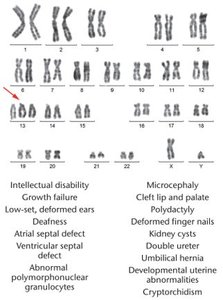
Patau syndrome (47, 13+), Edwards syndrome (47, 18+): Both are trisomies with severe malformations and early lethality.
About 20% of all conceptions terminate in spontaneous abortion, with 30% of these showing chromosomal imbalance.
Polyploidy
Types and Origins of Polyploidy
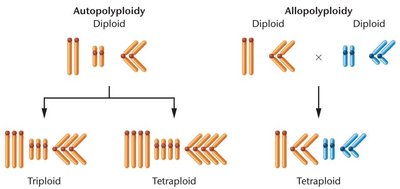
Polyploidy involves more than two sets of chromosomes and is common in plants but rare in animals.
Arises when chromosomes replicate but the parent cell fails to divide, or through hybridization between species.
Autopolyploidy: Addition of chromosome sets identical to the same species.
Allopolyploidy: Combination of chromosome sets from different species (hybridization).
Induction of Polyploidy
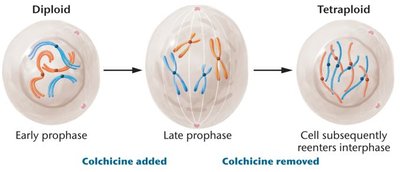
Tetraploid cells can be produced experimentally by applying colchicine, which interferes with spindle formation during mitosis.
Amphidiploid and Allotetraploid Plants
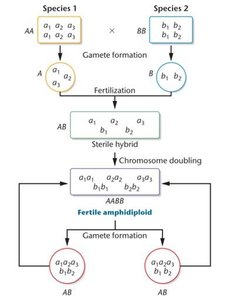
Amphidiploids are fertile hybrids with two complete diploid genomes from different species.
Examples include Gossypium (cotton) and Triticale (wheat-rye hybrid).

Chromosome Structure: Composition and Arrangement
Types of Chromosome Aberrations
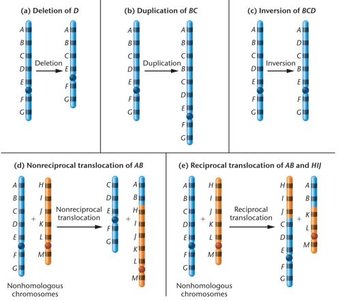
Aberrations include deletions, duplications, inversions, and translocations.
These changes can delete, add, or rearrange substantial portions of chromosomes.
Deletions
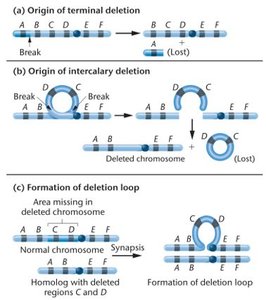
Deletions (deficiencies) are missing regions of a chromosome, which can be terminal or intercalary.
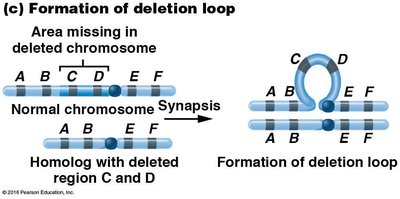
During synapsis, a deletion or compensation loop forms to allow pairing between normal and deleted chromosomes.
Cri du Chat Syndrome
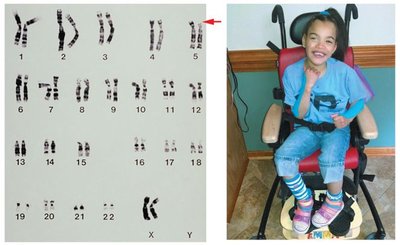
Caused by deletion of a small part of the short arm of chromosome 5 (46, 5p-).
Severity varies with the length of the deletion; not inherited but results from sporadic chromosomal loss in gametes.
Duplications
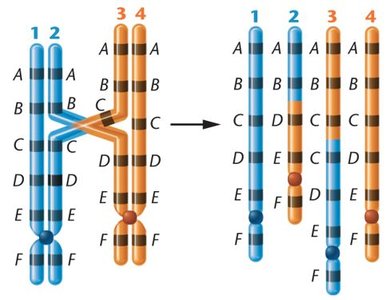
Duplications are repeated segments of chromosomes, often arising from unequal crossing over or replication errors.
They can result in gene redundancy, phenotypic variation, and serve as a source of genetic variability during evolution.
Gene Redundancy and Multigene Families
Multiple copies of genes, such as rRNA genes, are necessary for cellular function.
Multigene families are groups of contiguous genes with similar functions, such as hemoglobin and T-cell receptor genes.
Phenotypic Effects of Duplications: Bar Mutation in Drosophila
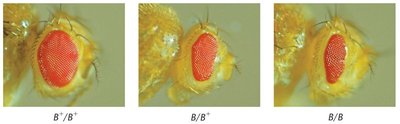
Duplications can cause phenotypic changes, such as the Bar-eye phenotype in Drosophila, where the eye shape is altered due to duplication of a region on the X chromosome.
Gene Duplication and Evolution
Gene duplication is a major mechanism for the evolution of new genes and functions.
Duplicated genes can accumulate mutations and diverge, leading to new functions that may provide adaptive advantages.
Copy Number Variants (CNVs)
CNVs are variations in the number of copies of a particular gene or genomic region among individuals.
They can be associated with diseases such as autism, diabetes, and cardiovascular disease.
Inversions
Types and Consequences of Inversions
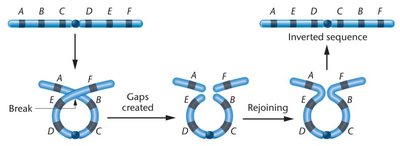
Inversions are chromosomal aberrations where a segment is reversed within the chromosome.
They require two breaks and reinsertion of the inverted segment.
Paracentric inversion: Does not include the centromere.
Pericentric inversion: Includes the centromere.
Inversion Heterozygotes and Gamete Formation
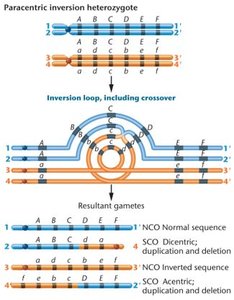
Inversion heterozygotes have one inverted and one normal chromosome; pairing requires an inversion loop.
Single crossover within the loop can produce dicentric (two centromeres) and acentric (no centromere) chromatids, leading to abnormal gametes.

Translocations
Types and Effects of Translocations
Translocation is the movement of a chromosomal segment to a new location in the genome.
Reciprocal translocation: Exchange of segments between two nonhomologous chromosomes; genetic information is rearranged but not lost or gained.
Heterozygotes for reciprocal translocations can produce genetically unbalanced gametes due to abnormal synapsis and segregation during meiosis.
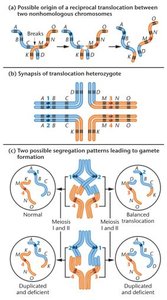

Segregation Pattern | Result |
|---|---|
Alternate segregation | Normal and balanced gametes |
Adjacent segregation | Gametes with duplications and deficiencies |
Semisterility
Semisterility results from the production of genetically unbalanced gametes, reducing reproductive fitness and influencing evolution.
Can lead to partial monosomy or trisomy, causing physical and biochemical abnormalities at birth.
Fragile Sites and Fragile-X Syndrome
Fragile Sites
Fragile sites are regions on chromosomes that appear as gaps or unstained areas, susceptible to breakage under certain conditions (e.g., folic acid deficiency).
Associated with intellectual disability and cancer.
Fragile-X Syndrome
Caused by a folate-sensitive site on the X chromosome.
Most common inherited form of intellectual disability, affecting more males than females.