 Back
BackChromosome Mutations: Variation in Number and Arrangement
Study Guide - Smart Notes
 Tailored notes based on your materials, expanded with key definitions, examples, and context.
Chromosome Mutations: Variation in Number and Arrangement
Introduction
Chromosome mutations, also known as chromosome aberrations, are large-scale changes in the structure or number of chromosomes. These mutations can result in significant phenotypic variations and are a major source of genetic diversity and disease. Chromosome mutations include changes in chromosome number (aneuploidy and polyploidy) and changes in chromosome structure (deletions, duplications, inversions, and translocations).
Variation in Chromosome Number
Terminology and Origin
Aneuploidy: The gain or loss of one or more chromosomes, but not a complete set. Examples include monosomy (loss of a single chromosome) and trisomy (gain of a single chromosome).
Euploidy: The presence of complete sets of chromosomes. Normal diploid organisms are euploid.
Polyploidy: The presence of more than two complete sets of chromosomes (e.g., triploid = 3n, tetraploid = 4n).
Chromosome number variations can arise from errors during cell division, particularly nondisjunction, where homologous chromosomes or sister chromatids fail to separate properly during meiosis or mitosis.
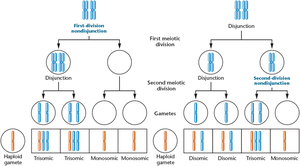
Nondisjunction
Nondisjunction is a major cause of aneuploidy. It can occur during the first or second meiotic division, resulting in gametes with abnormal chromosome numbers. Fertilization involving these gametes leads to zygotes with monosomy or trisomy.
Monosomy and Trisomy: Phenotypic Effects
Monosomy
Definition: Loss of a single chromosome (2n - 1).
Effects: Often lethal, especially in animals, because the single remaining copy may not be sufficient for normal function (haploinsufficiency) and may unmask recessive lethal alleles.
Trisomy
Definition: Gain of a single chromosome (2n + 1).
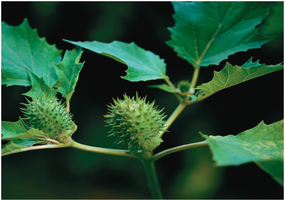
Effects: Trisomies can alter the phenotype and are often lethal in animals, but some plant trisomies are viable. Example: Datura stramonium (jimson weed) shows altered phenotypes due to trisomy.
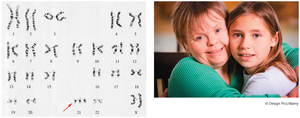
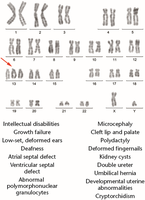
Trisomy 21—Down Syndrome
Cause: Trisomy of chromosome 21 (three copies of chromosome 21).
Phenotype: Individuals express 6 to 8 out of 12–14 characteristic features, including intellectual disability and distinctive facial features.
Origin of Extra 21st Chromosome
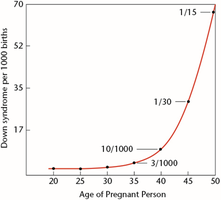
Most cases result from nondisjunction during meiosis, usually in the ovum.
The risk increases with maternal age.
Other Human Aneuploidies
Patau syndrome (trisomy 13): Severe developmental issues, early lethality.
Edwards syndrome (trisomy 18): Severe developmental issues, early lethality.
Polyploidy in Plants
Definition and Types
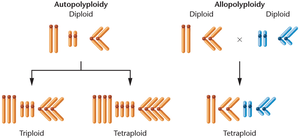
Polyploidy: More than two sets of chromosomes (e.g., triploid = 3n, tetraploid = 4n, pentaploid = 5n).
Autopolyploidy: Chromosome sets are all from the same species.
Allopolyploidy: Chromosome sets come from different species, usually via hybridization.
Origin of Polyploidy
Autopolyploids can arise from nondisjunction or the fusion of diploid gametes.
Allopolyploids result from hybridization between species, followed by chromosome doubling.
Autotetraploids
More likely to be found in nature than autotriploids due to even chromosome numbers, which allow for balanced gamete formation.
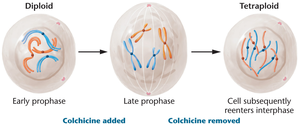
Can be experimentally induced using colchicine, which prevents chromosome separation during mitosis.
Allotetraploid and Amphidiploid
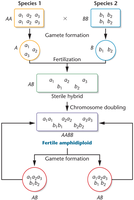
Allotetraploid: Polyploid with four haploid genomes from different species.
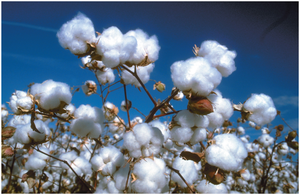
Amphidiploid: Allotetraploid where both parental species are known; often fertile and found in nature (e.g., cotton plant, Gossypium).
Endopolyploidy
Condition where only certain cells in a diploid organism are polyploid due to repeated chromosome replication without nuclear division.
Can occur in specialized tissues or in cancer cells.
Variation in Chromosome Structure
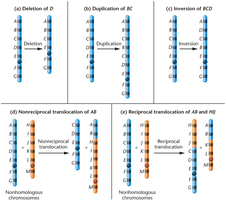
Types of Chromosome Rearrangements
Deletions: Loss of a chromosome segment.
Duplications: Repetition of a chromosome segment.
Inversions: Reversal of a chromosome segment.
Translocations: Movement of a chromosome segment to a new location.
Deletions
Can be terminal (end of chromosome) or intercalary (interior of chromosome).
During meiosis, a compensation loop forms to allow synapsis between a normal and a deleted chromosome.
Example: Cri du chat syndrome results from a terminal deletion on chromosome 5, causing severe developmental anomalies.
Duplications
Arise from unequal crossing over during meiosis.
Can result in gene redundancy (e.g., multiple rRNA gene copies) and gene amplification.
Example: Bar mutation in Drosophila (fruit fly) leads to narrow, slit-like eyes due to duplication.
Gene duplication is a major source of evolutionary innovation, as seen in gene families like trypsin and chymotrypsin.
Copy number variants (CNVs) are large duplicated or deleted DNA segments that affect gene expression and phenotypic traits.
Inversions
Segment of chromosome is reversed end to end.
Requires two breaks and reinsertion of the inverted segment.
Types:
Paracentric inversion: Does not include the centromere.
Pericentric inversion: Includes the centromere.
Inversion loops form during meiosis in inversion heterozygotes, affecting recombination and gamete viability.
Translocations
Reciprocal translocation: Exchange of segments between two nonhomologous chromosomes. Can lead to semisterility due to unbalanced gametes.
Robertsonian translocation: Fusion of two acrocentric chromosomes, resulting in a large metacentric chromosome and loss of small fragments. Example: familial Down syndrome.
Fragile Sites in Human Chromosomes
Fragile Sites
Regions of chromosomes prone to breakage, especially under certain culture conditions (e.g., folic acid deficiency).
Associated with nontightly coiled chromatin.
Fragile-X Syndrome
Most common inherited intellectual disability; caused by expansion of trinucleotide repeats in the FMR1 gene on the X chromosome.
Exhibits genetic anticipation: the number of repeats increases in successive generations, worsening the phenotype.
Carrier status: 55–230 repeats; syndrome status: over 230 repeats.
Fragile Sites and Cancer
Some fragile sites are associated with cancer, such as the FHIT gene at FRA3B, which is often altered or missing in lung cancer cells.
