 Back
BackChromosome Structure, DNA Organization, and Gene Expression
Study Guide - Smart Notes
 Tailored notes based on your materials, expanded with key definitions, examples, and context.
Chromosome Structure and DNA Organization
Introduction to Chromosome Structure
Chromosomes are highly organized structures composed of DNA and associated proteins. Their organization is essential for the storage, expression, and transmission of genetic information. The study of chromosome structure spans viral, bacterial, and eukaryotic systems, each with unique features and mechanisms for DNA packaging.
Viral and Bacterial Chromosomes
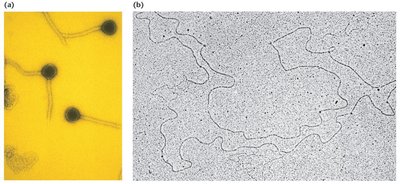
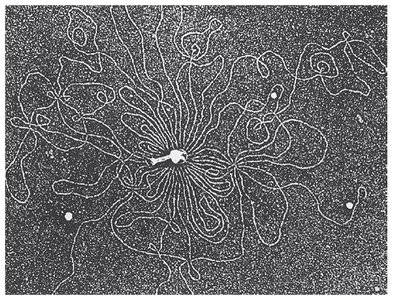
Viral Chromosomes: Consist of either DNA or RNA, which may be single-stranded (ss) or double-stranded (ds), and can be linear or circular. Viral genomes are compact and lack extensive protein association.
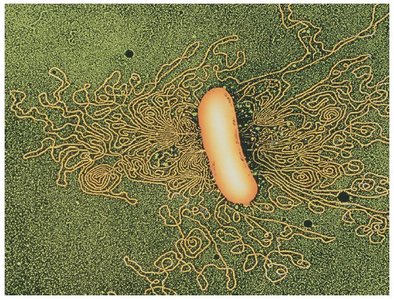
Bacterial Chromosomes: Typically circular, double-stranded DNA molecules compacted into a region called the nucleoid. DNA-binding proteins such as HU and H-NS facilitate DNA folding and compaction.
Genetic Material Packaging: Both viruses and bacteria have evolved mechanisms to package long DNA molecules into small volumes, similar to eukaryotic cells.
Mitochondrial and Chloroplast DNA
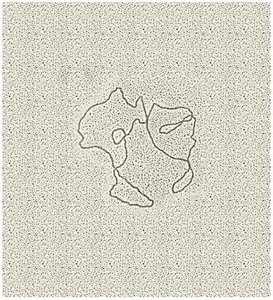
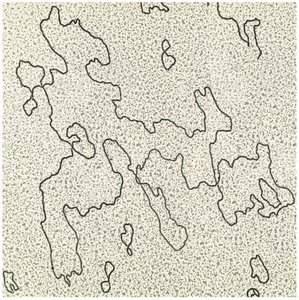
Mitochondrial DNA (mtDNA): Exists as a double-stranded closed circle, lacks chromosomal proteins, and contains few or no introns. Replication depends on nuclear-encoded enzymes.
Chloroplast DNA (cpDNA): Also circular and double-stranded, but larger than mtDNA and contains more genes, including introns and duplications. Both organellar DNAs are inherited maternally in most organisms and share similarities with prokaryotic genomes.
Specialized Chromosomes: Polytene and Lampbrush Chromosomes
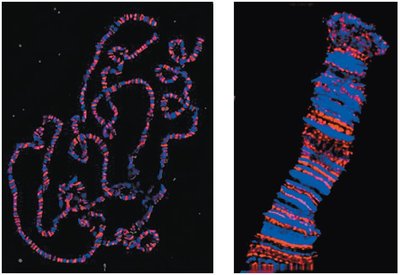
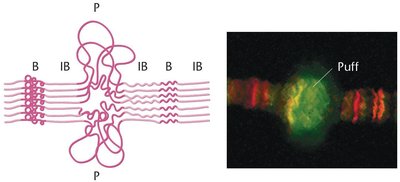
Polytene Chromosomes: Found in certain tissues (e.g., Drosophila salivary glands), these chromosomes are large, paired homologs with visible banding patterns (chromomeres). They undergo multiple rounds of DNA replication without cell division, resulting in puff regions that indicate active transcription.
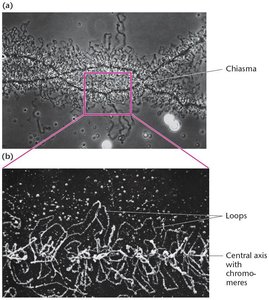
Lampbrush Chromosomes: Observed in oocytes of vertebrates and some insects, these meiotic chromosomes are characterized by extensive DNA looping, which facilitates high levels of transcription during oogenesis.
Chromatin Structure and Nucleosomes
Chromatin Organization
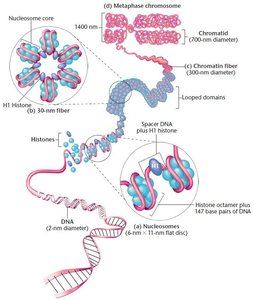
In eukaryotes, DNA is packaged into chromatin, a complex of DNA and proteins. During interphase, chromatin is dispersed and accessible for replication and transcription. During cell division, it condenses into visible chromosomes.
Histones and Nucleosomes
Histones: Positively charged proteins (H1, H2A, H2B, H3, H4) that bind DNA via electrostatic interactions, facilitating compaction.
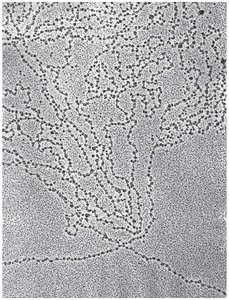
Nucleosomes: The basic unit of chromatin, consisting of DNA wrapped around a histone octamer. Nucleosomes appear as "beads on a string" under electron microscopy.
Chromatin Remodeling and Histone Modifications
Chromatin Remodeling: Dynamic changes in chromatin structure regulate DNA accessibility for replication, repair, and gene expression. Remodeling involves repositioning or removal of nucleosomes.
Histone Modifications: Chemical modifications (acetylation, methylation, phosphorylation) of histone tails alter chromatin structure and gene expression. These modifications are reversible and play key roles in epigenetic regulation.
Feature | Histone Acetylation | Histone Methylation | Histone Phosphorylation |
|---|---|---|---|
Group added | Acetyl | Methyl | Phosphate |
Target amino acids | Mainly Lysine | Lysine & Arginine | Serine, Threonine, Tyrosine |
Charge effect | Neutralizes positive charge | No change | Adds negative charge |
Effect on chromatin | Loosens (euchromatin) | Context-dependent | Often loosens |
Effect on gene expression | Activates | Activates or represses | Often activates |
Enzymes | HATs/HDACs | Methyltransferases/Demethylases | Kinases/Phosphatases |
Reversibility | Yes | Yes | Yes |
Key role | Gene activation | Gene regulation | Cell cycle, DNA damage response |
Euchromatin and Heterochromatin
Euchromatin: Less condensed, transcriptionally active, and stains lightly during interphase.
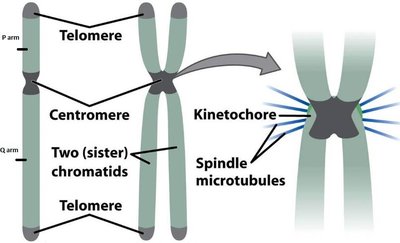
Heterochromatin: Highly condensed, transcriptionally inactive, and stains darkly. Includes telomeres and centromeres, which are essential for chromosome stability and segregation.
Repetitive DNA and Genome Organization
Types of Repetitive DNA
Satellite DNA: Highly repetitive sequences, often found in centromeric regions, with distinct density properties.
VNTRs and STRs: Variable number tandem repeats and short tandem repeats are moderately repetitive and used in DNA fingerprinting.
SINEs and LINEs: Short and long interspersed elements are mobile sequences dispersed throughout the genome, often derived from retrotransposons.
Pseudogenes: Nonfunctional gene copies that have accumulated mutations and are not transcribed.
The Genetic Code and Transcription
Features of the Genetic Code
Triplet Code: Each amino acid is encoded by a sequence of three nucleotides (codon).
Degeneracy: Most amino acids are specified by more than one codon.
Start and Stop Codons: AUG (methionine) is the initiator; UAA, UAG, and UGA are termination codons.
Universality: The genetic code is nearly universal, with minor exceptions in mitochondrial genomes.
Transcription in Prokaryotes and Eukaryotes
Prokaryotic Transcription: RNA polymerase binds to promoter regions (e.g., Pribnow box), synthesizes mRNA, and terminates at specific sequences or via rho factor. Polycistronic mRNAs are common.
Eukaryotic Transcription: Occurs in the nucleus, involves three RNA polymerases, and requires chromatin remodeling. mRNA undergoes capping, polyadenylation, and splicing to remove introns.
RNA Processing and Splicing
RNA Processing: Addition of a 5′ cap and 3′ poly-A tail stabilizes mRNA and facilitates translation.
Splicing: Introns are removed and exons joined by the spliceosome, which includes snRNPs. Alternative splicing allows for multiple protein isoforms from a single gene.
Translation and Protein Synthesis
Translation Mechanism
Ribosomes: Composed of rRNA and proteins, with distinct sites (A, P, E) for tRNA binding and peptide synthesis.
tRNA: Adapts codons in mRNA to specific amino acids via anticodon-codon pairing. Aminoacyl-tRNA synthetases charge tRNAs with the correct amino acid.
Stages of Translation: Initiation (assembly of ribosome and initiator tRNA), elongation (addition of amino acids), and termination (release of polypeptide at stop codon).
Protein Structure and Folding
Levels of Structure: Primary (amino acid sequence), secondary (α-helix, β-sheet), tertiary (3D conformation), and quaternary (multiple polypeptides).
Protein Folding: Assisted by chaperones; misfolding can lead to diseases such as sickle-cell anemia, Alzheimer's, and Parkinson's.
Regulation of Gene Expression in Bacteria
Operon Model
Inducible Systems: Genes are expressed only in the presence of an inducer (e.g., lac operon in response to lactose).
Repressible Systems: Genes are turned off in the presence of a corepressor (e.g., trp operon in response to tryptophan).
Positive and Negative Control: Regulatory proteins can activate (positive) or repress (negative) transcription.
Cis-acting Elements: DNA sequences adjacent to the gene cluster (e.g., operator, promoter).
Trans-acting Factors: Diffusible molecules (e.g., repressors, activators) that bind to cis-elements to regulate transcription.
Regulation of Gene Expression in Eukaryotes
Chromatin Structure and Epigenetic Regulation
Chromatin Remodeling: Nucleosome repositioning and histone modifications regulate DNA accessibility.
DNA Methylation: Addition of methyl groups to cytosine residues (CpG islands) represses gene expression.
Transcriptional Regulation
Promoters: Core and proximal elements determine the site and efficiency of transcription initiation.
Enhancers and Silencers: Cis-acting elements that increase or repress transcription, often acting at a distance via DNA looping.
Transcription Factors: Proteins that bind to DNA and modulate transcription, including general transcription factors and specific activators/repressors.
Post-Transcriptional Regulation
Alternative Splicing: Generates multiple protein isoforms from a single gene, contributing to proteomic diversity.
RNA Editing: Alters nucleotide sequences of RNA transcripts, affecting protein products.
Genomics and Bioinformatics
Genome Sequencing and Analysis
Genomics: The study of entire genomes, including sequencing, mapping, and functional analysis.
Bioinformatics: Application of computational tools to organize, analyze, and interpret genetic data.
Human Genome Project: Revealed that protein-coding sequences constitute less than 2% of the human genome, with extensive alternative splicing and repetitive DNA elements.
Applications: Disease gene identification, evolutionary studies, and personalized medicine.
Genome Editing
CRISPR-Cas Systems: Enable precise editing of genomic sequences, with applications in research, agriculture, and medicine.
