 Back
Conditional Mutants, Cre-LoxP System, and Genetic Engineering in Mouse Models
Study Guide - Smart Notes
 Tailored notes based on your materials, expanded with key definitions, examples, and context.
Gene Knockouts, Conditional Mutants, and Genome Editing
Introduction to Conditional Mutants
Conditional mutants are essential tools in genetics for studying gene function, especially when complete gene knockout leads to embryonic lethality or severe developmental defects. The Cre-LoxP system enables targeted, tissue-specific, or inducible gene deletion, allowing researchers to investigate gene roles in specific contexts.
Gene Knockout: Complete removal or inactivation of a gene, often resulting in loss-of-function phenotypes.
Conditional Mutant: A mutant in which gene inactivation occurs only under certain conditions (e.g., in specific tissues or at specific times).
Transgenic Mouse: A mouse genetically engineered to carry foreign genes or modified endogenous genes.
Cre-LoxP System: Mechanism and Application
The Cre-LoxP system is a site-specific recombination technology used to manipulate genes in mice.
Cre Recombinase: An enzyme that recognizes loxP sites and catalyzes recombination between them.
LoxP Sites: 34-base pair DNA sequences flanking the target gene or exon.
Gene Deletion: When Cre recombinase is expressed, it excises the DNA between two loxP sites, resulting in gene knockout.
Example: If a gene critical for development is knocked out and embryos fail to develop, conditional mutants allow gene study in adult tissues. 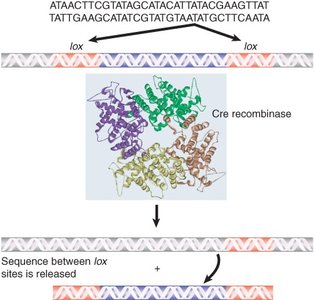
Controls in Cre-LoxP Experiments
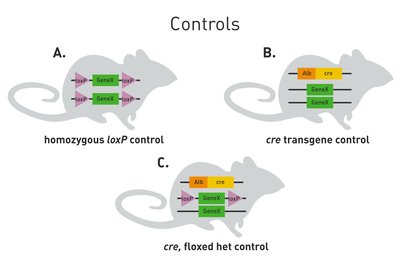
Proper controls are necessary to interpret results from Cre-LoxP experiments.
loxP Control: Mice homozygous for loxP sites but lacking Cre recombinase.
Cre Transgene Control: Mice expressing Cre recombinase but lacking loxP-flanked target gene.
Cre, Floxed Het Control: Mice heterozygous for both Cre and loxP-flanked gene.
Tissue-Specific Knockouts Using Cre-LoxP
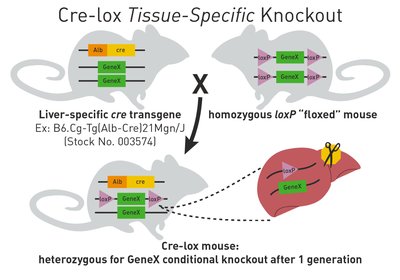
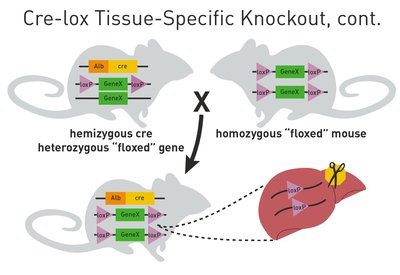
Tissue-specific knockouts are achieved by expressing Cre recombinase under a tissue-specific promoter.
Liver-Specific Knockout: Cre driven by albumin promoter deletes target gene only in liver cells.
Breeding Strategy: Cross a mouse carrying a tissue-specific Cre transgene with a mouse homozygous for loxP-flanked gene.
Result: Offspring have gene knockout only in the target tissue.
Feasibility and Limitations of Conditional Mutants
Creating conditional mutants for every gene and tissue is not feasible due to the vast number of combinations and time required.
Example Calculation: 39 tissues × 30,000 genes = over 1 million mutant animals.
Limitation: Each mutant line takes over a year to generate.
Case Study: CREB Deletion in the Hippocampus
Scientific Premise and Hypothesis
The CREB gene is involved in gene expression in the hippocampus and affects behavior related to stress.
Premise: CREB deletion results in improved behaviors and increased neurogenesis.
Hypothesis: Hippocampal CREB deletion reduces susceptibility to chronic stress.
Mouse Model Approach
Knockdown of CREB: Achieved in the hippocampus using Cre-LoxP system and viral delivery (AAV-cre).
Behavioral Changes: Increased resilience to chronic stress, decreased depressive behaviors.
Gene Expression Changes: Underlying molecular mechanisms of resilience.
Cre-LoxP Inducible System for Localized Deletion
Inducible System: Cre recombinase is delivered to the hippocampus via adeno-associated virus (AAV-cre).
Result: Localized deletion of CREB in the hippocampus.
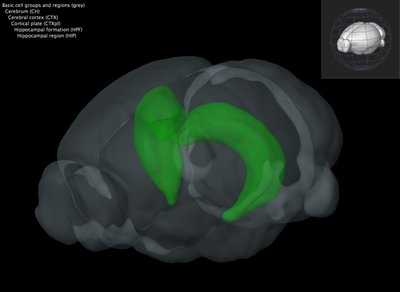

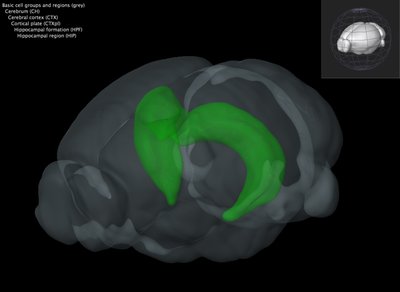
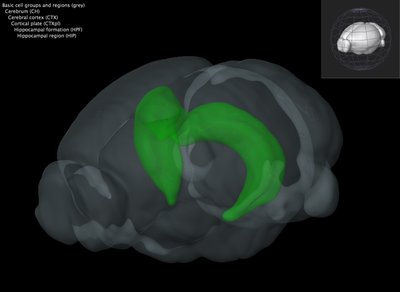
Behavioral and Molecular Effects of CREB Deletion
Decreased Shredding Behavior: CREB knockdown mice show reduced stress-induced shredding.
Increased Neurogenesis: Hippocampal CREB deletion increases neurogenesis and accelerates antidepressant response.
Translating Ribosome Affinity Purification (TRAP-seq)
TRAP-seq: Principle and Application
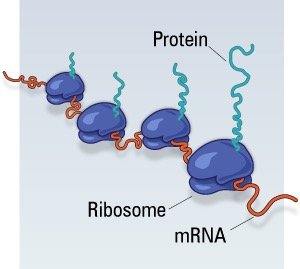
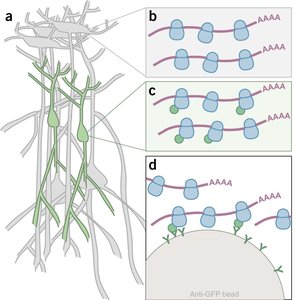
TRAP-seq is a method for isolating and sequencing mRNAs associated with ribosomes in specific cell types.
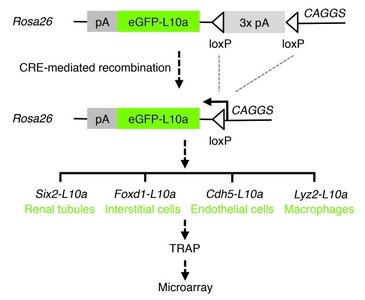
EGFP-L10a Fusion Protein: L10a ribosomal protein fused to EGFP is expressed in target cells.
Cre Recombinase: Enables cell-type specific expression of EGFP-L10a.
Magnetic Bead Isolation: Anti-EGFP antibodies on beads capture ribosomes from lysates.
Sequencing: mRNAs are purified and sequenced to analyze gene expression.
TRAP-seq in Genetic Engineering
Reporter Constructs: EGFP-L10a expression is driven by Cre recombinase in specific tissues.
Applications: Used to study gene expression in defined cell populations, such as hippocampal neurons or dorsal raphe cells.
Genetic Engineering Summary
Applications of Genetic Engineering
Genetic engineering techniques are widely used in research and biotechnology.
Human Insulin Production: Recombinant DNA technology enables production of insulin in bacteria.
Roundup-Resistant Crops: Genetic modification confers herbicide resistance.
Chimeric Organisms: Organisms with cells from different genetic backgrounds.
Reporter Constructs: Used to visualize gene expression.
CRISPR: Genome editing tool for precise gene modification.
Gene Drive: Technique to spread genetic modifications through populations (e.g., mosquitoes).
Conditional Knockouts: Cre-LoxP system for tissue-specific gene deletion.
Summary Table: Cre-LoxP System Applications
Application | Purpose | Example |
|---|---|---|
Gene Knockout | Study gene function by removing gene | Knockout of CREB in hippocampus |
Conditional Mutant | Tissue/time-specific gene deletion | Liver-specific knockout using albumin promoter |
Reporter Construct | Visualize gene expression | EGFP-L10a driven by Cre recombinase |
TRAP-seq | Cell-type specific mRNA profiling | EGFP-L10a in hippocampal neurons |
CRISPR | Genome editing | Gene drive in mosquitoes |
Conclusion
The Cre-LoxP system and related genetic engineering tools are fundamental for dissecting gene function in complex organisms. Conditional mutants, tissue-specific knockouts, and advanced molecular techniques like TRAP-seq enable precise analysis of gene expression and behavior, advancing our understanding of genetics and development.
