 Back
BackSpecial topics
Study Guide - Smart Notes
 Tailored notes based on your materials, expanded with key definitions, examples, and context.
Special Topic: CRISPR-Cas and Genome Editing
Introduction to CRISPR-Cas Systems
The CRISPR-Cas system is a revolutionary genetic tool derived from a natural adaptive immune mechanism in prokaryotes. It has transformed genome editing in research and medicine due to its precision, efficiency, and versatility.
ST 1.1 CRISPR-Cas as an Adaptive Immune System in Prokaryotes
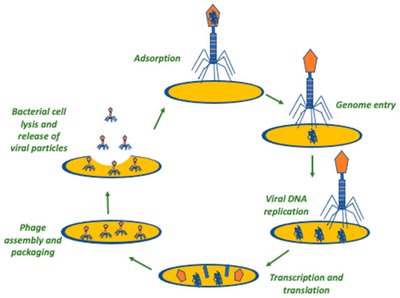
Innate vs. Adaptive Immunity in Bacteria: Bacteria defend against phage (virus) infection using both innate and adaptive mechanisms.
Innate Response: Restriction enzymes cleave foreign DNA nonspecifically.
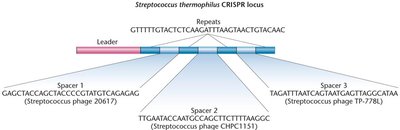
Adaptive Response: CRISPR-Cas systems provide sequence-specific immunity by storing fragments of phage DNA as 'spacers' in the bacterial genome, enabling targeted defense upon re-infection.
Discovery: The CRISPR system was first identified in bacteria used for yogurt and cheese production, where new spacers conferred resistance to specific phages.
Definition: CRISPR stands for Clustered Regularly Interspaced Short Palindromic Repeats.
CRISPR-Cas Mechanism
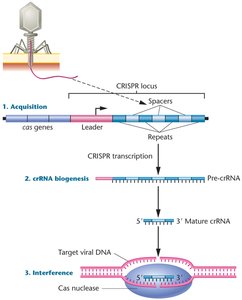
Spacer Acquisition: Invading phage DNA is cleaved into protospacers and integrated into the CRISPR locus as new spacers.
crRNA Biogenesis: The CRISPR locus is transcribed and processed into short CRISPR RNAs (crRNAs), each containing a unique spacer sequence.
Target Interference: crRNAs guide Cas nucleases to complementary phage DNA sequences, resulting in targeted cleavage and destruction of the invader's DNA.
ST 1.2 CRISPR-Cas as a Tool for Genome Editing
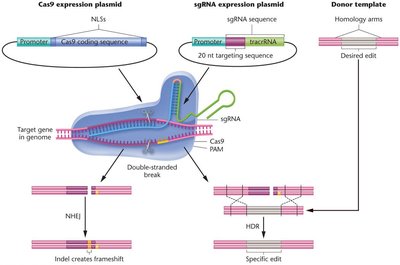
CRISPR-Cas9 has been adapted for precise genome editing in eukaryotic cells, enabling targeted gene modifications for research and therapeutic purposes.
Key Components:
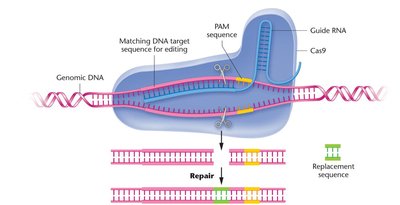
sgRNA (single guide RNA): Designed to target a specific gene sequence.
Cas9 Nuclease: Enzyme that introduces double-stranded breaks (DSBs) at the target site.
Donor/Homology Template: Used for homology-directed repair (HDR) to introduce specific edits.
Repair Mechanisms:
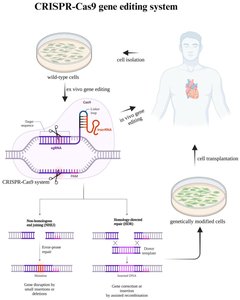
Non-homologous end joining (NHEJ): Error-prone, may cause insertions/deletions (indels).
Homology-directed repair (HDR): Precise, uses a template for specific sequence changes.
Recognition and Impact
Nobel Prize in Chemistry 2020: Awarded for the development of CRISPR-Cas9 gene editing technology.
Special Topic: Gene Therapy
ST 5.1 Candidates for Gene Therapy
Gene therapy involves the delivery of therapeutic genes to correct or compensate for defective genes responsible for disease. It is most suitable for monogenic disorders where the causative gene is well characterized.
Criteria:
Defective gene(s) must be identified.
Effective delivery system is required to introduce therapeutic genes into patient cells.
ST 5.2 Delivery of Therapeutic Genes
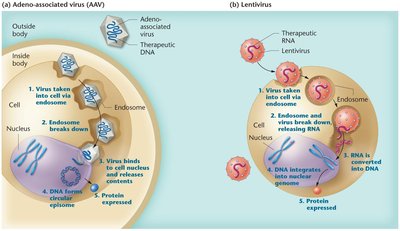
Viral Vectors: Genetically engineered viruses (with pathogenic components removed) are commonly used to deliver therapeutic DNA into target cells.
Types of Vectors: Adeno-associated virus (AAV), lentivirus, and others, each with unique properties for gene delivery.
ST 5.5 & 5.6: Gene Editing Approaches to Gene Therapy
Gene editing technologies, including CRISPR-Cas9, are being used to correct genetic mutations at their source, offering the potential for permanent cures.
DNA-Editing Nucleases: CRISPR-Cas9 can be used to target and modify disease-causing genes in patient cells.
Example: Sickle Cell Anemia
Patient blood cells are removed, edited ex vivo using CRISPR, and returned to the patient.
Sickle cell anemia is an autosomal recessive disorder caused by a mutation in the β-globin gene.
Somatic vs. Germline Gene Therapy
Somatic Gene Therapy: Edits are made in somatic (body) cells and are not inherited by offspring.
Germline Gene Therapy: Edits are made in germ cells or embryos, making changes heritable. This approach raises significant ethical concerns.
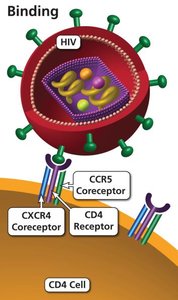
Controversy: The first reported use of germline CRISPR editing in human embryos (targeting the CCR5 gene for HIV resistance) sparked global debate.

ST 5.7 Future Challenges and Ethical Issues
Ethical Considerations: Germline editing, gene "enhancements," and long-term safety are major concerns.
Regulatory Oversight: Strict guidelines and oversight are necessary to ensure responsible use of gene editing technologies.
FDA-Approved Gene Therapies
Gene therapies have been approved for diseases such as sickle cell disease, β-thalassemia, spinal muscular atrophy, hemophilia, congenital blindness, and certain cancers (e.g., CAR-T cell therapies).
Ongoing research continues to expand the list of treatable conditions.
Applications and Research Questions
CRISPR can be used to study gene function by creating loss-of-function or gain-of-function mutations, or by introducing specific disease-associated mutations in model organisms.
Gene therapy applications focus on correcting disease-causing mutations in humans.
Globin Gene Regulation and CRISPR Therapy for Hemoglobinopathies
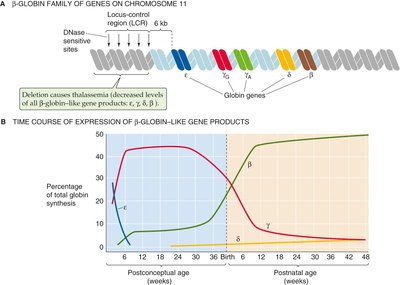
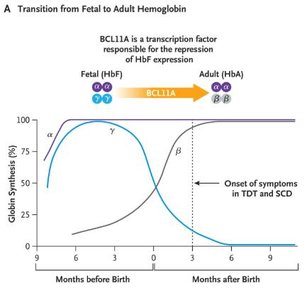
Globin Gene Expression: The β-globin gene cluster is differentially regulated during development, with fetal (γ) globin predominating before birth and adult (β) globin after birth.
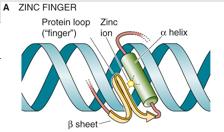
BCL11A: A zinc-finger transcription factor that represses fetal hemoglobin (HbF) expression after birth.
Therapeutic Strategy: CRISPR-mediated reduction of BCL11A expression increases HbF, alleviating symptoms of sickle cell disease and β-thalassemia.
Summary Table: Key Differences Between Somatic and Germline Gene Therapy
Aspect | Somatic Gene Therapy | Germline Gene Therapy |
|---|---|---|
Target Cells | Somatic (body) cells | Germ cells/embryos |
Heritability | Not inherited | Inherited by offspring |
Ethical Concerns | Fewer (focused on safety and efficacy) | Significant (long-term effects, consent, enhancement) |
Current Status | Widely researched and some therapies approved | Highly restricted or banned in most countries |
Additional info: CRISPR-Cas9 technology continues to evolve, with new variants (e.g., base editors, prime editors) expanding the range of possible genetic modifications. Ethical, legal, and social implications are under active discussion in the scientific and medical communities.
