 Back
BackDevelopmental Genetics: Gene Regulation, Stem Cells, and Pattern Formation
Study Guide - Smart Notes
 Tailored notes based on your materials, expanded with key definitions, examples, and context.
Developmental Genetics: Overview
Developmental genetics explores how genes control the growth, differentiation, and organization of cells into tissues and organisms. It highlights conserved mechanisms across species and investigates the genetic and epigenetic regulation of development, stem cell biology, and the consequences of gene defects.
Gene Regulation in Development
Spatiotemporal Gene Expression
Gene regulation determines which genes are expressed in specific tissues, at what times, and under what conditions. This regulation is crucial for proper development and differentiation.
Transcriptional Regulation: Involves transcription factors (TFs), enhancers, repressors, and chromatin structure.
Post-transcriptional, Translational, and Post-translational Regulation: Includes mRNA processing, stability, translation efficiency, and protein modifications.
Tissue-Specific Expression: Different tissues express unique sets of genes, regulated by combinations of TFs and epigenetic marks.
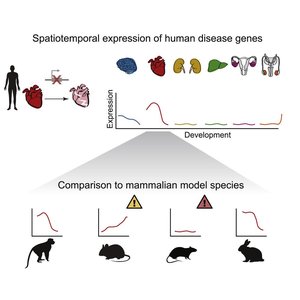
Example: The same gene may be highly expressed in the heart during early development but not in the brain, and these patterns can differ between humans and model organisms.
Mechanisms of Gene Regulation
Basal Transcription Factors: Required for moderate gene expression in all cells.
Activator Proteins: Enhance transcription in specific tissues (e.g., liver).
Repressor Proteins: Inhibit transcription in other tissues (e.g., brain).
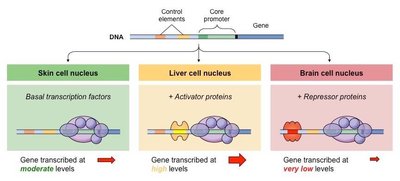
Key Point: The combination of regulatory proteins present in a cell determines its gene expression profile and, consequently, its identity and function.
Stem Cells and Differentiation
Types of Stem Cells
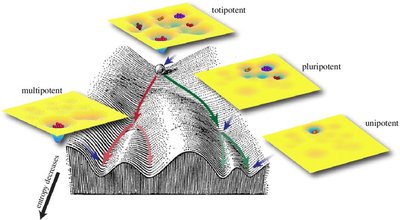
Stem cells are undifferentiated cells with the capacity for self-renewal and differentiation into specialized cell types. Their potency decreases as development progresses:
Totipotent: Can give rise to all cell types, including extraembryonic tissues (e.g., zygote).
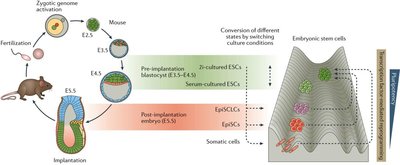
Pluripotent: Can form all cell types of the body but not extraembryonic tissues (e.g., embryonic stem cells).
Multipotent: Can differentiate into a limited range of cell types within a tissue (e.g., hematopoietic stem cells).
Unipotent: Can produce only one cell type but retain self-renewal (e.g., epidermal stem cells).
Example: Hematopoietic stem cells in bone marrow are multipotent, giving rise to various blood cells.
Stem Cell Differentiation and Lineage
During development, stem cells undergo a series of fate decisions, leading to the formation of specialized cells and tissues. This process is tightly regulated by intrinsic (lineage) and extrinsic (environmental) signals.
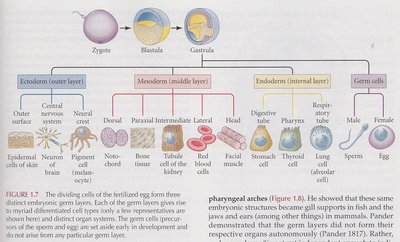
Key Point: The three primary germ layers—ectoderm, mesoderm, and endoderm—give rise to all tissues and organs in the body.
Maternal-Zygotic Transition (MZT) and Embryonic Genome Activation (EGA)
Transition from Maternal to Zygotic Control
Early embryonic development is initially controlled by maternal mRNAs and proteins deposited in the egg. The maternal-zygotic transition (MZT) marks the point when the embryonic genome becomes transcriptionally active.
Timing: Occurs at the 2-cell stage in mice, 4-cell stage in humans, and 4-8 cell stage in cattle.
Significance: Essential for continued development; blocking transcription leads to developmental arrest.
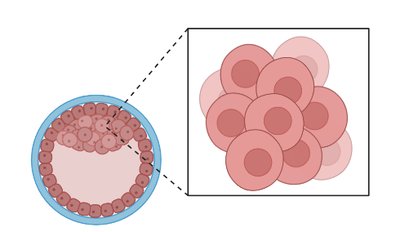
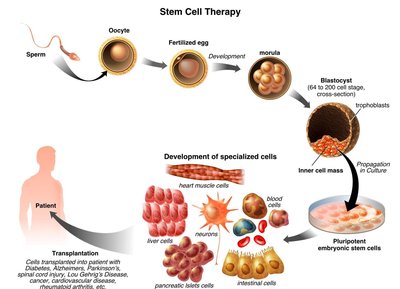
Example: The blastocyst stage features the first cell fate decisions, forming the inner cell mass (ICM) and trophectoderm (TE).
Genetic and Epigenetic Regulation of Development
Epigenetic Mechanisms
Epigenetic regulation involves heritable changes in gene expression that do not alter the DNA sequence. Key mechanisms include:
DNA Methylation: Addition of methyl groups to cytosine residues, typically silencing gene expression.
Histone Modifications: Chemical changes to histone proteins affecting chromatin structure and gene accessibility.
Non-coding RNAs: Regulate gene expression post-transcriptionally.
Key Point: Epigenetic reprogramming is crucial for establishing cell identity and resetting the genome during gametogenesis and early embryogenesis.
Genomic Imprinting and DNA Methylation
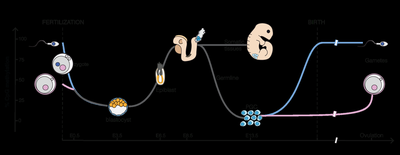
Genomic imprinting is an epigenetic phenomenon where certain genes are expressed in a parent-of-origin-specific manner. DNA methylation patterns are erased and re-established during the life cycle, particularly in germ cells and early embryos.
Imprints are erased in primordial germ cells and re-established in gametes.
After fertilization, global demethylation occurs except at imprinted regions.
Example: DNMT1 maintains imprints during early development, while DNMT3A and DNMT3B establish new methylation patterns post-implantation.
Patterning and Morphogenesis
Establishment of Body Axes and Segmentation
Patterning organizes cells spatially, while morphogenesis shapes tissues and organs. The anterior-posterior and dorsal-ventral axes are established early, guided by gradients of maternal mRNAs and proteins.
Maternal-effect Genes: Set up initial gradients (e.g., Bicoid, Nanos in Drosophila).
Segmentation Genes: Gap, pair-rule, and segment polarity genes subdivide the embryo into segments.
Homeotic (Hox) Genes: Specify segment identity and adult structures.
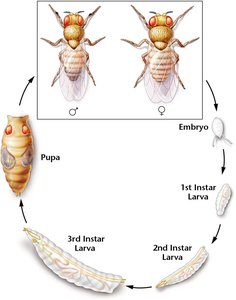
Example: Mutations in Hox genes can transform one body segment into another (homeosis).
Evolutionary Conservation of Developmental Mechanisms
Developmental mechanisms are highly conserved across animal species. Model organisms such as mouse, chick, zebrafish, fruit fly, and nematode are used to study these processes.
Orthologs: Genes in different species derived from a common ancestor.
Paralogs: Genes within a species that arose by duplication and divergence.
Key Point: The order and function of Hox genes are conserved, explaining similarities in body plans among diverse animals.
Applications: Stem Cell Therapy and Regenerative Medicine
Stem Cell Therapy
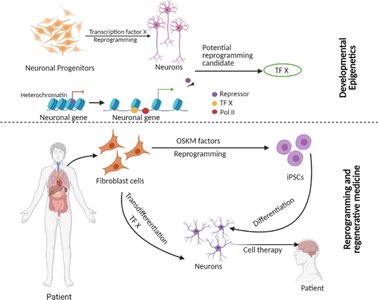
Pluripotent stem cells can be used for regenerative medicine, drug discovery, and cell therapy. Induced pluripotent stem cells (iPSCs) are generated from differentiated cells using reprogramming factors, overcoming immune rejection issues.
Example: iPSCs can be differentiated into neurons for treating neurodegenerative diseases.
Epigenetic Reprogramming and CRISPR Technology
Epigenetic reprogramming resets DNA methylation and chromatin states, enabling cell identity changes. CRISPR-Cas9 can activate endogenous pluripotency genes, facilitating direct reprogramming of somatic cells.
Key Point: These technologies hold promise for personalized regenerative therapies.
Summary Table: Types of Stem Cells
Type | Potency | Example |
|---|---|---|
Totipotent | All cell types, including extraembryonic | Zygote |
Pluripotent | All body cell types | Embryonic stem cell |
Multipotent | Multiple, related cell types | Hematopoietic stem cell |
Unipotent | One cell type | Spermatogonia |
Key Terms
Transcription Factor (TF): Protein that binds DNA to regulate gene expression.
Epigenetics: Heritable changes in gene expression not involving DNA sequence changes.
Homeotic Gene: Gene that determines the identity of body segments.
Induced Pluripotent Stem Cell (iPSC): Somatic cell reprogrammed to a pluripotent state.
