 Back
BackDevelopmental Genetics: Principles, Model Organisms, and Molecular Mechanisms
Study Guide - Smart Notes
 Tailored notes based on your materials, expanded with key definitions, examples, and context.
Developmental Genetics: An Overview
Introduction to Developmental Genetics
Developmental genetics explores how genes control the growth and differentiation of multicellular organisms. It focuses on the molecular mechanisms that guide the transformation from a single cell to a complex organism, emphasizing the role of gene regulation, signaling pathways, and genetic hierarchies.
Development is the process by which a multicellular organism forms from a single cell, involving cell division, differentiation, migration, and programmed cell death (apoptosis).
Differential gene expression is central to development, as it determines cell fate and specialization.
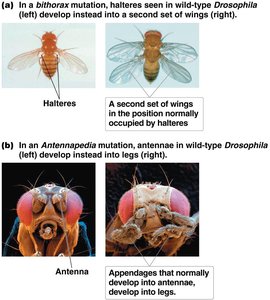
Homeotic mutations can cause normal organs to develop in abnormal locations, illustrating the genetic control of body patterning.
Key Cellular Events in Development
Major Cellular Processes
Four fundamental cellular events drive the development of multicellular organisms:
Cell division: Increases cell number.
Cell migration (in animals): Cells move to new positions.
Cell differentiation: Cells become specialized for specific functions.
Cell death (apoptosis): Programmed removal of unnecessary or damaged cells.
Stages of Cellular Differentiation
As development proceeds, cells become progressively more specialized:
Totipotent: Fertilized egg; can give rise to all cell types.
Pluripotent: Embryonic stem cells; can form most cell types.
Multipotent/Unipotent: Adult stem cells; limited differentiation potential.
Pattern Formation and Morphogens
Establishing Body Axes and Positional Information
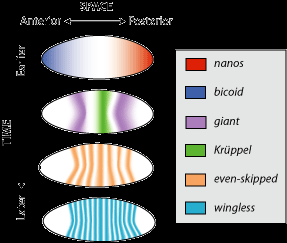
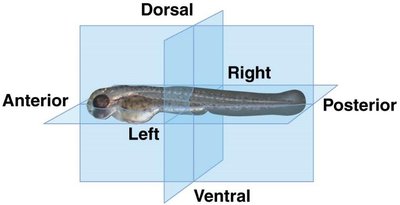
Pattern formation involves the establishment of body-plan axes (anterior-posterior, dorsal-ventral, left-right) through interacting genetic and molecular events. Cells receive positional information via gradients of signaling molecules called morphogens.
Morphogens: Substances whose concentration gradients dictate cell fate decisions.
Cells interpret morphogen gradients to determine their developmental fate.
Induction and Inhibition
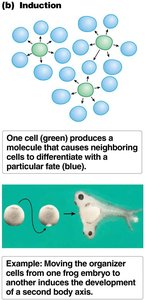
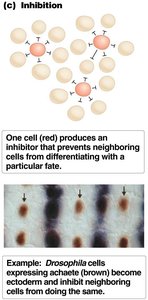
Cells communicate with neighbors through signaling molecules, influencing differentiation:
Induction: A cell produces a signal that causes neighboring cells to adopt a particular fate.
Inhibition: A cell produces a signal that prevents neighboring cells from adopting a certain fate.
Animal Development: Model Organisms and Body Plan Formation
Model Organisms in Developmental Genetics
Several model organisms are used to study developmental genetics due to their genetic tractability and conserved developmental processes:
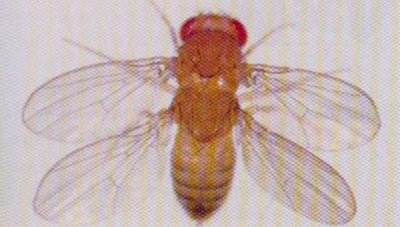
Drosophila melanogaster (fruit fly)
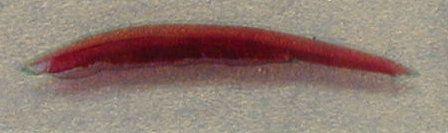
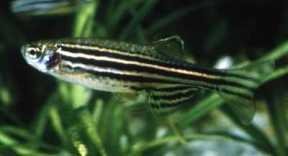
Danio rerio (zebrafish)
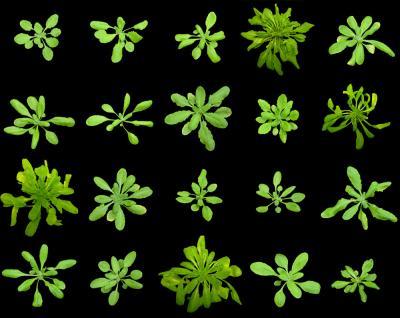
Arabidopsis thaliana (thale cress, a model plant)
Phases of Bilateral Animal Development
Development in bilaterally symmetrical animals proceeds through four overlapping phases:
Formation of major body axes
Segmentation of the body
Determination of structures within segments
Cell differentiation
Drosophila Development: Hierarchical Gene Regulation
Overview of Drosophila Embryogenesis
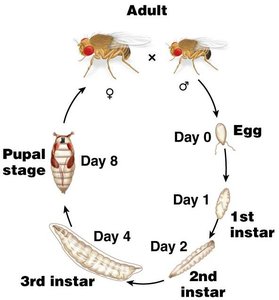
Drosophila melanogaster is a classic model for studying animal development due to its short life cycle and well-characterized genetics. Embryogenesis involves a series of rapid, genetically controlled changes:
Eggs possess anterior-posterior and dorsal-ventral polarity before fertilization.
Early nuclear divisions occur without cellular division, forming a multinucleate syncytium.
Nuclei migrate to the periphery, and pole cells (future germ cells) are set aside.
Cellularization produces the cellular blastoderm, after which cells become more restricted in developmental potential.
Segmentation and Hierarchical Gene Expression
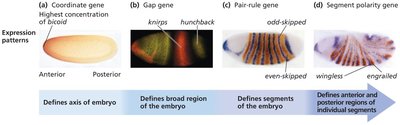
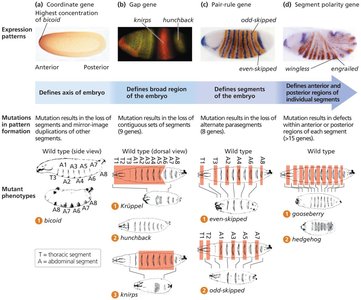
Segmentation in Drosophila is controlled by a hierarchy of gene classes, each influencing the next:
Maternal effect (coordinate) genes: Establish main body axes using maternally supplied mRNA and proteins (e.g., bicoid, nanos).
Gap genes: Define broad regions of the embryo (e.g., hunchback, Krüppel).
Pair-rule genes: Define alternating segments (e.g., even-skipped).
Segment polarity genes: Define anterior and posterior within each segment (e.g., engrailed).
Homeotic (Hox) genes: Specify the identity of each segment.
Maternal Effect vs. Zygotic Genes
Maternal effect genes are expressed in the mother and their products deposited in the egg, determining early embryonic axes. Zygotic genes are expressed from the embryo's own genome and direct later development.
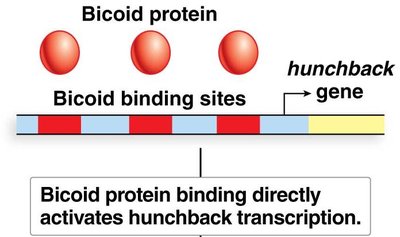
Bicoid protein activates hunchback transcription in the anterior.
Nanos protein represses translation of maternal hunchback mRNA in the posterior.
Homeotic (Hox) Genes and Segment Identity
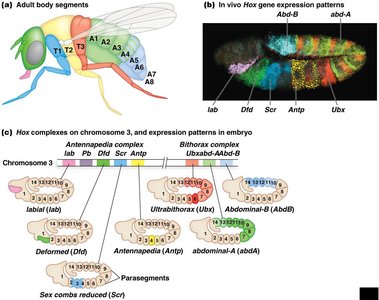
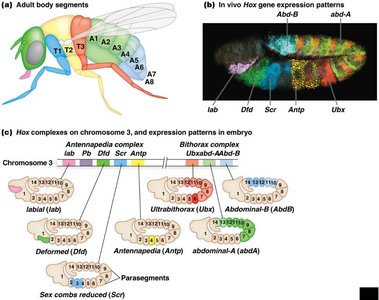
Hox genes are transcription factors that determine the identity of body segments. In Drosophila, they are organized into two clusters on chromosome 3:
Antennapedia complex: Specifies head and thoracic segments.
Bithorax complex: Specifies thoracic and abdominal segments.
Mutations in Hox genes can cause homeotic transformations, such as legs developing in place of antennae (Antennapedia mutation) or wings replacing halteres (Bithorax mutation).
Downstream Targets of Hox Genes
Hox genes regulate downstream targets, including other transcription factors and signaling molecules. Realizator genes are a subset that directly control the morphological features of each segment.
Evolutionary Developmental Biology (Evo-Devo)
Principles of Evo-Devo
Evolutionary developmental biology (evo-devo) studies how changes in development drive evolutionary changes in body plans and structures. Key concepts include:
Conservation of developmental pathways and gene clusters (e.g., Hox genes) across animal phyla.
Gene duplication and divergence as sources of evolutionary novelty.
Co-option of existing genes for new developmental roles.
Examples of Evo-Devo
Hox gene clusters are conserved in all animals, with vertebrates having four clusters due to genome duplications.
Mutations in Hox genes in mice alter vertebral identity, demonstrating conservation of function.
Digit formation in vertebrates is regulated by bone morphogenetic proteins (Bmps) and their inhibitors, with variations leading to different limb morphologies (e.g., webbed feet in ducks and bats).
Plant Developmental Genetics
Unique Features of Plant Development
Plants represent an independent evolutionary experiment in multicellularity, with key differences from animals:
Growth is modular (repeating units) and indeterminate (continuous throughout life).
Development occurs at meristems, regions of pluripotent cells that generate new tissues.
Floral Homeotic Genes (MADS Box Genes)
Flower development is controlled by MADS box genes, which encode transcription factors divided into classes (A, B, C, and SEP). The combination of gene expression in each floral whorl determines organ identity:
Class A: Sepals
Class A + B: Petals
Class B + C: Stamens
Class C: Carpels
SEP: Required for all floral organs
Evolution of Flowering Plants
The evolution of MADS-box genes through duplication and diversification was crucial for the origin and rapid diversification of angiosperms (flowering plants) about 125-130 million years ago.
Summary Table: Hierarchical Gene Regulation in Drosophila Development
Gene Class | Function | Example Genes | Mutant Phenotype |
|---|---|---|---|
Maternal effect (coordinate) | Establish body axes | bicoid, nanos | Loss of anterior or posterior structures |
Gap genes | Define broad regions | hunchback, Krüppel | Missing contiguous segments |
Pair-rule genes | Define segment boundaries | even-skipped | Missing alternate segments |
Segment polarity genes | Define anterior/posterior within segments | engrailed | Defects in segment polarity |
Homeotic (Hox) genes | Specify segment identity | Antennapedia, Ultrabithorax | Homeotic transformations |
Key Concepts and Takeaways
Development is directed by hierarchical gene regulation and differential gene expression.
Model organisms like Drosophila and Arabidopsis have revealed conserved genetic mechanisms underlying development.
Homeotic genes (Hox and MADS box) are master regulators of body plan and organ identity.
Evolutionary changes in development (evo-devo) explain the diversity of animal and plant forms.
