 Back
BackDNA as the Genetic Material: Discovery, Structure, and Organization
Study Guide - Smart Notes
 Tailored notes based on your materials, expanded with key definitions, examples, and context.
DNA as the Genetic Material
Historical Foundations of Genetics
The identification of DNA as the genetic material was a pivotal moment in biology, integrating classical genetics with molecular biology. Early geneticists defined genes as units controlling phenotypic traits, while molecular biologists later described genes as DNA segments encoding functional products.
Gene (Classical Definition): A hereditary unit controlling an organism’s phenotype, residing on chromosomes and segregating during reproduction.
Gene (Molecular Definition): A segment of DNA containing information to produce a functional product, typically a protein.
Central Dogma: Genetic information flows from DNA to RNA to protein, linking genotype to phenotype.
Example: A mutation (allele) in DNA can alter the RNA and protein, resulting in a changed phenotype.
Discovery of DNA as the Genetic Material
Early 20th-century scientists debated whether proteins or DNA were the genetic material. Key experiments resolved this question:
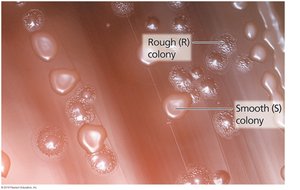
Griffith’s Transformation Experiment (1928): Demonstrated that a 'transforming principle' from dead virulent bacteria could convert non-virulent bacteria into a virulent form.
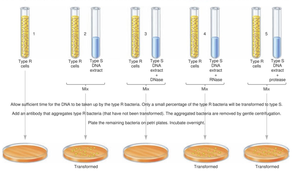
Avery, MacLeod, and McCarty (1944): Identified DNA as the 'transforming principle' by showing that only DNA, not protein or RNA, could transform bacteria.
Hershey-Chase Experiment (1952): Used bacteriophages labeled with radioactive isotopes to confirm that DNA, not protein, is the genetic material in viruses.
Structure of DNA
DNA and RNA: Nucleic Acids
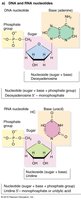
DNA (deoxyribonucleic acid) and RNA (ribonucleic acid) are polymers of nucleotides. Each nucleotide consists of a pentose sugar, a nitrogenous base, and a phosphate group.
DNA: Contains deoxyribose sugar; bases are adenine (A), guanine (G), cytosine (C), and thymine (T).
RNA: Contains ribose sugar; bases are adenine (A), guanine (G), cytosine (C), and uracil (U) instead of thymine.
Chargaff’s Rules and the Double Helix
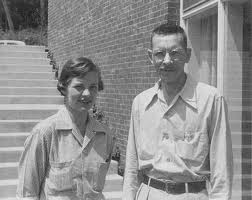
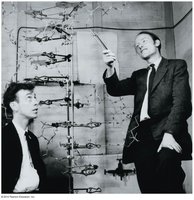
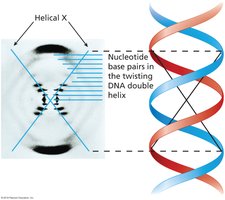
Erwin Chargaff discovered that in DNA, the amount of adenine equals thymine and the amount of guanine equals cytosine (A=T, G=C). Rosalind Franklin’s X-ray crystallography revealed the helical structure of DNA, which was modeled by Watson and Crick in 1953.
Double Helix: Two antiparallel strands form a right-handed helix with a sugar-phosphate backbone on the outside and paired bases on the inside.
Base Pairing: A pairs with T via two hydrogen bonds; G pairs with C via three hydrogen bonds.
Helical Parameters: One turn of the helix is 3.4 nm and contains about 10 base pairs.
DNA Polarity and Bonds
DNA strands have polarity, with a 5’ phosphate group at one end and a 3’ hydroxyl group at the other. Nucleotides are joined by phosphodiester bonds between the 5’ phosphate and 3’ hydroxyl groups.
Antiparallel Orientation: The two strands run in opposite directions (5’ to 3’ and 3’ to 5’).
Major and Minor Grooves: The double helix has alternating wide (major) and narrow (minor) grooves, important for protein-DNA interactions.
Organization of Genetic Material
Prokaryotic Genomes
Prokaryotes (bacteria and archaea) typically have a single, circular chromosome composed of double-stranded DNA. Additional small circles of DNA, called plasmids, may be present.
Genome Size: Measured in base pairs (bp), kilobase pairs (kb), or megabase pairs (Mb).
DNA Supercoiling: DNA is compacted by supercoiling, aided by enzymes called topoisomerases.
Eukaryotic Genomes
Eukaryotes have multiple, linear chromosomes. DNA is organized with proteins into chromatin, with the nucleosome as the basic unit (146-147 bp of DNA wrapped around eight histone proteins).
Chromatin Structure: Nucleosomes resemble 'beads on a string' and are further compacted into higher-order structures.
Telomeres: Specialized structures at chromosome ends protect genetic information.
Viral Genomes
Viruses can have DNA or RNA genomes, which may be single- or double-stranded, circular or linear, and segmented or unsegmented. Some viruses, such as retroviruses, have RNA genomes.
Summary Table: Key Differences Between DNA and RNA
Feature | DNA | RNA |
|---|---|---|
Sugar | Deoxyribose | Ribose |
Bases | A, T, G, C | A, U, G, C |
Strandedness | Double-stranded (usually) | Single-stranded (usually) |
Function | Genetic information storage | Information transfer, catalysis |
Additional info: The discovery and characterization of DNA as the genetic material laid the foundation for modern genetics, molecular biology, and biotechnology, including genomics, gene therapy, and genetic engineering.
