 Back
BackDNA as the Genetic Material: Structure, Evidence, and Organization
Study Guide - Smart Notes
 Tailored notes based on your materials, expanded with key definitions, examples, and context.
DNA as the Genetic Material
Definition and Historical Context
DNA is recognized as the primary genetic material in most living organisms, responsible for heredity, variation, and evolution. The identification of DNA as the genetic material was a pivotal moment in genetics, supported by a series of landmark experiments.
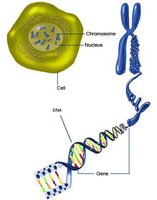
Gene (Genetic Definition): A gene is a unit of heredity that controls some aspect of an organism’s phenotype and resides on chromosomes.
Gene (Molecular Definition): A gene is a segment of DNA containing the information to express a protein or functional RNA.
Central Dogma: Genetic information flows from DNA to RNA to protein, linking genotype to phenotype.
Historical Experiments Establishing DNA as Genetic Material
Several key experiments established DNA as the genetic material:
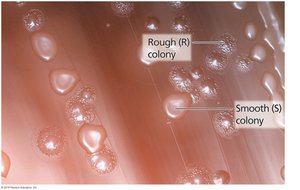
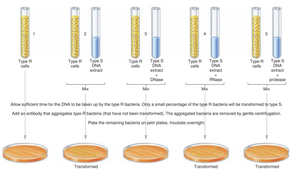
Griffith’s Transformation Experiment (1928): Demonstrated that a 'transforming principle' from dead S strain bacteria could convert live R strain bacteria into virulent S type.
Avery, MacLeod, and McCarty (1944): Identified DNA as the transforming principle by showing that only DNA destruction prevented transformation.
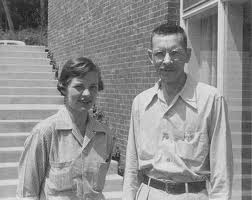
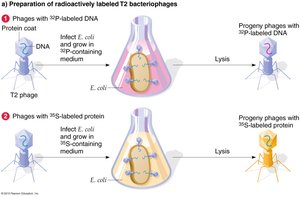
Hershey-Chase Experiment (1952): Used bacteriophage and radioactive labeling to confirm that DNA, not protein, is the genetic material transferred during infection.
Structure of DNA
Discovery and Evidence
The structure of DNA was elucidated through a combination of chemical analysis, X-ray crystallography, and model building. Chargaff’s rules, Franklin’s X-ray diffraction, and Watson and Crick’s model were central to this discovery.
Chargaff’s Rules: In every species, the amount of adenine equals thymine (A=T), and guanine equals cytosine (G=C).
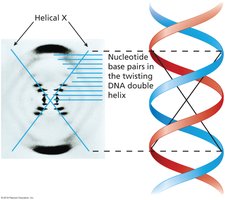
Rosalind Franklin’s X-ray Crystallography: Revealed the helical structure of DNA.
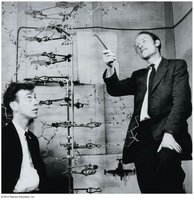
Watson and Crick Model (1953): Proposed the double helix structure with antiparallel strands and specific base pairing.
DNA Double Helix
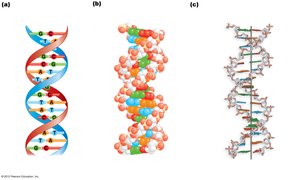
DNA consists of two polynucleotide strands wound around each other in a right-handed double helix. The strands are antiparallel, and the backbone is composed of sugar and phosphate groups, with paired bases on the inside.
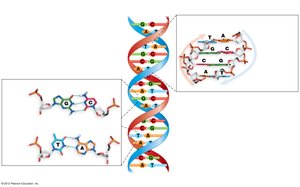
Base Pairing: Adenine pairs with thymine via two hydrogen bonds; guanine pairs with cytosine via three hydrogen bonds.
Antiparallel Orientation: One strand runs 5’ to 3’, the other 3’ to 5’.
Helical Parameters: One turn of the helix is 3.4 nm and contains 10 base pairs; the distance between bases is 0.34 nm.
Nucleotide Structure
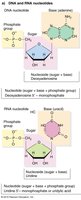
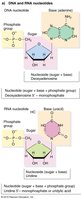
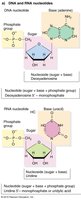
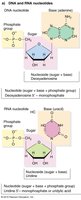
The basic unit of DNA and RNA is the nucleotide, which consists of a pentose sugar, a nitrogenous base (purine or pyrimidine), and a phosphate group.
Pentose Sugar: Deoxyribose in DNA, ribose in RNA.
Bases: Purines (adenine, guanine), pyrimidines (cytosine, thymine in DNA; uracil in RNA).
Phosphate Group: Attached to the 5’ carbon of the sugar.
Organization of Genomes
Prokaryotic Genomes
Prokaryotes typically have a single, circular chromosome composed of double-stranded DNA. DNA is supercoiled to fit within the cell, and smaller circles of DNA called plasmids may also be present.
Genome Size: Measured in base pairs (bp), kilobase pairs (kb), and megabase pairs (Mb).
Supercoiling: DNA is compacted by negative and positive supercoiling, mediated by topoisomerases.
Eukaryotic Genomes
Eukaryotes have multiple linear chromosomes, each a long double-stranded DNA molecule. DNA is organized into chromatin, with nucleosomes as the basic unit.
Nucleosome: 146-147 bp of DNA wrapped around eight histone proteins.
Chromatin Compaction: Higher-order structures include the 30 nm fiber and chromatin loops.
Telomeres: Specialized structures at chromosome ends.
Virus Genomes
Viruses can have DNA or RNA genomes, which may be single- or double-stranded, circular or linear, and segmented or non-segmented. Some viruses, such as retroviruses, have RNA genomes.
Comparison of DNA and RNA
Structural Differences
DNA and RNA differ in their sugar, base composition, and strand structure.
Sugar: DNA contains deoxyribose; RNA contains ribose.
Bases: DNA uses thymine; RNA uses uracil.
Strand Structure: DNA is usually double-stranded; RNA is usually single-stranded but can form internal base pairs.
Summary Table: Key Differences Between DNA and RNA
Feature | DNA | RNA |
|---|---|---|
Sugar | Deoxyribose | Ribose |
Bases | A, T, G, C | A, U, G, C |
Strand Structure | Double-stranded | Single-stranded (can form internal base pairs) |
Function | Genetic information storage | Information transfer, catalysis, regulation |
Key Equations
Chargaff’s Rule:
Phosphodiester Bond Formation:
Helical Parameters:
Additional info: The notes integrate foundational experiments, molecular structure, and genome organization, providing a comprehensive overview suitable for genetics students.
