 Back
BackDNA Damage, Repair, and Mutation: Mechanisms and Consequences
Study Guide - Smart Notes
 Tailored notes based on your materials, expanded with key definitions, examples, and context.
DNA Damage, Repair, and Mutation
Introduction
Mutations are permanent changes in the DNA sequence that can alter the characteristics of organisms. Understanding the molecular nature of mutations, their causes, and the cellular mechanisms for DNA repair is essential for comprehending genetic diseases and evolution. This chapter explores the types of mutations, their molecular consequences, and the biological repair mechanisms that maintain genomic integrity.
Types of Mutations and Associated Diseases
Classification of Genetic Diseases
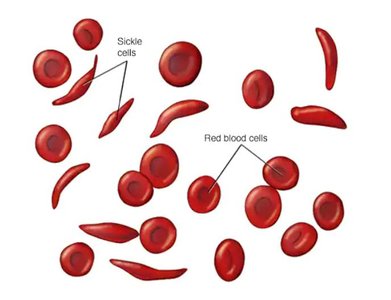
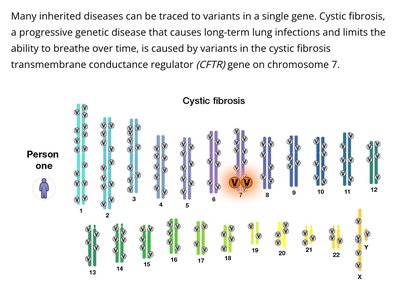
Single Gene Disorders: Caused by mutations in a single gene (e.g., Sickle Cell Anemia, Huntington’s Disease, Fragile X Syndrome).
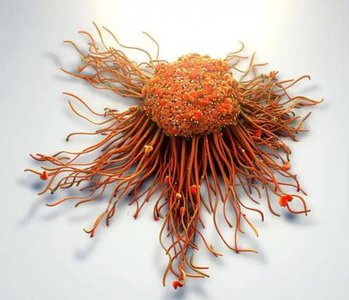
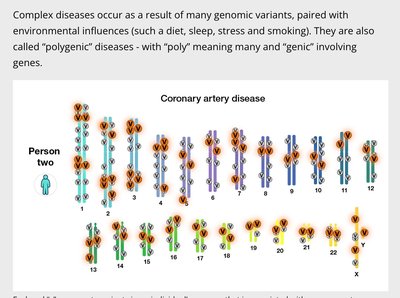
Multifactorial Diseases: Result from the interaction of multiple genes and environmental factors (e.g., cancer, autism, diabetes).
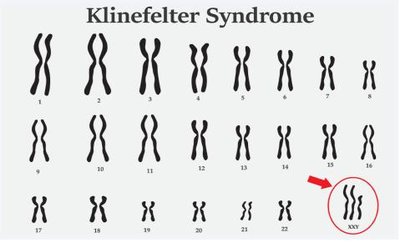
Chromosomal Abnormalities: Involve changes in chromosome number or structure (e.g., Down’s syndrome, Turner syndrome, Klinefelter syndrome).
Mitochondrial Gene Mutations: Affect mitochondrial function (e.g., MELAS syndrome).
Single Gene vs. Complex Diseases
Single Gene Diseases: Inherited in Mendelian patterns, often with clear family history.
Complex Diseases: Involve multiple genetic variants and environmental influences; inheritance patterns are not straightforward.
Lack of Diversity in Genetic Data
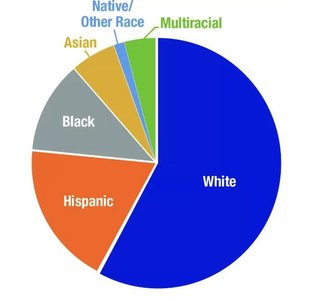
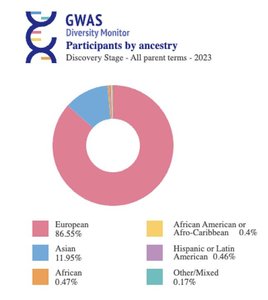
Most genetic studies have focused on populations of European descent, leading to gaps in understanding genetic risk in other groups.
Somatic vs. Germ Line Mutations
Differences and Consequences
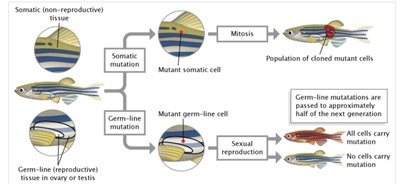
Somatic Mutations: Occur in non-reproductive cells; affect only the individual and are not inherited.
Germ Line Mutations: Occur in reproductive cells; can be passed to offspring and affect all cells of the progeny.
Molecular Consequences of Point Mutations
Types of Point Mutations
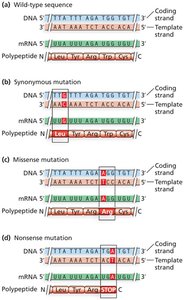
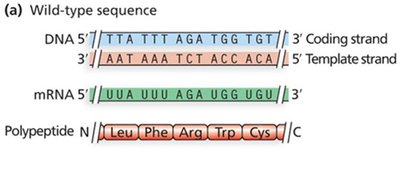
Base Substitutions: Replacement of one nucleotide with another.
Synonymous (Silent) Mutation: No change in amino acid sequence.
Missense Mutation: Changes one amino acid to another.
Nonsense Mutation: Converts a codon to a stop codon, truncating the protein.
Frameshift Mutations
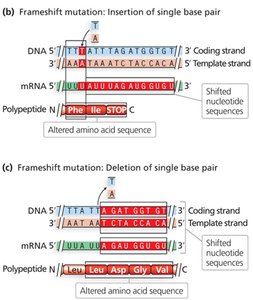
Insertions or deletions of nucleotides that are not multiples of three can shift the reading frame, altering the downstream amino acid sequence and often resulting in nonfunctional proteins.
Mutations in Non-Coding Regions
Regulatory Mutations
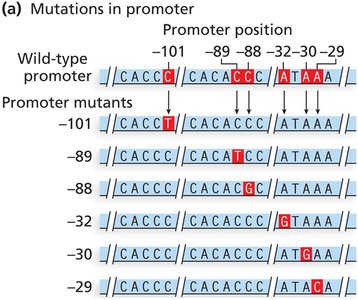
Point mutations in promoter or enhancer regions can affect transcription levels.
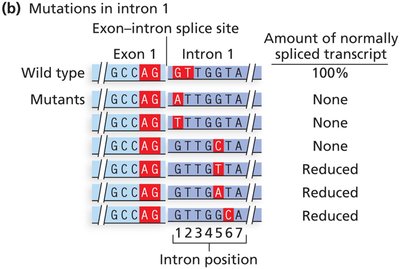
Mutations in splice sites can disrupt normal mRNA processing.
Changes in 5’ or 3’ UTRs can affect mRNA stability and translation efficiency.
Cryptic Splice Sites
Mutations can create new (cryptic) splice sites, leading to abnormal mRNA splicing and potentially nonfunctional proteins.
Human Diseases Caused by Single Gene Mutations
β-thalassemia
Cystic Fibrosis
Fragile X Syndrome
Hemophilia A
Huntington’s Disease
Lactose (in)tolerance
Marfan Syndrome
Phenylketonuria
Sickle Cell Anemia
Tay-Sachs disease
Duchenne Muscular Dystrophy
Causes of Mutations
Spontaneous Mutations
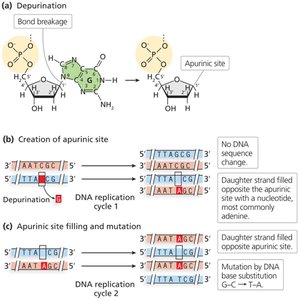
Depurination: Loss of a purine base (A or G) from DNA, leading to mutations during replication.
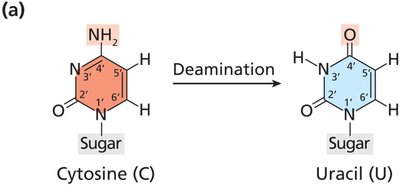
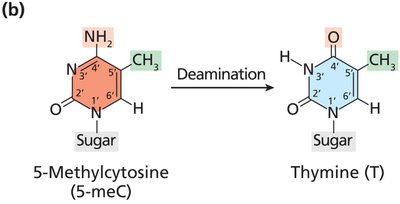
Deamination: Removal of an amino group from cytosine (to uracil) or 5-methylcytosine (to thymine), causing base changes.
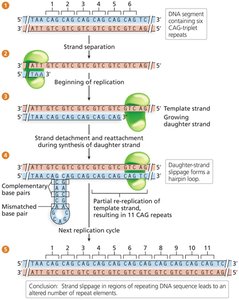
Strand Slippage: Occurs in regions of repetitive DNA, leading to insertions or deletions and repeat expansion disorders (e.g., Fragile X, Huntington’s Disease).


Induced Mutations
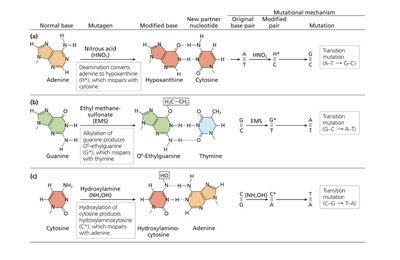
Caused by exposure to chemical mutagens or radiation, which can alter DNA bases or cause breaks in the DNA backbone.
DNA Damage and Repair Mechanisms
Overview of DNA Damage and Repair
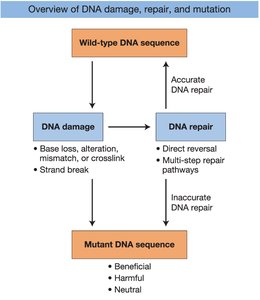
Cells possess multiple mechanisms to detect and repair DNA damage, ensuring genomic stability. Failure to repair DNA damage accurately can result in mutations.
Repair Mechanisms
Mismatch Repair: Corrects errors that escape proofreading during DNA replication by excising and replacing the incorrect base.
Base Excision Repair: Removes and replaces damaged bases that do not significantly distort the DNA helix.
Nucleotide Excision Repair: Removes bulky DNA lesions (e.g., thymine dimers) by excising a short single-stranded DNA segment containing the lesion.
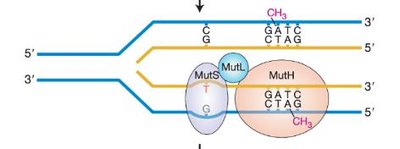
Repair of Double-Stranded Breaks
Homologous Recombination: Uses a homologous DNA sequence as a template for accurate repair of double-stranded breaks.
Nonhomologous End Joining: Directly joins broken DNA ends without a homologous template, which can result in small insertions or deletions.
Summary Table: Types of DNA Repair Mechanisms
Repair Mechanism | Type of Damage | Key Steps |
|---|---|---|
Mismatch Repair | Replication errors (mismatched bases) | Recognition, excision, resynthesis |
Base Excision Repair | Small, non-helix-distorting base lesions | Removal of base, excision of backbone, resynthesis |
Nucleotide Excision Repair | Bulky, helix-distorting lesions | Excision of oligonucleotide, resynthesis |
Homologous Recombination | Double-stranded breaks | Strand invasion, DNA synthesis, ligation |
Nonhomologous End Joining | Double-stranded breaks | Direct ligation of DNA ends |
Key Equations and Concepts
Mutation Rate: The probability of a mutation occurring per gene per generation.
Transition Mutation: Purine-to-purine or pyrimidine-to-pyrimidine substitution.
Transversion Mutation: Purine-to-pyrimidine or pyrimidine-to-purine substitution.
Example Equation:
Mutation rate per base per generation: Where = number of mutations observed, = total number of bases analyzed.
Additional info: This chapter integrates molecular mechanisms with clinical examples, emphasizing the importance of DNA repair in preventing genetic diseases and maintaining genomic stability.
