 Back
BackDNA Structure and Analysis: Foundations of Genetic Material
Study Guide - Smart Notes
 Tailored notes based on your materials, expanded with key definitions, examples, and context.
DNA Structure and Analysis
Four Essential Characteristics of Genetic Material
To function as genetic material, a molecule must fulfill four critical criteria. These requirements ensure the faithful transmission, expression, and evolution of genetic information in all living organisms.
Replication: The genetic material must be able to replicate, allowing its information to be partitioned into daughter cells during cell division.
Storage of Information: It must serve as a repository for genetic information, encoding instructions for cellular structure and function.
Expression of Information: The information must be expressed, enabling the flow from genetic material to cellular machinery and phenotype.
Variation by Mutation: The material must be capable of undergoing changes (mutations), which can lead to phenotypic variation and drive evolution.
Historical Perspective: Protein vs. DNA as Genetic Material
Until the mid-20th century, proteins were considered the most likely candidates for genetic material due to their chemical diversity and abundance. DNA, with its apparent lack of diversity, was thought insufficient to store complex genetic information.
Proteins: Diverse and abundant, leading to the assumption they could encode genetic complexity.
DNA: Chemically simple, initially believed to lack the capacity for extensive information storage.
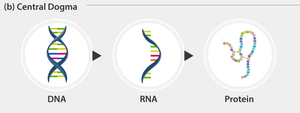
Central Dogma of Molecular Biology
The central dogma describes the flow of genetic information within a biological system: DNA is transcribed into RNA, which is then translated into protein. This process underlies gene expression and phenotype determination.
DNA → RNA → Protein: Sequential information transfer from genetic material to functional molecules.
Experimental Evidence: Griffith's Transformation Experiment
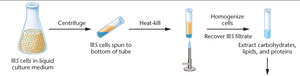
Frederick Griffith's experiments with Streptococcus pneumoniae demonstrated that a chemical component from dead virulent bacteria could transform avirulent bacteria into virulent forms, introducing the concept of a "transforming principle."
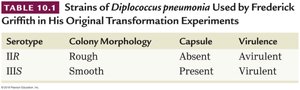
Virulent (IIIS) vs. Avirulent (IIR) Strains: IIIS strains have a smooth capsule and cause disease; IIR strains lack a capsule and are non-pathogenic.
Transformation: Avirulent bacteria acquired virulence when exposed to heat-killed virulent cells, suggesting transfer of genetic material.
Serotype | Colony Morphology | Capsule | Virulence |
|---|---|---|---|
IIR | Rough | Absent | Avirulent |
IIIS | Smooth | Present | Virulent |
Avery, MacLeod, and McCarty: Identifying DNA as the Transforming Agent
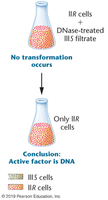
Building on Griffith's work, Avery, MacLeod, and McCarty isolated biomolecules from virulent bacteria and treated them with enzymes to degrade proteins, RNA, or DNA. Only DNA was able to transform avirulent bacteria, providing direct evidence that DNA is the genetic material.
Protease: Degrades proteins; transformation still occurs.
RNase: Degrades RNA; transformation still occurs.
DNase: Degrades DNA; transformation does not occur.
Conclusion: DNA is the active transforming factor.
Hershey and Chase Experiment: DNA as Genetic Material in Bacteriophages
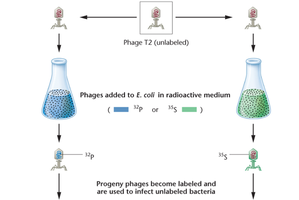
Hershey and Chase used radioisotopes to label DNA and protein in bacteriophage T2, demonstrating that only DNA enters the bacterial cell and directs viral reproduction. This experiment confirmed DNA as the genetic material in viruses.
32P: Labels DNA.
35S: Labels protein.
Result: Only DNA (32P) was found inside bacteria, proving its role in heredity.
Indirect Evidence: DNA Content and Mutagenesis
Indirect evidence for DNA as genetic material includes the correlation between DNA content and chromosome sets in gametes and diploids, and the absorption of mutagenic UV light at 260 nm, which matches DNA's absorption spectrum.
DNA Content: Amount of DNA correlates with ploidy level, not protein content.
Mutagenesis: UV light is most mutagenic at 260 nm, the wavelength at which DNA absorbs; proteins absorb at 280 nm.
Summary
Multiple lines of evidence, including classic experiments and indirect observations, have established DNA as the genetic material in most living organisms. Understanding its structure and function is fundamental to genetics.
