 Back
DNA Structure and Analysis: Key Concepts and Experiments in Genetics
Study Guide - Smart Notes
 Tailored notes based on your materials, expanded with key definitions, examples, and context.
DNA as Genetic Material
Historical Perspective and Key Experiments
The identification of DNA as the genetic material was a pivotal moment in genetics, supported by several landmark experiments. Early hypotheses favored proteins due to their chemical diversity, but experiments by Griffith, Avery, MacLeod, McCarty, and Hershey & Chase established DNA's role.
Griffith's Transformation Experiment (1927): Demonstrated that non-virulent bacteria could be transformed into virulent forms by exposure to heat-killed virulent bacteria, suggesting a 'transforming principle.'
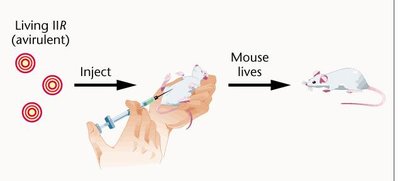
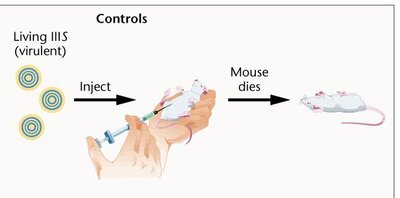
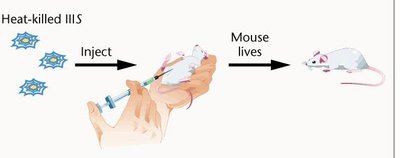
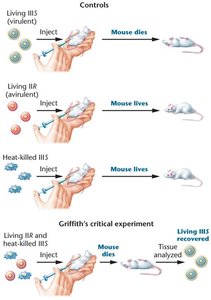
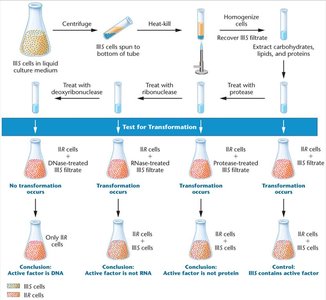
Avery, MacLeod, and McCarty (1944): Identified DNA as the transforming principle by systematically removing proteins and RNA, showing only DNA could transform bacteria.
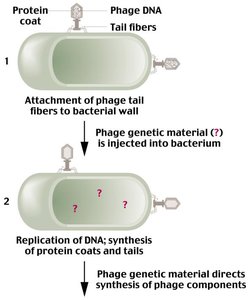
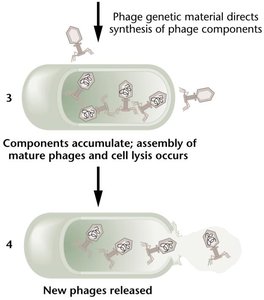
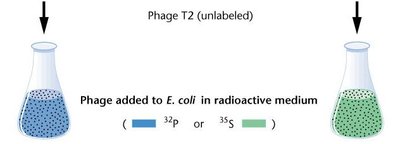
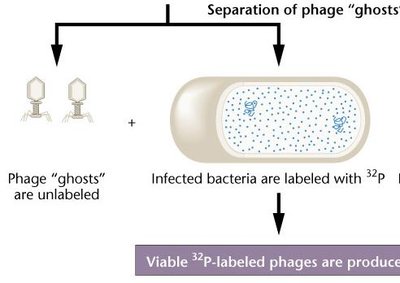
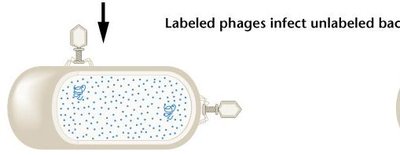
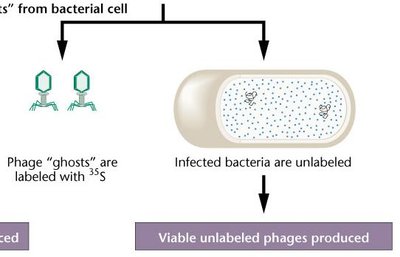
Hershey and Chase (1952): Used radioisotope labeling (32P for DNA, 35S for protein) in bacteriophage T2 to show that only DNA enters bacteria and directs viral replication.
Properties of Genetic Material
Genetic material must fulfill several criteria:
Storage of Information: Must encode vast amounts of information in a compact form.
Replication: Must possess chemical regularity to allow accurate copying.
Expression: Must control cellular development and function.
Variation by Mutation: Must allow for diversity and adaptability.
DNA Structure
Organization of DNA in Chromosomes
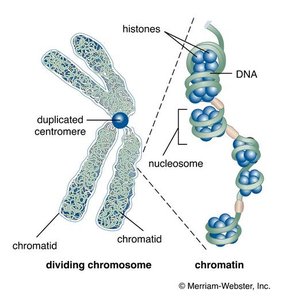
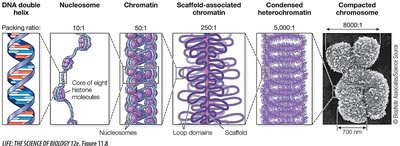
DNA is highly organized within chromosomes, allowing ~2 meters of DNA to fit inside a nucleus of only 5 µm diameter. Chromosomes undergo dynamic changes during the cell cycle, affecting gene expression.
Nucleotide Structure
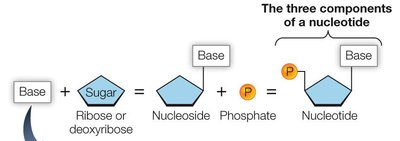
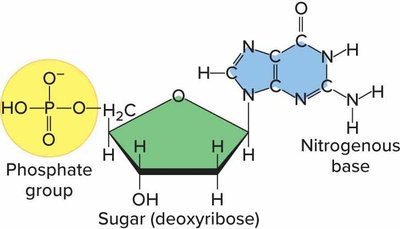
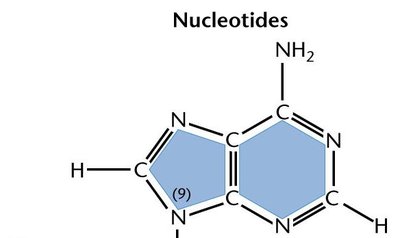
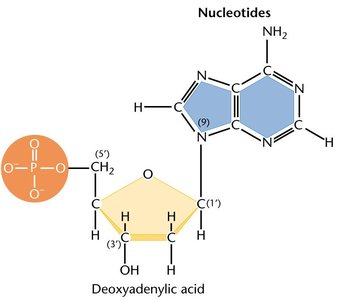
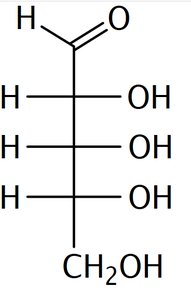
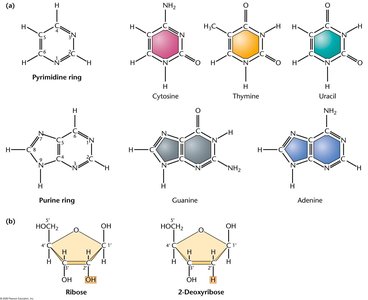
Nucleotides are the building blocks of DNA and RNA, consisting of a nitrogenous base, a pentose sugar, and a phosphate group.
Nucleoside: Nitrogenous base + pentose sugar
Nucleotide: Nucleoside + phosphate group
Nitrogenous Bases
There are two types of nitrogenous bases:
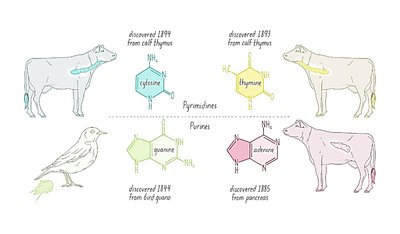
Pyrimidines: Single ring (Cytosine, Thymine, Uracil)
Purines: Double ring (Adenine, Guanine)
Polynucleotide Chain and Phosphodiester Bonds
Nucleotides are linked by phosphodiester bonds between the 5' phosphate and 3' hydroxyl groups, forming a sugar-phosphate backbone.
Directionality: DNA strands have 5' to 3' directionality and are antiparallel.
Mono-, Di-, and Triphosphates
Nucleotides can exist as mono-, di-, or triphosphates, with triphosphates (e.g., ATP, GTP) serving as energy sources and precursors for nucleic acid synthesis.
Double Helix Model
Watson and Crick Model (1953)
The double helix model proposed by Watson and Crick describes DNA as two antiparallel strands connected by complementary base pairing (A-T, G-C), with bases stacked inside the helix.
Chargaff's Rules: A=T, G=C; (A+G) = (C+T); disproved tetranucleotide hypothesis.
X-ray Diffraction: Franklin's studies revealed DNA's helical structure and periodicity.
Complementary Base Pairing: Hydrogen bonds provide stability (A-T: 2 bonds, G-C: 3 bonds).
Alternative DNA Forms
DNA can adopt several conformations depending on environmental conditions:
B-DNA: Standard right-handed helix, biologically significant.
A-DNA: More compact, right-handed, occurs under dehydration.
Z-DNA: Left-handed helix, less common.
RNA Structure and Function
Chemical Differences from DNA
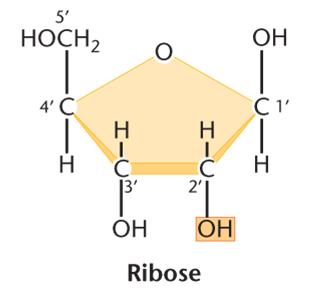
RNA differs from DNA by having ribose sugar and uracil instead of thymine. RNA is usually single-stranded but can form hairpin loops and double-stranded regions.
Major Classes of RNA
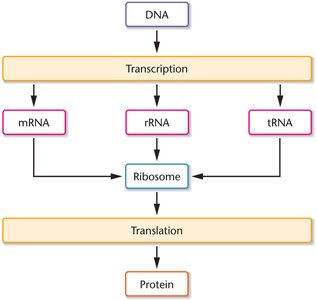
mRNA: Messenger RNA, carries genetic information from DNA to ribosome.
rRNA: Ribosomal RNA, structural component of ribosomes.
tRNA: Transfer RNA, brings amino acids to ribosome during translation.
Unique RNAs in Eukaryotes
Telomerase RNA: Involved in DNA replication.
snRNA: Small nuclear RNA, processes mRNA.
miRNA, siRNA, lncRNA: Regulate gene expression.
Analytical Techniques
Molecular Hybridization
Fluorescence in situ hybridization (FISH) uses fluorescent probes to detect specific DNA sequences on chromosomes, aiding in gene mapping and diagnostics.
Nucleic Acid Electrophoresis
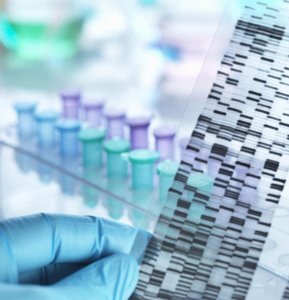
Electrophoresis separates DNA and RNA fragments by size using agarose gel; smaller fragments migrate faster.
Summary Table: DNA vs. Protein as Genetic Material
Property | DNA | Protein |
|---|---|---|
Chemical Diversity | 4 bases | 20 amino acids |
Abundance in Chromosomes | High | High |
Role in Inheritance | Genetic material | Functional molecules |
Experimental Evidence | Griffith, Avery, Hershey & Chase | None as genetic material |
Key Equations
Chargaff's Rule: ;
Phosphodiester Bond Formation:
Conclusion
Understanding DNA's structure and function is fundamental to genetics. The experiments and analytical techniques described here form the basis for modern molecular genetics, gene expression, and biotechnology.
