 Back
DNA Structure and Analysis: Key Concepts and Experiments in Genetics
Study Guide - Smart Notes
 Tailored notes based on your materials, expanded with key definitions, examples, and context.
DNA as Genetic Material
Historical Experiments Establishing DNA as Genetic Material
The identification of DNA as the genetic material was a pivotal moment in genetics, supported by several landmark experiments. These experiments demonstrated that DNA, not protein, is responsible for heredity and cellular function.
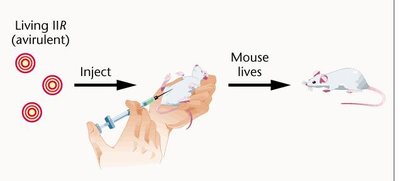
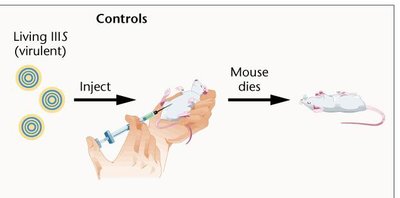
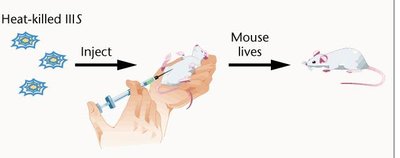
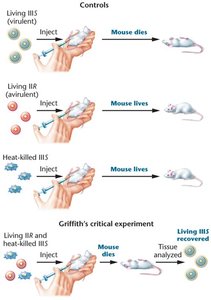
Griffith's Transformation Experiment (1927): Showed that non-virulent bacteria could be transformed into virulent forms by exposure to heat-killed virulent bacteria, suggesting the existence of a "transforming principle."
Avery, MacLeod, and McCarty (1944): Identified DNA as the transforming principle by systematically eliminating proteins and RNA as candidates.
Hershey and Chase (1952): Used radioisotope labeling to demonstrate that DNA, not protein, enters bacteria during phage infection and directs viral replication.
Example: Griffith's experiment with Streptococcus pneumoniae showed that mice injected with a mixture of heat-killed virulent bacteria and live avirulent bacteria died, and live virulent bacteria could be recovered from them.
Properties of Genetic Material
Essential Characteristics
Genetic material must fulfill several key functions to support life and heredity:
Storage of Information: Must encode vast amounts of information in a compact form.
Replication: Must be able to duplicate itself with high fidelity.
Expression: Must control cellular development and function.
Variation by Mutation: Must allow for diversity and adaptability through mutation.
Example: DNA's structure allows it to be both stable and mutable, supporting inheritance and evolution.
DNA vs. Protein as Genetic Material
Comparative Analysis
Early hypotheses favored proteins as genetic material due to their complexity, but key experiments refuted this:
DNA: Composed of four nucleotides; initially thought to lack diversity (tetranucleotide hypothesis).
Protein: Composed of 20 amino acids; considered more chemically diverse.
Chargaff's Rules: Demonstrated that DNA's base composition varies and is not uniform, refuting the tetranucleotide hypothesis.
Structure of DNA
Nucleotide Composition and Organization
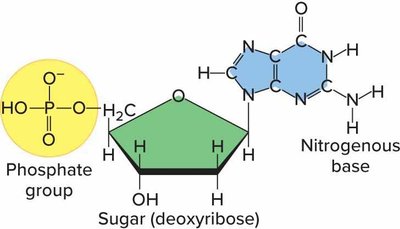
DNA is a polymer of nucleotides, each consisting of a nitrogenous base, a pentose sugar (deoxyribose), and a phosphate group. The arrangement of these components forms the basis for genetic information storage and transmission.
Nitrogenous Bases: Two types—purines (adenine, guanine) and pyrimidines (cytosine, thymine).
Pentose Sugar: Deoxyribose in DNA; ribose in RNA.
Phosphate Group: Links nucleotides via phosphodiester bonds.
Nucleosides and Nucleotides
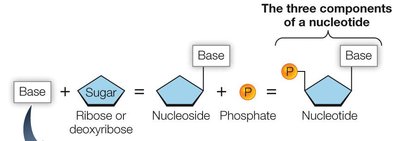
A nucleoside consists of a nitrogenous base and a sugar, while a nucleotide is a nucleoside with one or more phosphate groups attached.
Nucleoside: Base + sugar
Nucleotide: Nucleoside + phosphate
Phosphodiester Bonds and DNA Backbone
Nucleotides are linked by phosphodiester bonds between the 5' phosphate group and the 3' hydroxyl group of adjacent sugars, forming a continuous sugar-phosphate backbone.
Directionality: DNA strands have 5' to 3' polarity and are antiparallel.
Double Helix Structure
Watson and Crick (1953) proposed the double helix model, with two antiparallel strands held together by complementary base pairing (A-T, G-C) and stacked nitrogenous bases.
Complementary Base Pairing: A-T (double hydrogen bond), G-C (triple hydrogen bond).
Helical Structure: 2 nm diameter, 3.4 nm per turn, 10.4 bases per turn.
Example: The double helix allows for accurate replication and information storage.
Alternative Forms of DNA
DNA Conformations
DNA can adopt several conformations depending on environmental conditions:
B-DNA: Standard right-handed helix, biologically significant.
A-DNA: More compact, right-handed, occurs under high-salt or dehydration conditions.
Z-DNA: Left-handed helix, less common.
RNA Structure and Function
Chemical Differences from DNA
RNA is typically single-stranded, contains ribose instead of deoxyribose, and uses uracil in place of thymine.
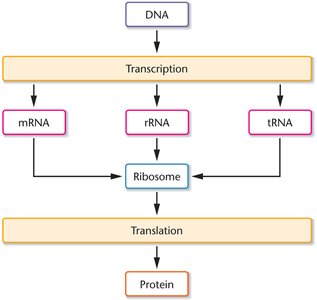
Classes of RNA: mRNA (messenger), rRNA (ribosomal), tRNA (transfer).
Unique RNAs: Telomerase RNA, snRNA, miRNA, siRNA, lncRNA.
Central Dogma of Molecular Genetics
Flow of Genetic Information
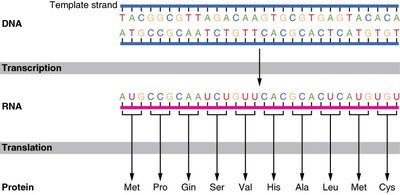
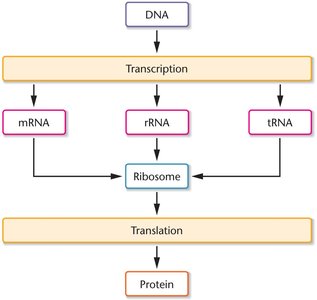
The central dogma describes the flow of genetic information from DNA to RNA to protein:
Transcription: DNA is transcribed into RNA.
Translation: RNA is translated into protein.
Analytical Techniques in DNA and RNA Study
Fluorescence In Situ Hybridization (FISH)
FISH uses fluorescent probes to detect specific DNA sequences on chromosomes, aiding in gene mapping and diagnosis.
Nucleic Acid Electrophoresis
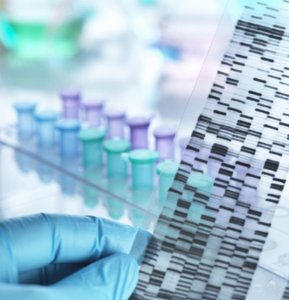
Electrophoresis separates DNA and RNA fragments by size using a porous gel matrix. Smaller fragments migrate faster, allowing for analysis of genetic material.
Summary Table: DNA vs. RNA
Feature | DNA | RNA |
|---|---|---|
Sugar | Deoxyribose | Ribose |
Strandedness | Double-stranded | Single-stranded (usually) |
Bases | A, T, G, C | A, U, G, C |
Function | Genetic information storage | Gene expression, regulation |
Key Equations and Formulas
Chargaff's Rule: $A = T$, $G = C$, $(A + G) = (C + T)$
Phosphodiester Bond Formation: $\text{Nucleotide}_1\text{(3'-OH)} + \text{Nucleotide}_2\text{(5'-phosphate)} \rightarrow \text{Phosphodiester bond}$
Conclusion
Understanding the structure and function of DNA is fundamental to genetics. The experiments and analytical techniques described here provide the foundation for modern molecular biology, gene expression, and genetic engineering.
