 Back
BackDNA Structure and Analysis: The Discovery of DNA as the Genetic Material
Study Guide - Smart Notes
 Tailored notes based on your materials, expanded with key definitions, examples, and context.
DNA Structure and Analysis
Introduction
This chapter explores the historical and experimental evidence that established DNA as the genetic material, the essential criteria for genetic material, and the foundational experiments that led to our current understanding of DNA's role in heredity. The content is structured to provide a comprehensive overview suitable for college-level genetics students.
The Genetic Material: Criteria and Early Hypotheses
Four Essential Characteristics of Genetic Material
For a molecule to serve as the genetic material, it must fulfill four key criteria:
Replication: The molecule must be able to make exact copies of itself to ensure genetic continuity during cell division.
Storage of Information: It must act as a repository for genetic information, encoding the instructions for cellular structure and function.
Expression of Information: The information must be accessible and translatable into cellular products (e.g., proteins).
Variation by Mutation: The molecule must be capable of undergoing changes (mutations) that can be inherited and lead to phenotypic diversity.
Historical Context: Protein vs. DNA as Genetic Material
In the early 20th century, proteins were favored as the genetic material due to their chemical diversity and abundance. DNA was considered too simple, with only four types of nucleotides, to account for the complexity of genetic information.
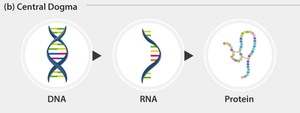
Central Dogma: The flow of genetic information from DNA to RNA to protein underpins the expression of genetic traits.
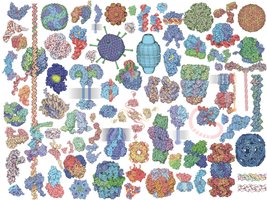
Protein Diversity: The structural diversity of proteins contributed to the early belief that proteins, not DNA, were the genetic material.
Experimental Evidence for DNA as the Genetic Material
Griffith's Transformation Experiment (1927)
Frederick Griffith's experiments with Streptococcus pneumoniae demonstrated the phenomenon of transformation, where a heritable trait could be transferred from dead virulent bacteria to live avirulent bacteria.

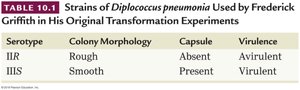
Serotype | Colony Morphology | Capsule | Virulence |
|---|---|---|---|
IIR | Rough | Absent | Avirulent |
IIIS | Smooth | Present | Virulent |
Key Points:
Virulent (IIIS) strains have a polysaccharide capsule and cause disease.
Avirulent (IIR) strains lack the capsule and do not cause disease.
Mixing heat-killed virulent bacteria with live avirulent bacteria resulted in the transformation of the latter into virulent forms, suggesting the transfer of a 'transforming principle.'
Avery, MacLeod, and McCarty Experiment (1944)
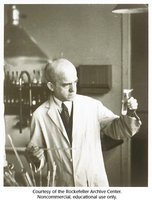
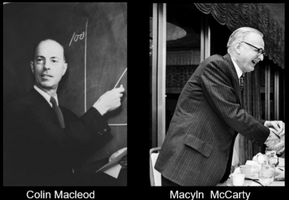
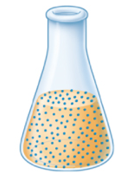
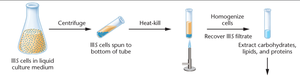
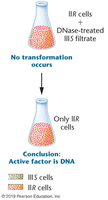
Building on Griffith's work, Avery, MacLeod, and McCarty isolated biomolecules from virulent bacteria and treated them with enzymes to degrade proteins, RNA, or DNA. Only the destruction of DNA prevented transformation, indicating DNA as the genetic material.
Protease treatment: Proteins destroyed, transformation still occurred.
RNase treatment: RNA destroyed, transformation still occurred.
DNase treatment: DNA destroyed, transformation did not occur.
Conclusion: DNA is the 'transforming principle' responsible for heredity.
Hershey-Chase Experiment (1952)
Hershey and Chase used bacteriophage T2 and radioisotopes to label DNA (with 32P) and protein (with 35S). They demonstrated that only DNA enters bacterial cells and directs viral replication, confirming DNA as the genetic material.
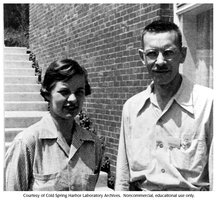
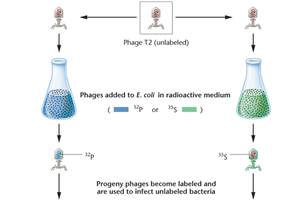
32P labels DNA: DNA enters bacteria and is inherited by progeny phages.
35S labels protein: Protein remains outside the bacterial cell and is not inherited.
Conclusion: DNA, not protein, is the genetic material in phages.
Evidence for DNA as Genetic Material in Eukaryotes
Indirect Evidence: DNA Content and Mutagenesis
DNA Content: There is a close correlation between the amount of DNA and the number of chromosome sets in gametes and diploid cells, supporting DNA's role as genetic material.
Mutagenesis: DNA absorbs ultraviolet (UV) light most strongly at 260 nm, which is also the wavelength most effective at inducing mutations. Proteins absorb at 280 nm, but this does not correlate with mutagenic effects.
Summary Table: (Described in text)
Haploid cells (e.g., sperm) have half the DNA content of diploid cells (e.g., somatic cells).
No such correlation exists for protein content.
Summary
The discovery that DNA is the genetic material was a pivotal moment in genetics, supported by a series of classic experiments. DNA fulfills all the criteria for genetic material, and its role has been confirmed in both prokaryotes and eukaryotes through direct and indirect evidence. Understanding these foundational experiments is essential for further study of DNA structure, replication, and function.
