Back
BackExtensions and Modifications of Basic Principles in Genetics
Study Guide - Smart Notes
 Tailored notes based on your materials, expanded with key definitions, examples, and context.
Autosomal Dominant Inheritance
Definition and Key Features
Autosomal dominant inheritance refers to genetic traits or disorders that are expressed when at least one dominant allele is present on one of the autosomes (non-sex chromosomes). These traits typically appear in every generation and affect both males and females equally.
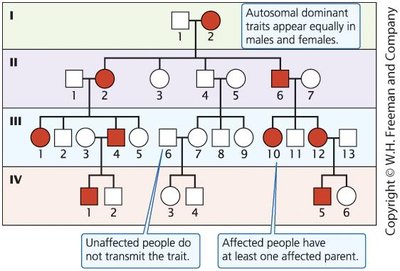
Affected individuals in every generation: Autosomal dominant traits do not skip generations; an affected individual usually has at least one affected parent.
Transmission: Both males and females can transmit the trait to their offspring, regardless of sex.
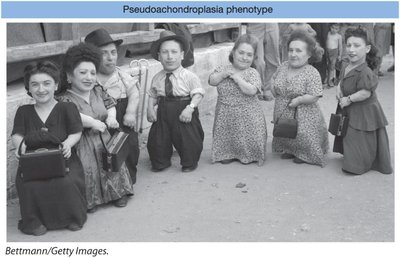
Examples: Pseudoachondroplasia, Huntington’s disease, polydactyly, and piebald spotting are classic examples of autosomal dominant disorders.

Pedigree Analysis
Pedigrees are used to track the inheritance of traits through generations. In autosomal dominant pedigrees:
Equal appearance in both sexes: Males and females are equally likely to be affected.
Vertical transmission: The trait is observed in every generation.
Unaffected individuals do not transmit the trait: If an individual does not express the trait, they do not pass it to their offspring.
Extensions and Modifications of Mendelian Principles
Gene Interaction and Non-Mendelian Ratios
Not all traits follow simple Mendelian inheritance. Gene interactions and other factors can modify expected ratios and phenotypes.
Gene interaction: Multiple genes can interact to produce novel phenotypes, as seen in sweet peas (Lathyrus odoratus), where a 9:7 ratio among progeny is observed instead of the classic 9:3:3:1 ratio.
Sex determination: Sex is determined by various mechanisms, including chromosomal, genic, and environmental systems.

Sex Determination Mechanisms
Chromosomal Sex Determination
Sex determination in many organisms is governed by the presence or absence of specific sex chromosomes. The X and Y chromosomes pair during meiosis, although they are not homologous in gene content.
XX–XY system: Females are XX (homogametic), and males are XY (heterogametic), as seen in mammals and fruit flies.
ZZ–ZW system: In birds and some reptiles, males are ZZ (homogametic), and females are ZW (heterogametic).
Autosomes vs. sex chromosomes: Autosomes are non-sex chromosomes, while sex chromosomes determine the sex of the individual.

Alternation of Generations in Sexual Reproduction
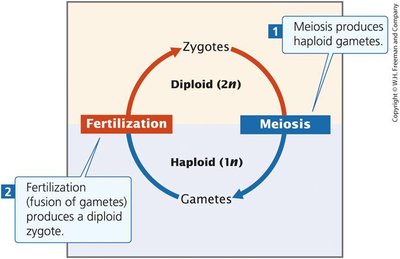
Sexual reproduction alternates between haploid (1n) and diploid (2n) states. Fertilization restores diploidy, while meiosis produces haploid gametes.
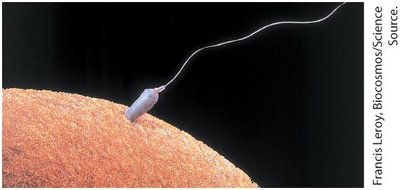
Gamete differences: Male and female gametes differ in size; sperm are typically smaller and motile, while eggs are larger and non-motile.
Sex Determination in Humans and Other Species
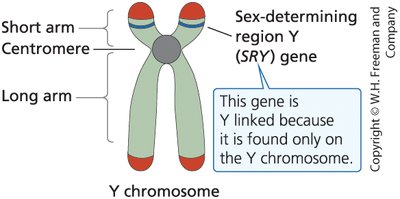
In humans, the presence of the Y chromosome (specifically the SRY gene) determines maleness. In fruit flies, the number of X chromosomes relative to autosomes determines sex. Birds use the ZZ–ZW system, where females are heterogametic (ZW).
SRY gene: The sex-determining region Y (SRY) gene on the Y chromosome triggers male development.
Model Organisms in Genetics
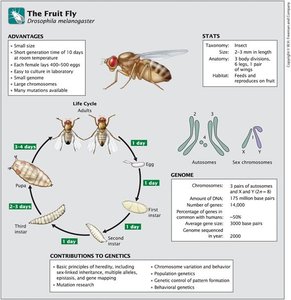
Drosophila melanogaster
The fruit fly, Drosophila melanogaster, is a model genetic organism due to its short generation time, ease of culture, and well-understood genetics. It has been instrumental in the discovery of sex-linked inheritance and gene interaction.