 Back
BackExtensions and Modifications of Basic Principles in Genetics
Study Guide - Smart Notes
 Tailored notes based on your materials, expanded with key definitions, examples, and context.
Autosomal Dominant Inheritance
Definition and Key Features
Autosomal dominant inheritance refers to genetic traits or disorders that are expressed when only one copy of a mutant allele is present on an autosome (non-sex chromosome). These traits typically appear in every generation and affect both males and females equally.
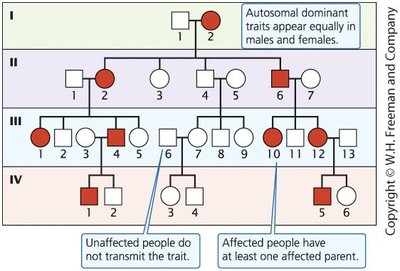
Affected individuals appear in every generation
Males and females transmit the trait equally to their offspring
Unaffected individuals do not transmit the trait
Affected individuals have at least one affected parent

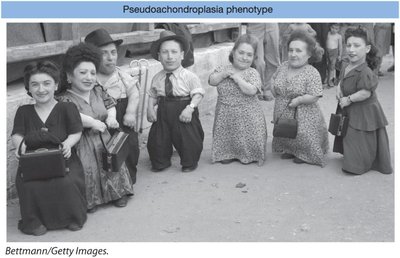
Examples: Huntington’s disease, Polydactyly, Piebald spotting, Pseudoachondroplasia
Gene Interaction and Extensions of Mendelian Principles
Introduction
Classical Mendelian genetics describes inheritance patterns for single-gene traits, but many traits are influenced by multiple genes or modified by environmental factors. Extensions and modifications of basic principles include gene interactions, multiple alleles, and non-Mendelian inheritance patterns.
Sex Determination and Chromosomal Systems
Mechanisms of Sex Determination
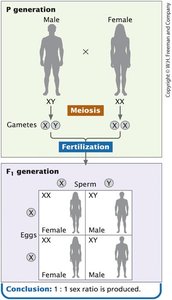
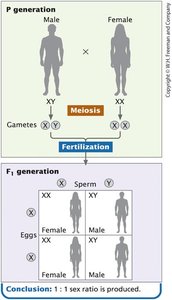
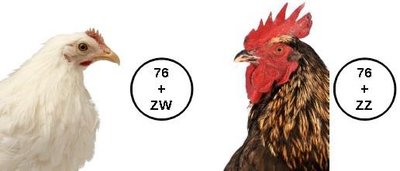
Sex determination is the process by which organisms develop into males or females. Several mechanisms exist, including chromosomal, genic, and environmental systems.
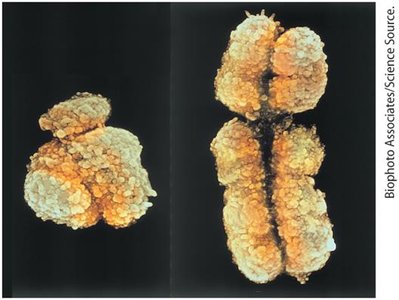
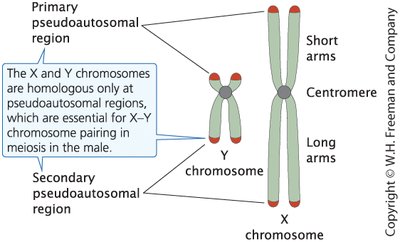
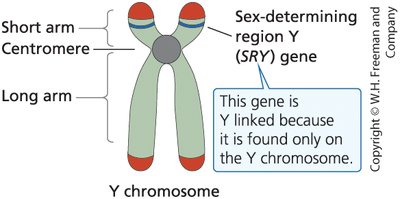
Chromosomal sex determination: Sex is determined by specific combinations of sex chromosomes (e.g., XX/XY in humans, ZZ/ZW in birds).
Genic sex determination: Sex is determined by genes on undifferentiated chromosomes, not by distinct sex chromosomes.
Environmental sex determination: Environmental factors such as temperature influence sex determination in some species (e.g., turtles).
Model Organisms in Genetics
Drosophila melanogaster
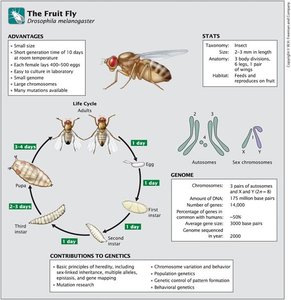
Drosophila melanogaster (fruit fly) is a widely used model organism in genetics due to its short generation time, ease of culture, and well-understood genome.
Sex-Linked Inheritance
X-Linked Recessive Traits
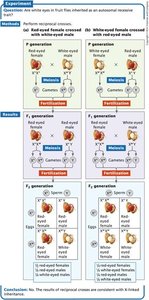
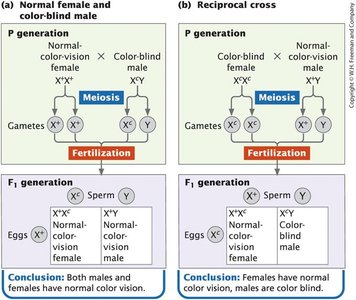
X-linked recessive traits are determined by genes located on the X chromosome. Males (XY) are more likely to express these traits because they have only one X chromosome, while females (XX) must inherit two copies of the mutant allele to express the trait.
Examples: Red-green color blindness, Hemophilia
Females: Can be homozygous normal, heterozygous carriers, or homozygous affected
Males: Hemizygous for X-linked genes (only one allele present)




Dosage Compensation and X Inactivation
Mechanisms and Examples
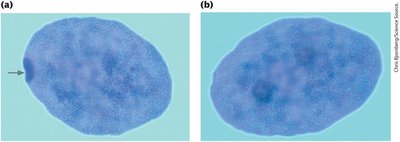
Dosage compensation ensures equal expression of X-linked genes in males and females. In mammals, one X chromosome in females is randomly inactivated (Barr body formation), leading to mosaic expression of X-linked traits.
Barr body: Inactivated X chromosome in female cells
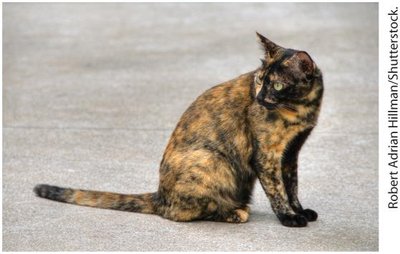
Random X inactivation: Leads to mosaic phenotypes, such as tortoiseshell coat color in cats
Extensions of Mendelian Inheritance: Dominance Relationships
Complete, Incomplete, and Codominance
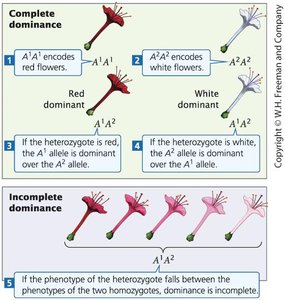
Dominance relationships describe how different alleles interact to produce phenotypes in heterozygotes.
Complete dominance: Heterozygote expresses the same phenotype as one homozygote
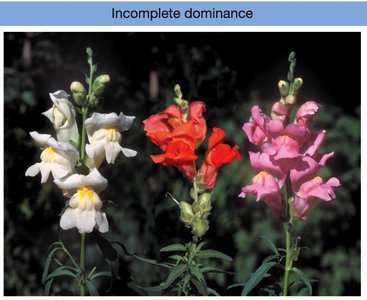
Incomplete dominance: Heterozygote shows an intermediate phenotype
Codominance: Heterozygote expresses both phenotypes simultaneously
Multiple Alleles and Codominance: ABO Blood Groups
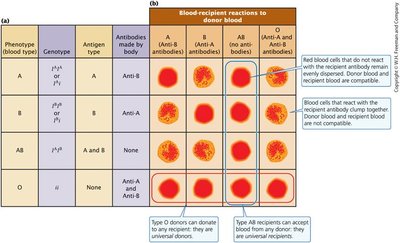
Some loci have more than two alleles in the population. The ABO blood group system is a classic example, with three alleles (IA, IB, i) showing both codominance and dominance relationships.
IA and IB are codominant
Both are dominant to i
Expressivity:
Penetrance:
Compound heterozygotę: an individual who carries two different non functional alleles of a gene that results in a recessive phenotype EX: cystic fibrosis
