 Back
Extensions and Modifications of Mendelian Principles: Study Guide for Genetics
Study Guide - Smart Notes
 Tailored notes based on your materials, expanded with key definitions, examples, and context.
Extensions and Modifications of Basic Principles
Allelic Interactions and Types of Dominance
Allelic interactions at a single locus can significantly impact the expression of traits, leading to deviations from classical Mendelian ratios. The type of dominance observed depends on how the two alleles interact to produce a phenotype.
Complete Dominance: One allele completely masks the effect of the other. The heterozygote has the same phenotype as the homozygous dominant.
Incomplete Dominance: The heterozygote displays a phenotype intermediate between the two homozygotes. Genotypic ratio equals phenotypic ratio.
Codominance: Both alleles in the heterozygote are fully expressed, resulting in a phenotype that shows characteristics of both homozygotes.
Example: Flower color in snapdragons demonstrates incomplete dominance, where the heterozygote (A1A2) produces a pink flower, intermediate between red (A1A1) and white (A2A2).
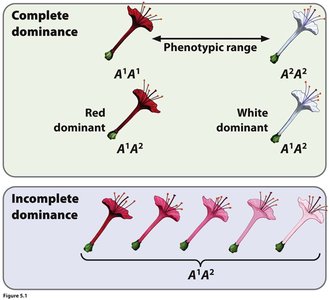
Additional info: Dominance is an intralocus interaction and does not affect gene inheritance, only phenotype expression.
Penetrance and Expressivity
Penetrance and expressivity describe how consistently and to what degree a genotype manifests as a phenotype.
Penetrance: The percentage of individuals with a specific genotype who express the expected phenotype.
Expressivity: The degree or intensity with which a phenotype is expressed.
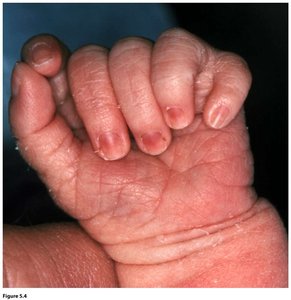
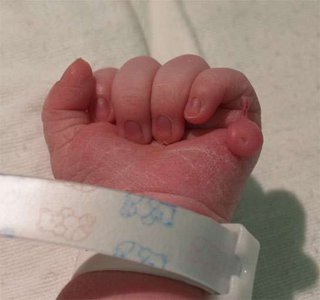
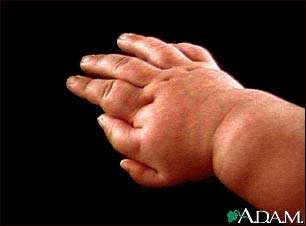
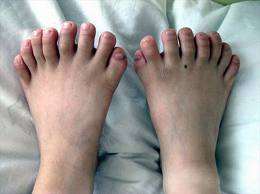
Example: Polydactyly (extra fingers or toes) in humans is caused by a dominant allele but shows incomplete penetrance and variable expressivity.
Lethal Alleles
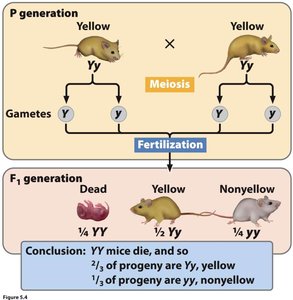
Lethal alleles cause death at an early stage of development, altering expected Mendelian ratios. Most lethal alleles are recessive, and a typical cross involving a recessive lethal allele produces a 2:1 phenotypic ratio.
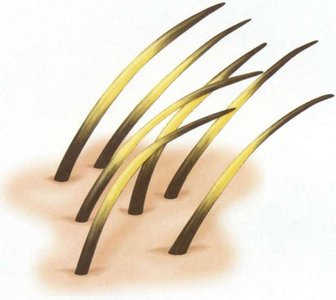
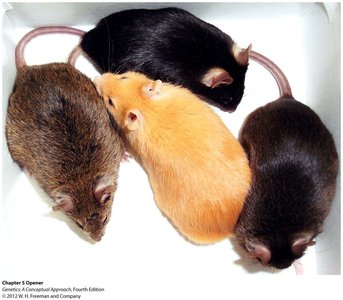
Example: The yellow coat color gene in mice (AY) is a recessive lethal allele. Homozygous AYAY mice die, so only heterozygotes (AYAW) and homozygous wild-type (AWAW) survive.
Multiple Alleles and Blood Groups
Multiple Alleles
Some loci have more than two possible alleles in a population, increasing the number of possible genotypes and phenotypes.
Genotype formula: , where n is the number of alleles.
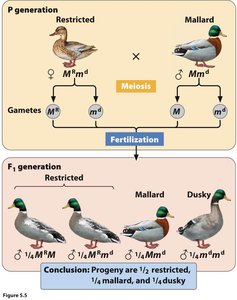
Example: Plumage pattern in mallard ducks is determined by three alleles at the M locus: MR (restricted), M (mallard), and md (dusky).
Human ABO Blood Groups
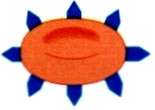
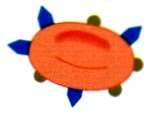
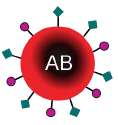
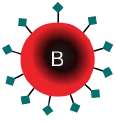
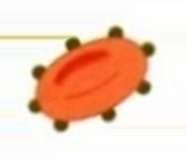
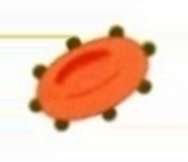
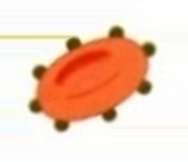
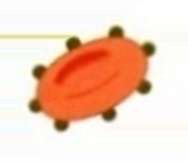
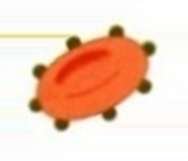
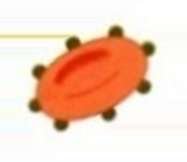
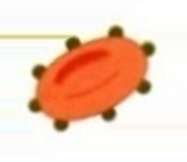
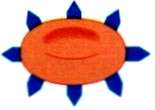
The ABO blood group system is determined by three alleles: IA, IB, and i. The presence of specific antigens and antibodies determines blood type compatibility.
Phenotypes: A, B, AB, O
Genotypes: IAIA, IAi, IBIB, IBi, IAIB, ii
Antigens: A, B, both, or none
Antibodies: Anti-B, Anti-A, none, or both
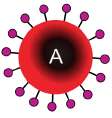
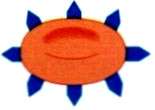
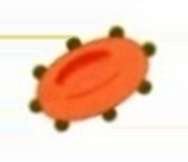
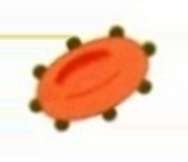
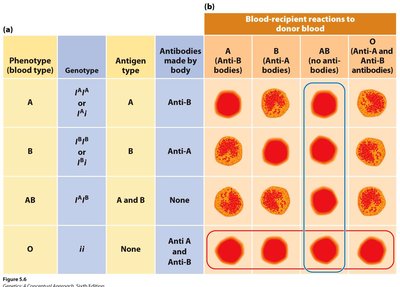
Phenotype (blood type) | Genotype | Antigen type | Antibodies made by body |
|---|---|---|---|
A | IAIA or IAi | A | Anti-B |
B | IBIB or IBi | B | Anti-A |
AB | IAIB | A and B | None |
O | ii | None | Anti-A and Anti-B |
Compound Heterozygotes
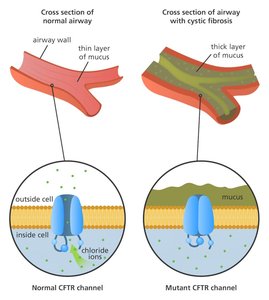
A compound heterozygote carries two different mutant alleles at a locus, resulting in a recessive phenotype. This is common in diseases like cystic fibrosis, where multiple mutant alleles can cause the same disease.
Gene Interaction and Epistasis
Gene Interaction
Gene interaction occurs when two or more genes at different loci influence a single trait. This can produce novel phenotypes and alter expected Mendelian ratios.
Example: Fruit color in peppers is determined by interaction between the Y and C loci, resulting in four phenotypes: red, peach, orange, and cream.
Epistasis
Epistasis is a form of gene interaction where one gene masks the effect of another gene at a different locus.
Recessive Epistasis: Two recessive alleles at one locus mask the expression of another gene (9:3:4 ratio).
Dominant Epistasis: A single dominant allele at one locus masks the expression of another gene (12:3:1 ratio).
Duplicate Recessive Epistasis: Two recessive alleles at either of two loci suppress a phenotype (9:7 ratio).
Example: Labrador retriever coat color is determined by B and E loci, with recessive epistasis producing black, brown, and yellow phenotypes.
Sex-Based Influences and Cytoplasmic Inheritance
Sex-Influenced and Sex-Limited Characteristics
Sex-influenced traits are encoded by autosomal genes but expressed differently in males and females. Sex-limited traits are also autosomal but expressed only in one sex.
Example: Beard in goats is sex-influenced; rooster feathering in chickens is sex-limited.
Cytoplasmic Inheritance
Cytoplasmic inheritance involves genes located in organelles such as mitochondria and chloroplasts. These traits are usually maternally inherited and can show extensive phenotypic variation.
Example: Mitochondrial diseases and leaf variegation in four-o’clocks.
Genetic Maternal Effect, Genomic Imprinting, and Epigenetics
Genetic Maternal Effect
The phenotype of the offspring is determined only by the genotype of the mother, due to substances present in the egg cytoplasm.
Example: Shell coiling direction in snails is determined by the maternal genotype.
Genomic Imprinting
Genomic imprinting occurs when the expression of a gene depends on whether it is inherited from the mother or father. This is often due to epigenetic marks such as DNA methylation.
Example: The Igf2 gene in humans is expressed only from the paternal allele.
Epigenetics
Epigenetics refers to heritable changes in gene expression that do not involve changes to the DNA sequence. These changes are often due to chemical modifications such as methylation.
Example: Bee larvae develop into workers or queens based on epigenetic modifications influenced by diet.
Anticipation, Environmental Effects, and Polygenic Traits
Anticipation
Anticipation is the phenomenon where a genetic trait becomes more strongly expressed or appears at an earlier age in successive generations.
Example: Myotonic dystrophy in humans, where the mutation increases in size over generations.
Environmental Effects
Environmental factors can influence the expression of genetic traits, sometimes producing phenocopies—phenotypes that mimic those produced by specific genotypes.
Example: Vestigial wing mutation in Drosophila is only expressed at certain temperatures.
Polygenic and Multifactorial Traits
Polygenic traits are controlled by multiple genes, resulting in continuous variation. Multifactorial traits are influenced by both genetic and environmental factors.
Example: Human height and skin color are polygenic and multifactorial.
Pleiotropy
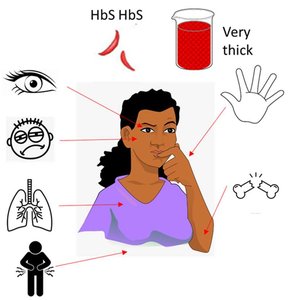
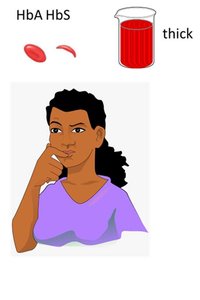
Pleiotropy occurs when one gene affects multiple characteristics.
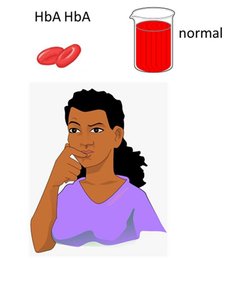
Example: The HbS mutation in sickle cell anemia affects multiple organ systems.
Summary Table: Phenotypic Ratios and Genetic Mechanisms
Phenotypic Ratio | Cross | Genetic Explanation |
|---|---|---|
3:1 | Aa x Aa | 1 gene, 2 alleles, complete dominance |
2:1 | Heterozygote x heterozygote (lethal allele) | Recessive lethal allele |
9:3:3:1 | AaBb x AaBb | 2 genes, 2 alleles per gene, complete dominance |
9:3:4 | Dihybrid cross with recessive epistasis | Recessive epistasis |
12:3:1 | Dihybrid cross with dominant epistasis | Dominant epistasis |
9:7 | Dihybrid cross with duplicate recessive epistasis | Duplicate recessive epistasis |
Expectations for Mastery
Recognize and define co-dominance, incomplete dominance, lethal alleles, multiple alleles, penetrance, expressivity, epistasis, sex-linked, sex-limited, cytoplasmic effect, maternal effect, genetic anticipation, genomic imprinting, pleiotropy, continuous traits, and multifactorial traits.
Interpret worked examples and solve problems involving these concepts.
