 Back
BackExtensions of Mendelian Inheritance: Sex Determination, Sex-linked Inheritance, and Gene Interactions
Study Guide - Smart Notes
 Tailored notes based on your materials, expanded with key definitions, examples, and context.
Extensions of Basic Principles
Subtopic 4.1 – Sex Chromosomes and Sex Determination
Sex determination in higher eukaryotes involves specialized chromosomes called sex chromosomes, which differ between males and females, in contrast to autosomes that are the same in both sexes. The mechanisms of sex determination vary among species and can involve different chromosomal systems.
Autosomes: Non-sex chromosomes, present in equal numbers in both sexes.
Sex chromosomes: Chromosomes that determine the biological sex of an organism and carry genes for sex-linked traits.
Heterogametic sex: Produces two types of gametes with respect to sex chromosomes (e.g., XY in mammals, ZW in birds).
Homogametic sex: Produces one type of gamete with respect to sex chromosomes (e.g., XX in mammals, ZZ in birds).
Organism | Homogametic | Heterogametic |
|---|---|---|
Mammals | XX (female) | XY (male) |
Birds, Butterflies | ZZ (male) | ZW (female) |
Grasshoppers | XX (female) | X (male) |
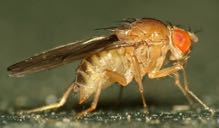
Drosophila | XX (female) | XY (male) |
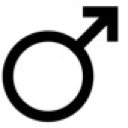
In mammals, the presence of the Y chromosome (specifically the SRY gene) determines maleness.
In Drosophila, sex is determined by the ratio of X chromosomes to sets of autosomes (X:A ratio).
Abnormalities such as XO (Turner syndrome) and XXY (Klinefelter syndrome) illustrate the importance of sex chromosomes in development.
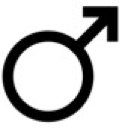
Intersex individuals may have ambiguous genitalia or mismatched chromosomal and phenotypic sex due to variations in sex chromosome composition or gene expression.
Subtopic 4.2 – Sex-linked Inheritance
Sex-linked inheritance refers to the transmission of genes located on sex chromosomes, most commonly the X chromosome. This leads to unique inheritance patterns, especially for X-linked traits.
X-linked traits: Traits determined by genes on the X chromosome.
Y-linked traits: Traits determined by genes on the Y chromosome (rare).
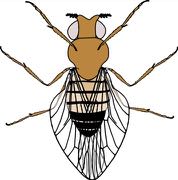
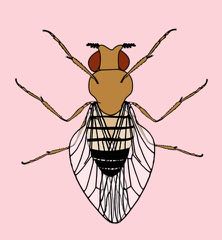
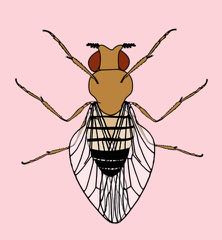
Thomas Hunt Morgan's experiments with Drosophila demonstrated X-linked inheritance using the white-eyed mutation.
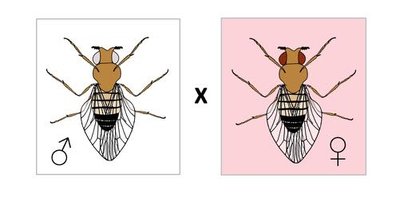
In Morgan's original cross (white-eyed male × wildtype female), all F1 offspring had wildtype eyes, but F2 showed a 3:1 ratio with all white-eyed flies being male.
Reciprocal crosses (wildtype male × white-eyed female) produced all white-eyed males and all wildtype females in F1, confirming X-linkage.
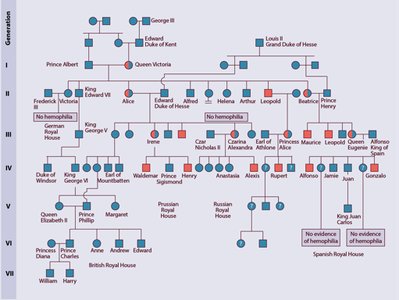
Pedigree analysis of X-linked recessive traits (e.g., hemophilia) shows that males are more frequently affected, as they have only one X chromosome.
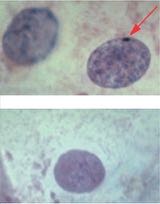
Lyon hypothesis: In females, one X chromosome is randomly inactivated (Barr body), leading to dosage compensation and genetic mosaics (e.g., tortoiseshell cats).
Subtopic 4.3 – Additional Factors at a Gene Locus
Gene expression can be influenced by various factors at a single locus, including dominance relationships, penetrance, expressivity, and the presence of lethal alleles or multiple alleles.
Complete dominance: Heterozygote shows the phenotype of the dominant allele; F2 ratio is 3:1.
Incomplete dominance: Heterozygote displays an intermediate phenotype; F2 ratio is 1:2:1.
Codominance: Both alleles are expressed in the heterozygote (e.g., AB blood type).
Penetrance: Proportion of individuals with a genotype who express the expected phenotype.
Expressivity: Degree to which a genotype is expressed in an individual.
Lethal alleles: Certain genotypes result in death, altering expected Mendelian ratios (e.g., yellow coat color in mice, where YY is lethal).
Multiple alleles: More than two alleles exist for a gene in a population (e.g., ABO blood group system).
Genotype | Blood Type (Phenotype) |
|---|---|
IAIA, IAi | A |
IBIB, IBi | B |
IAIB | AB |
ii | O |
Subtopic 4.4 – Epistatic Gene Interactions
Epistasis occurs when the expression of one gene is affected by one or more other genes. This can alter the expected phenotypic ratios in dihybrid crosses.
Epistasis: One gene masks or modifies the effect of another gene at a different locus.
Recessive epistasis: Homozygosity for a recessive allele at one locus masks expression at another locus (e.g., coat color in mice: cc is epistatic to B/b).
Duplicate recessive epistasis (complementation): Two genes are required for a phenotype; mutations in either gene produce the same phenotype (e.g., eye color in Drosophila).
Duplicate dominant epistasis: Either of two genes can produce the phenotype (e.g., endosperm color in maize).
Type of Epistasis | F2 Phenotypic Ratio | Example |
|---|---|---|
Recessive epistasis | 9:3:4 | Mouse coat color |
Duplicate recessive epistasis | 9:7 | Drosophila eye color |
Duplicate dominant epistasis | 15:1 | Maize endosperm color |
Subtopic 4.5 – Sex Can Influence Expression and Inheritance
Sex can influence the expression of certain genes, even if they are not located on sex chromosomes. This can occur through sex-influenced or sex-limited inheritance, as well as cytoplasmic inheritance and genomic imprinting.
Sex-influenced inheritance: Autosomal genes whose expression is affected by the sex of the individual (e.g., pattern baldness in humans).
Sex-limited inheritance: Autosomal genes expressed in only one sex (e.g., milk production in mammals).
Cytoplasmic inheritance: Traits inherited through genes in the cytoplasm (mitochondria or chloroplasts), usually from the mother (e.g., variegation in plants).
Genetic maternal effect: Offspring phenotype is determined by the genotype of the mother (e.g., shell coiling in snails).
Genomic imprinting: Expression of an allele depends on whether it is inherited from the mother or father, often due to epigenetic modifications such as DNA methylation.
Subtopic 4.6 – Influence of Environment and Multiple Genes
Phenotypes can be influenced by both genetic and environmental factors. Some traits are controlled by multiple genes (polygenic inheritance) and may also be affected by environmental conditions.
Environmental effects: The environment can affect gene expression (e.g., temperature-sensitive alleles in Himalayan rabbits).
Discontinuous (discrete) characteristics: Traits with a few distinct phenotypes (e.g., blood type).
Continuous (quantitative) characteristics: Traits with a range of phenotypes, often due to polygenic inheritance (e.g., height, skin color).
Multifactorial (complex) characteristics: Traits influenced by multiple genes and environmental factors.
