 Back
BackExtranuclear Inheritance: Organelle Genetics and Maternal Effects
Study Guide - Smart Notes
 Tailored notes based on your materials, expanded with key definitions, examples, and context.
Extranuclear Inheritance
Introduction to Extranuclear Inheritance
Extranuclear inheritance refers to the transmission of genetic information to offspring through the cytoplasm rather than the nucleus. This mode of inheritance often deviates from Mendelian principles and is now recognized as a significant aspect of genetics. The discovery of DNA in mitochondria and chloroplasts provided the foundation for understanding these non-Mendelian inheritance patterns.
Extranuclear inheritance: Genetic transmission via cytoplasmic organelles, usually from one parent (often the mother).
Three main varieties: Organelle heredity, infectious heredity, and maternal effect.
Types of Extranuclear Inheritance
Organelle heredity: DNA in mitochondria or chloroplasts determines certain phenotypic characteristics of offspring.
Infectious heredity: Phenotype is affected by symbiotic or parasitic microorganisms present in the host's cytoplasm.
Maternal effect: Nuclear gene products are stored in the egg and influence the phenotype of the offspring during early development.
Organelle Heredity
Chloroplast and Mitochondrial DNA
Organelle heredity involves the inheritance of traits determined by DNA in chloroplasts or mitochondria. The phenotype of the offspring is often determined by the source of the ovule (egg cell), not the pollen (sperm cell).
Chloroplast Mutation: Mirabilis jalapa (Four O'Clock Plant)
The four o'clock plant exhibits white, green, and variegated leaves due to mutations in chloroplast DNA. These mutations can eliminate green chlorophyll, resulting in white sectors of the leaf. The inheritance pattern depends on the cytoplasmic content of the ovule.
Source of Pollen | White Branch | Green Branch | Variegated Branch |
|---|---|---|---|
White branch | White | Green | White, green, or variegated |
Green branch | White | Green | White, green, or variegated |
Variegated branch | White | Green | White, green, or variegated |
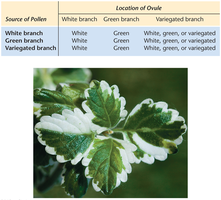
Example: The phenotype of progeny is determined by the branch (ovule source), not the pollen donor.
Chloroplast Mutations in Chlamydomonas
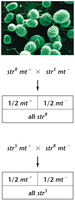
Chlamydomonas, a unicellular green alga, is a model for studying plastid inheritance. It contains a single large chloroplast with multiple copies of circular double-stranded DNA. Ruth Sager's studies on streptomycin resistance demonstrated cytoplasmic inheritance, as reciprocal crosses yielded different results depending on the parent contributing the cytoplasm.
Mitochondrial Mutations
Mitochondrial inheritance has been studied in organisms such as Neurospora crassa (bread mold) and Saccharomyces cerevisiae (yeast). Mutations in mitochondrial DNA can affect cellular respiration and energy production.
Mitochondrial Mutation in Neurospora crassa
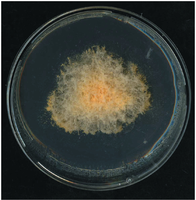
The 'poky' mutant strain of Neurospora crassa grows slowly due to impaired mitochondrial function, specifically the absence of several cytochrome proteins required for electron transport.
Mitochondrial Mutations in Saccharomyces cerevisiae (Yeast)
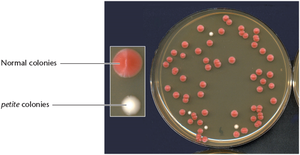
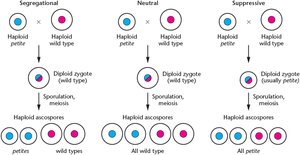
Yeast mutants called 'petites' form small colonies due to deficiencies in cellular respiration. There are three types of petite mutations:
Segregational petites: Result from nuclear mutations and segregate in a Mendelian fashion.
Neutral petites: Result from loss or deletion of mitochondrial DNA; mitochondria are inherited from both parents, but all progeny are wild type when crossed with wild type.
Suppressive petites: When crossed with wild type, all progeny express the petite phenotype due to dominance of the mutant mitochondria.
Organelle DNA Structure and Evolution
DNA in Chloroplasts and Mitochondria
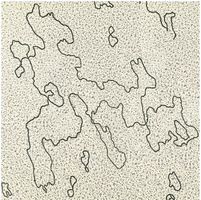
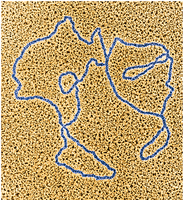
Organelle DNA is distinct from nuclear DNA. Both mitochondrial DNA (mtDNA) and chloroplast DNA (cpDNA) are typically circular and double-stranded, but mtDNA is generally smaller than cpDNA. These genomes encode some, but not all, proteins required for organelle function.
Endosymbiotic Theory
The endosymbiotic theory proposes that mitochondria and chloroplasts originated from free-living bacteria that were engulfed by ancestral eukaryotic cells. This symbiotic relationship allowed eukaryotes to acquire oxidative respiration and photosynthesis.
Bacteria were engulfed by larger cells and became organelles.
Organelles lost autonomy but provided essential metabolic functions.
Ribosomal Variation
Ribosomes in the cytoplasm are uniformly 80S in eukaryotes, while mitochondrial ribosomes vary from 55S to 80S. Chloroplasts contain genes for 16S and 23S rRNA, similar to prokaryotes.
Mitochondrial Gene Products
Most proteins required for mitochondrial function are encoded by nuclear genes, including DNA and RNA polymerases, ribosomal proteins, and aminoacyl tRNA synthetases.
Mutations in Mitochondrial DNA and Human Disorders
Human mtDNA
Human mitochondrial DNA contains 16,569 base pairs and encodes 13 proteins essential for aerobic respiration. Mutations in mtDNA can have severe effects due to limited DNA repair mechanisms and high exposure to reactive oxygen species (ROS).
mtDNA is more susceptible to mutations than nuclear DNA.
Heteroplasmy: Cells may contain a mixture of normal and mutant mitochondria, leading to variable expression of mitochondrial diseases.
Criteria for mtDNA-Linked Human Disorders
Maternal inheritance pattern
Deficiency in bioenergetic function
Mutation in one or more mitochondrial genes
Examples of Human mtDNA Disorders
MERRF (Myoclonic Epilepsy and Ragged-Red Fiber Disease): Characterized by muscle weakness, lack of coordination, and ragged-red muscle fibers.
LHON (Leber’s Hereditary Optic Neuropathy): Leads to sudden loss of vision in young adults.
KSS (Kearns–Sayre Syndrome): Causes progressive external ophthalmoplegia and other systemic symptoms.
Mitochondria, Health, and Aging
Mitochondrial dysfunction is implicated in a wide range of human diseases, including anemia, blindness, diabetes, autism, infertility, and neurodegenerative diseases such as Parkinson's and Alzheimer's.
Prevention of mtDNA Disorders
Genetic testing can identify individuals at risk for mtDNA-based diseases. Experimental therapies, such as mitochondrial replacement therapy (MRT), can prevent transmission of mtDNA mutations to offspring.
Maternal Effect
Definition and Mechanism
The maternal effect describes cases where the offspring’s phenotype is determined by the genotype of the mother, due to gene products deposited in the egg during oogenesis. These products influence early developmental patterns and traits.
Example: Shell Coiling in Lymnaea peregra (Snail)
In the snail Lymnaea peregra, the direction of shell coiling is determined by the genotype of the mother, not the offspring. This is a classic example of a permanent maternal effect on phenotype.
Maternal Effect in Drosophila Embryonic Development
In Drosophila, maternal gene products are synthesized and stored in the oocyte. After fertilization, these products establish molecular gradients that organize the developing embryo, activating cascades of gene expression.
Additional info: Maternal effect genes are crucial for early patterning and axis formation in many animals, and disruptions can lead to developmental abnormalities.
