 Back
BackFoundations of Genetics: Key Concepts, Chromosomes, and Mendelian Inheritance
Study Guide - Smart Notes
 Tailored notes based on your materials, expanded with key definitions, examples, and context.
Introduction to Genetics
Overview and Historical Context
Genetics is the study of heredity and variation in living organisms. The field has evolved from early observations of trait inheritance to the molecular understanding of genes and chromosomes. Modern genetics integrates classical experiments, molecular biology, and genomics to explain how traits are transmitted and expressed.
Genetics is built on a tradition of discovery, from ancient domestication of plants and animals to the molecular era.
Transmission genetics describes how genes are passed through gametes from one generation to the next.
Model organisms are used to study genetic principles and human diseases due to their ease of manipulation and genetic similarity to humans.
Genetic technology is advancing rapidly, raising important ethical and societal questions.
Genes, Chromosomes, and Heredity
Chromosome Theory of Inheritance
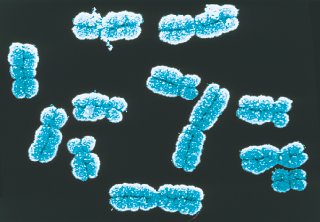
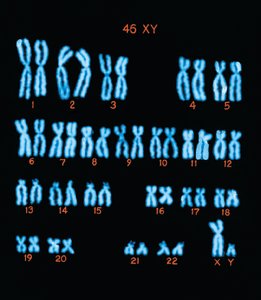
The chromosome theory of inheritance unites Mendel's principles with cytological observations, establishing that genes are located on chromosomes, which are transmitted through gametes.
Diploid organisms have pairs of homologous chromosomes (one from each parent).
Meiosis reduces chromosome number by half, ensuring genetic continuity and variation.
Genetic variation arises from mutations (heritable changes in DNA) and recombination.
DNA as the Genetic Material
Experiments by Avery, MacLeod, McCarty, and Hershey-Chase established DNA as the genetic material, not protein. The structure of DNA, elucidated by Watson and Crick, revealed a double helix composed of nucleotide pairs (A=T, G≡C), providing a mechanism for replication and information storage.
Gene expression follows the central dogma: DNA → RNA → Protein.
Proteins are the functional products of most genes, determining phenotype.
Mutations in DNA can alter protein structure and function, leading to genetic disorders (e.g., sickle-cell anemia).
Recombinant DNA Technology and Biotechnology
Recombinant DNA and Genomics
Recombinant DNA technology allows genes from different organisms to be combined and cloned, revolutionizing research and leading to the biotechnology industry. Genomics and proteomics are fields that analyze entire genomes and protein sets, respectively, using bioinformatics tools.
Genomic libraries are collections of cloned DNA fragments representing an organism's genome.
Biotechnology applications include genetically modified crops, gene therapy, and production of therapeutic proteins.
Model Organisms in Genetics
Importance and Examples
Model organisms such as Drosophila melanogaster (fruit fly), Mus musculus (mouse), Arabidopsis thaliana (mustard plant), and Caenorhabditis elegans (nematode) are used to study genetic mechanisms due to their short life cycles, ease of genetic manipulation, and relevance to human biology.
Discoveries in model organisms often translate to understanding human diseases.
Transgenic and knockout models are used to study gene function and disease mechanisms.
Mitosis and Meiosis
Cell Division and Genetic Continuity
Mitosis and meiosis are processes that ensure the faithful transmission of genetic material. Mitosis produces two identical diploid cells, while meiosis produces four genetically unique haploid gametes, introducing genetic variation through independent assortment and crossing over.
Mitosis: Maintains chromosome number and genetic identity in somatic cells.
Meiosis: Reduces chromosome number by half and increases genetic diversity.
Mendelian Genetics
Mendel's Laws and Experimental Approach
Gregor Mendel's experiments with pea plants established the basic principles of inheritance, now known as Mendel's Laws:
Law of Segregation: Each individual has two alleles for each gene, which segregate during gamete formation.
Law of Independent Assortment: Genes for different traits assort independently during gamete formation.
Dominance: In heterozygotes, one allele may mask the expression of another (dominant vs. recessive).
Monohybrid and Dihybrid Crosses
Mendel's monohybrid crosses (one trait) revealed a 3:1 phenotypic ratio in the F2 generation, while dihybrid crosses (two traits) revealed a 9:3:3:1 ratio, supporting the principle of independent assortment.
Punnett squares are used to predict genotypic and phenotypic ratios.
Testcrosses determine the genotype of individuals expressing dominant phenotypes.
Chromosomal Basis of Inheritance
The behavior of chromosomes during meiosis explains Mendel's laws. Homologous chromosomes segregate and assort independently, providing a physical basis for genetic ratios.
Genetic Variation and Probability
Sources of Variation
Independent assortment and crossing over during meiosis generate extensive genetic diversity.
The number of possible gamete combinations is , where is the haploid chromosome number.
Probability in Genetics
Genetic ratios are predictions based on probability laws (product and sum rules).
Chi-square analysis is used to evaluate the influence of chance on genetic data and to test hypotheses about inheritance patterns.
Ethical and Societal Considerations
Genetics, Ethics, and Society
Advances in genetics and biotechnology raise important ethical questions regarding genetic testing, privacy, gene editing, and the use of genetically modified organisms. Ongoing dialogue and policy development are essential to address these challenges responsibly.
