 Back
BackMidterm 1
Study Guide - Smart Notes
 Tailored notes based on your materials, expanded with key definitions, examples, and context.
Introduction to Genetics
Historical Perspectives and Theories of Inheritance
Genetics is the study of heredity and variation in living organisms. Early theories attempted to explain how traits are passed from one generation to the next, leading to the development of modern genetics.
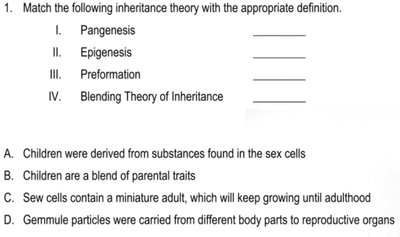
Pangenesis: The theory that gemmule particles are carried from different body parts to reproductive organs (D).
Epigenesis: The concept that an organism develops from the successive differentiation of an originally undifferentiated structure (A).
Preformation: The idea that sex cells contain a miniature adult, which will keep growing until adulthood (C).
Blending Theory of Inheritance: The belief that children are a blend of parental traits (B).
Timeline of Major Discoveries in Genetics
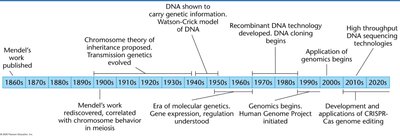
The field of genetics has evolved through key discoveries, from Mendel's foundational work to the era of genomics and genome editing.
1860s: Mendel's work on inheritance published.
1900s: Chromosome theory of inheritance proposed; Mendel's work rediscovered.
1940s: DNA shown to carry genetic information.
1950s: Watson-Crick model of DNA structure.
1970s: Recombinant DNA technology developed.
1990s: Human Genome Project initiated.
2000s–2020s: High-throughput sequencing and CRISPR genome editing.
Chromosomes and Cell Division
Chromosome Structure and Types
Chromosomes are structures within cells that contain DNA and proteins. They exist in pairs in diploid organisms, with one set from each parent.
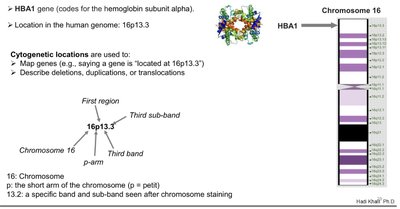
Centromere: The region where sister chromatids are joined; divides the chromosome into p (short) and q (long) arms.
Types of Chromosomes: Classified by centromere position: metacentric, submetacentric, acrocentric, and telocentric.
Meiosis: Modern vs. Sutton's Interpretation
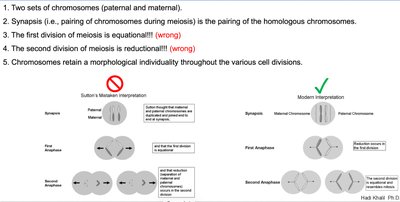
Meiosis is the process by which gametes are formed, reducing chromosome number by half. Modern interpretations clarify misconceptions from early models.
Two sets of chromosomes (paternal and maternal) are present.
Synapsis is the pairing of homologous chromosomes.
The first division of meiosis is reductional (not equational).
The second division is equational (not reductional).
Chromosomes retain their individuality throughout cell divisions.
DNA Structure and Analysis
DNA as the Genetic Material
DNA is the molecule responsible for storing and transmitting genetic information. Key experiments established its role as the genetic material.
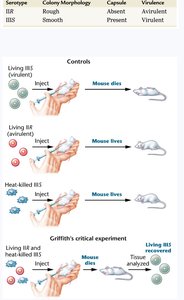
Griffith's Experiment: Demonstrated transformation in bacteria, suggesting a 'transforming principle' (later identified as DNA).
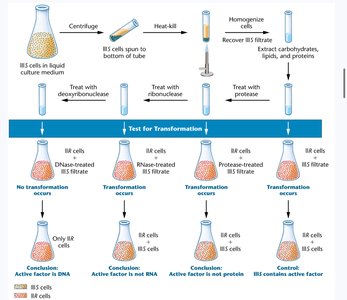
Avery-MacLeod-McCarty Experiment: Showed that DNA is the substance responsible for transformation.
X-ray Diffraction and DNA Structure
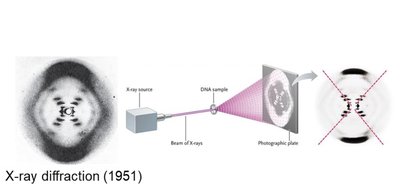
X-ray diffraction studies provided critical evidence for the double helix structure of DNA, as elucidated by Watson and Crick.
Chemical Structure of DNA
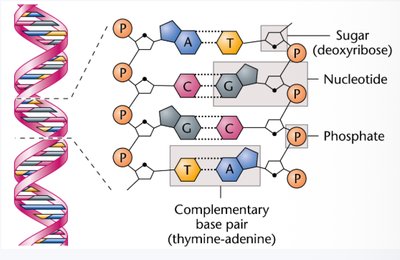
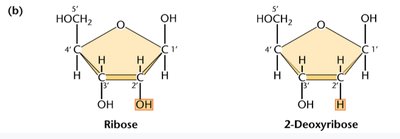
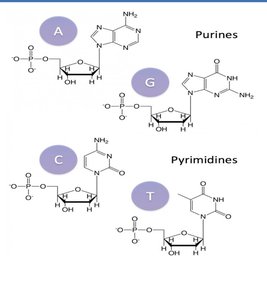
DNA is a double helix composed of nucleotides, each containing a phosphate group, a deoxyribose sugar, and a nitrogenous base (adenine, thymine, cytosine, or guanine).
Base Pairing: Adenine pairs with thymine (A-T) via two hydrogen bonds; cytosine pairs with guanine (C-G) via three hydrogen bonds.
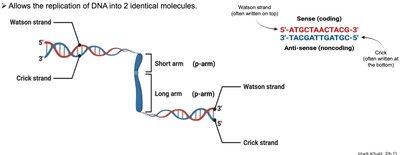
Complementary Strands: The two DNA strands are antiparallel and complementary.
Nucleotides and Nucleic Acid Chemistry
Nucleotides are the building blocks of nucleic acids. They consist of a nitrogenous base, a five-carbon sugar (ribose in RNA, deoxyribose in DNA), and a phosphate group.
Pyrimidines: Cytosine (C) and Thymine (T)
Purines: Adenine (A) and Guanine (G)
Chromatin and Chromosome Organization
Nucleosomes and Chromatin Structure
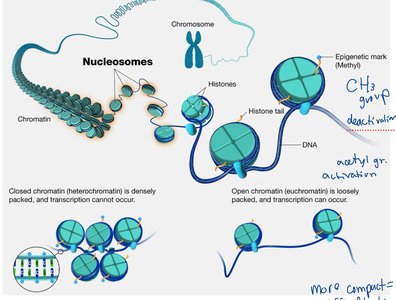
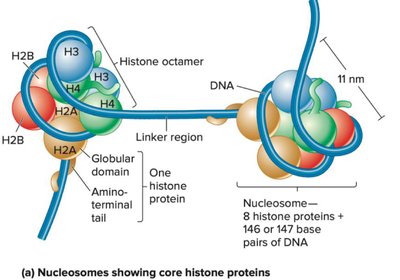
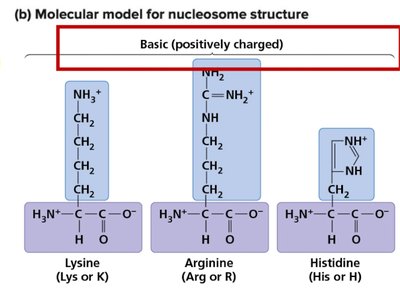
DNA is packaged into chromatin, which consists of DNA wrapped around histone proteins to form nucleosomes. This structure allows efficient packaging and regulation of gene expression.
Nucleosome: The basic unit of chromatin, consisting of DNA wrapped around a histone octamer.
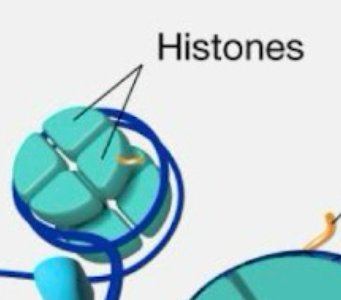
Histones: Proteins rich in lysine and arginine that facilitate DNA packaging.
Histone Types and Properties
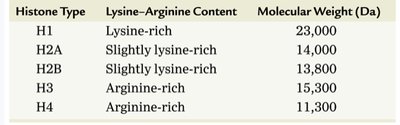
Histones are classified based on their amino acid content and molecular weight. They play a crucial role in chromatin structure and gene regulation.
Histone Type | Lysine–Arginine Content | Molecular Weight (Da) |
|---|---|---|
H1 | Lysine-rich | 23,000 |
H2A | Slightly lysine-rich | 14,000 |
H2B | Slightly lysine-rich | 13,800 |
H3 | Arginine-rich | 15,300 |
H4 | Arginine-rich | 11,300 |
Chromatin States and Epigenetic Regulation
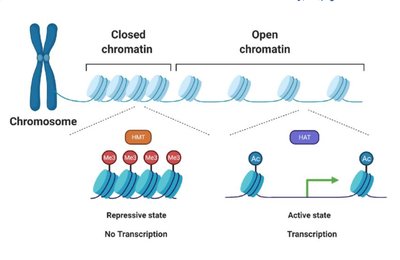
Chromatin can exist in open (euchromatin) or closed (heterochromatin) states, influencing gene expression. Epigenetic marks such as methylation and acetylation regulate chromatin structure and transcriptional activity.
Closed Chromatin (Heterochromatin): Densely packed, transcriptionally inactive.
Open Chromatin (Euchromatin): Loosely packed, transcriptionally active.
Gene Expression: Transcription and Translation
Central Dogma of Molecular Biology
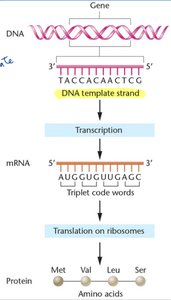
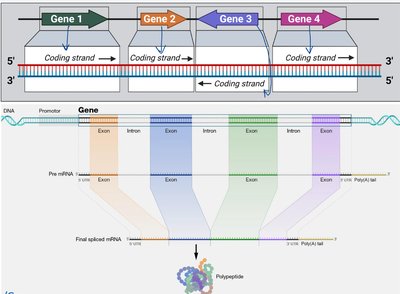
The central dogma describes the flow of genetic information from DNA to RNA to protein. Transcription produces messenger RNA (mRNA) from a DNA template, and translation synthesizes proteins using the mRNA code.
Transcription: Synthesis of RNA from a DNA template by RNA polymerase.
Translation: Synthesis of proteins on ribosomes using the mRNA sequence as a template.
Genetic Code and Codons
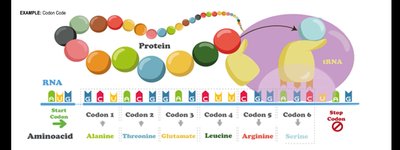
The genetic code is composed of triplet codons, each specifying a particular amino acid. The code is nearly universal and redundant, with multiple codons coding for the same amino acid.
Start Codon: AUG (methionine)
Stop Codons: UAA, UAG, UGA (signal termination of translation)
Transcription Mechanism
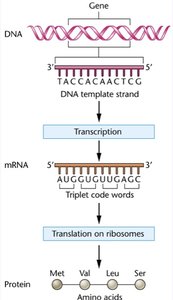
During transcription, RNA polymerase synthesizes RNA in the 5' to 3' direction, using the DNA template strand. The coding (non-template) strand has the same sequence as the RNA (except T is replaced by U).
Probability in Genetics
Calculating Probabilities in Genetic Crosses
Probability calculations are essential for predicting genetic outcomes. For rare traits, individuals with genotype AA are neither affected nor carriers. To pass on a recessive disease, a parent must be a carrier (Aa). The probability of being a carrier, given that the individual is not affected, is 2/3 (excluding aa individuals).
When multiple independent conditions must be met, multiply their probabilities.
Example Calculation:
Probability =
Additional info: This approach is used in pedigree analysis and risk assessment for inherited diseases.
