 Back
BackFoundations of Genetics: Structure, Function, and Historical Discoveries
Study Guide - Smart Notes
 Tailored notes based on your materials, expanded with key definitions, examples, and context.
Introduction to Genetics
Genetics is the scientific study of heredity and variation in living organisms. It explores how traits are passed from one generation to the next and how genetic information is encoded, replicated, and expressed. The field has evolved from early observations of inheritance to the molecular understanding of DNA, genes, and chromosomes.
DNA Mutation and Genetic Diseases
Sickle Cell Anemia: A Case Study
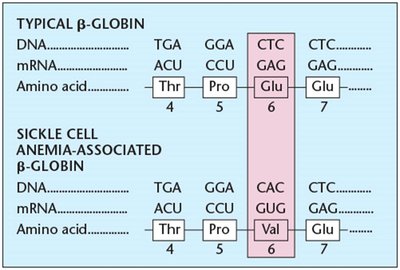
Sickle cell anemia is a genetic disorder caused by a single-nucleotide substitution in the gene encoding the β-globin subunit of hemoglobin. This mutation leads to the replacement of glutamic acid with valine at the sixth position of the β-globin protein, altering the protein's structure and function.
Mutation Type: Point mutation (missense mutation)
Effect: Alters the mRNA codon and the resulting amino acid sequence
Phenotypic Consequence: Abnormal hemoglobin causes red blood cells to assume a sickle shape, leading to various health complications
Silent Mutations and Phenotypic Effects
Not all mutations in the coding region of a gene result in observable phenotypic changes. A single base-pair substitution may be silent if it does not alter the amino acid sequence (due to the redundancy of the genetic code), or if the change does not affect protein function. Mutations can have effects at the DNA, RNA, or protein level, but may not always manifest in the organism's phenotype.
Gene Expression: Transcription and Translation
Central Dogma of Molecular Biology
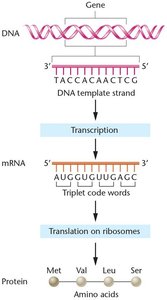
Gene expression involves two main processes: transcription and translation. During transcription, DNA is used as a template to synthesize messenger RNA (mRNA). Translation then uses the mRNA sequence to assemble amino acids into a protein with the help of ribosomes.
Transcription: DNA → mRNA
Translation: mRNA → Protein
Genetics and Evolution
Principles of Evolution by Natural Selection
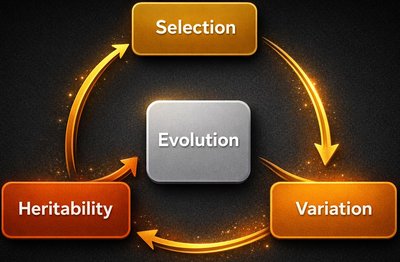
Evolution occurs when heritable variations are subject to natural selection over time. Three key components are necessary and sufficient for evolution by natural selection:
Variation: Individuals in a population vary in their traits
Heritability: Traits are passed from parents to offspring
Selection: Some traits confer a reproductive advantage
Historical Perspectives in Genetics
Major Discoveries
Cell Theory (1838): All living things are composed of cells, and all cells arise from pre-existing cells.
Theory of Evolution (1859): Charles Darwin and Alfred Russel Wallace proposed descent with modification and natural selection.
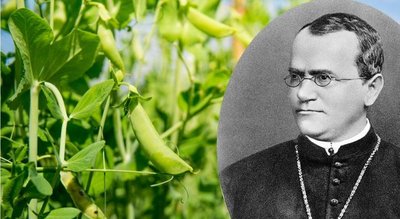
Mendel's Experiments (1866): Gregor Mendel's work with pea plants established the basic laws of inheritance.
Mendelian Genetics
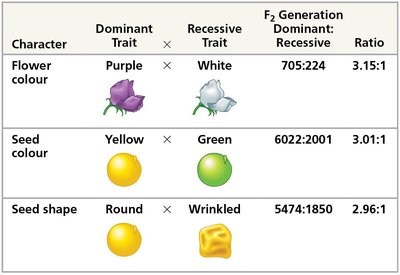
Mendel's experiments with pea plants revealed predictable patterns of inheritance for traits such as flower color, seed color, and seed shape. He formulated the laws of segregation and independent assortment.
Character | Dominant Trait | Recessive Trait | F2 Generation Dominant:Recessive Ratio |
|---|---|---|---|
Flower colour | Purple | White | 3.15:1 |
Seed colour | Yellow | Green | 3.01:1 |
Seed shape | Round | Wrinkled | 2.96:1 |
Chromosomes and Cell Division
Chromosome Structure and Function
Chromosomes are threadlike structures composed of DNA and proteins. They carry genetic information and are visible during cell division. Chromosomes exist in pairs in diploid organisms, with one set inherited from each parent.
Meiosis and Chromosome Behavior
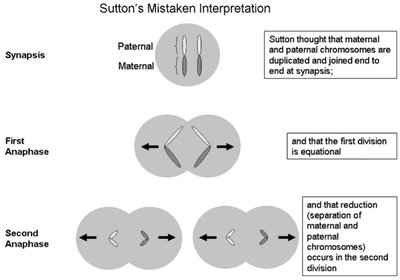
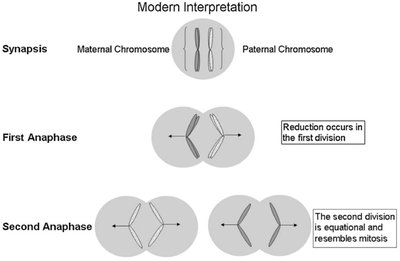
Meiosis is the process by which gametes (sperm and egg cells) are produced, reducing the chromosome number by half. Early interpretations of chromosome behavior during meiosis were revised as our understanding improved.
Synapsis: Pairing of homologous chromosomes
First Division: Reductional (chromosome number halved)
Second Division: Equational (resembles mitosis)
Discovery of DNA as Genetic Material
Griffith's Transformation Experiment (1927)
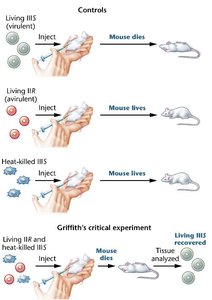
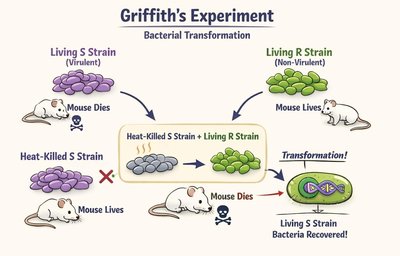
Frederick Griffith demonstrated that a 'transforming principle' from dead virulent bacteria could convert non-virulent bacteria into a virulent form, suggesting that genetic information could be transferred between cells.
Avery, MacLeod, and McCarty Experiment (1944)
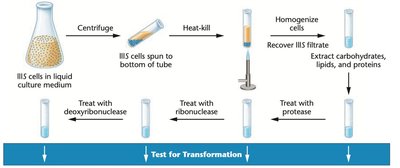
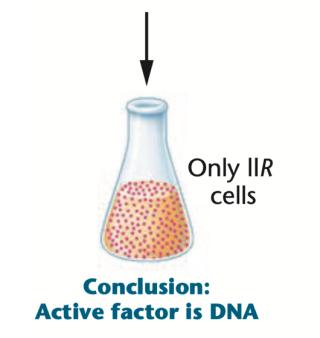
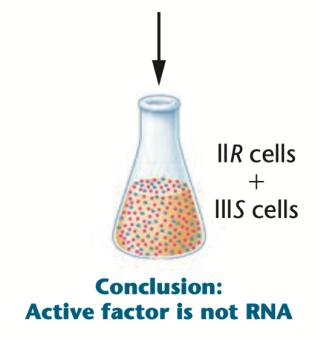
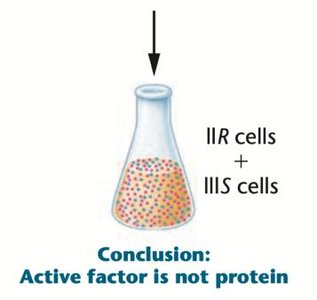
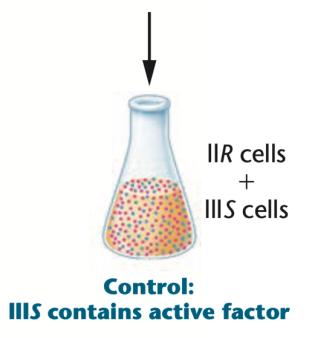
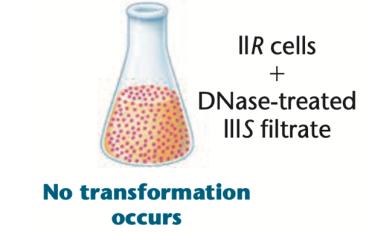
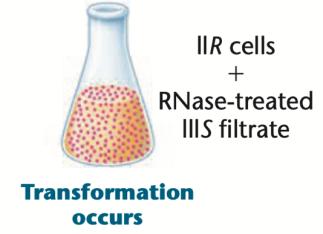
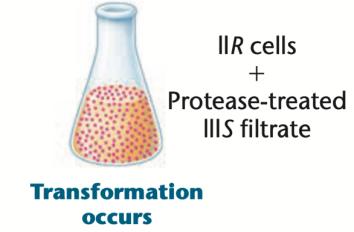
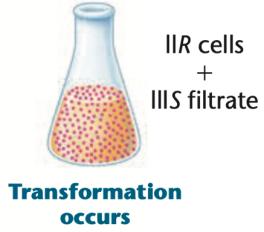
This experiment identified DNA as the molecule responsible for transformation. By selectively destroying proteins, RNA, or DNA in bacterial extracts, they showed that only the destruction of DNA prevented transformation, proving that DNA carries genetic information.
Genome Organization and Chromatin Structure
Genome Definition and Components
The genome is the complete set of heritable genetic information in an organism, including nuclear DNA, mitochondrial DNA, and (in plants) chloroplast DNA. In prokaryotes, the genome is typically a single circular chromosome.
Chromatin and Chromosome Structure
DNA is packaged with proteins into chromatin, which further condenses to form chromosomes. The basic unit of chromatin is the nucleosome, consisting of DNA wrapped around histone proteins. Chromatin exists in two forms:
Heterochromatin: Densely packed, transcriptionally inactive
Euchromatin: Loosely packed, transcriptionally active
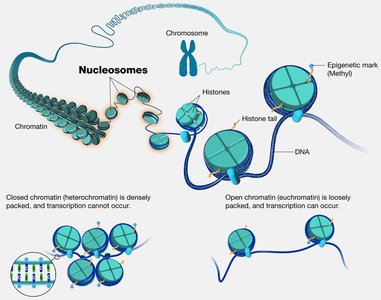

Chromosome Anatomy
Chromosomes have distinct regions, including the centromere (site of spindle attachment during cell division), p-arm (short arm), and q-arm (long arm). Genes are mapped to specific locations (cytogenetic locations) on chromosomes, such as 16p13.3 for the HBA1 gene.
DNA Structure and Composition
DNA Components
DNA is composed of nucleotides, each consisting of a deoxyribose sugar, a phosphate group, and a nitrogenous base (adenine, thymine, cytosine, or guanine). The double helix structure is stabilized by hydrogen bonds between complementary bases (A-T and C-G).
Pyrimidines: Cytosine and thymine (single ring)
Purines: Adenine and guanine (double ring)
DNA Coding and Template Strands
The coding (sense) strand of DNA has the same sequence as the mRNA (except T is replaced by U in RNA), while the template (antisense) strand is used for transcription. Genes can be located on either strand.
Transcription and Translation
Process Overview
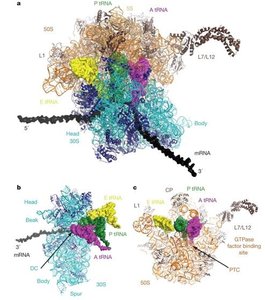
Transcription produces an mRNA molecule complementary to the DNA template strand. Translation uses the mRNA sequence to direct the synthesis of a protein on the ribosome, following the genetic code.
Transcription direction: 5' to 3'
mRNA: Contains codons that specify amino acids
Translation: Ribosomes read mRNA and assemble amino acids into proteins
Summary Table: Key Concepts in Genetics
Concept | Definition | Example/Application |
|---|---|---|
Gene | Basic unit of inheritance | β-globin gene |
Mutation | Change in DNA sequence | Sickle cell anemia |
Chromosome | DNA-protein complex carrying genes | Human chromosome 16 |
Transcription | DNA to mRNA synthesis | mRNA for hemoglobin |
Translation | mRNA to protein synthesis | Hemoglobin protein |
Heterochromatin | Densely packed, inactive chromatin | Centromeric regions |
Euchromatin | Loosely packed, active chromatin | Gene-rich regions |
