 Back
BackGene Interactions: Variations in Dominance and Allelic Relationships CH4 Pt1 NEW SEM
Study Guide - Smart Notes
 Tailored notes based on your materials, expanded with key definitions, examples, and context.
Gene Interactions and Variations in Dominance
Overview of Mendelian and Non-Mendelian Dominance
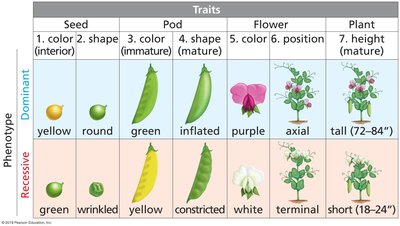
Classical Mendelian genetics describes traits controlled by two alleles, with one being dominant and the other recessive. However, many traits exhibit more complex inheritance patterns due to interactions between alleles or the presence of multiple alleles. Understanding these variations is essential for predicting genotypic and phenotypic outcomes in genetic crosses.
Complete Dominance: One allele completely masks the effect of the other.
Incomplete Dominance: Heterozygotes display an intermediate phenotype.
Codominance: Both alleles are fully expressed in heterozygotes.
Multiple Alleles: More than two alleles exist for a gene within a population.
Lethal Alleles: Certain alleles can cause death at embryonic or later stages.
Molecular Basis of Dominance
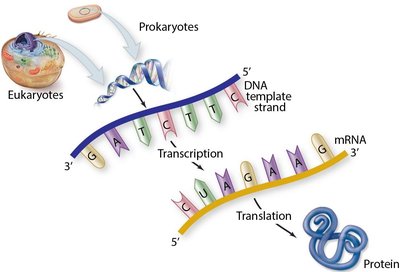
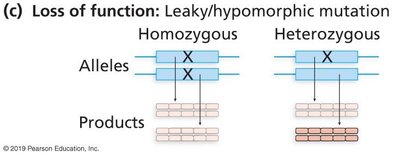
Dominance relationships are determined by the molecular function of gene products. The central dogma of molecular biology explains how DNA is transcribed into mRNA and then translated into protein. Mutations can alter the amount, timing, or function of these gene products, leading to different dominance relationships.
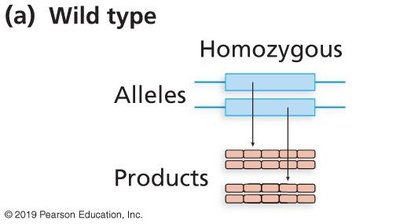
Wild-type alleles: Produce normal, functional protein.
Mutant alleles: May produce no protein, less protein, or altered protein.
Types of Mutation Effects
Mutations can be classified based on their effect on gene function:
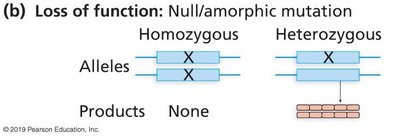
Loss of Function Mutations:
Null Mutations: Complete loss of gene product.
Leaky (Hypomorphic) Mutations: Reduced gene product, but some function remains.
Dominant Negative Mutations: Mutant protein interferes with wild-type protein function.
Gain of Function Mutations:
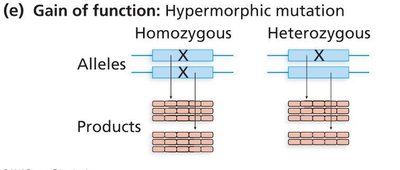
Hypermorphic: Increased gene activity.
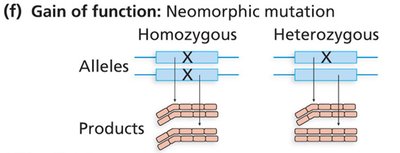
Neomorphic: Novel gene activity not found in wild-type.

Variations on Dominance
Incomplete Dominance
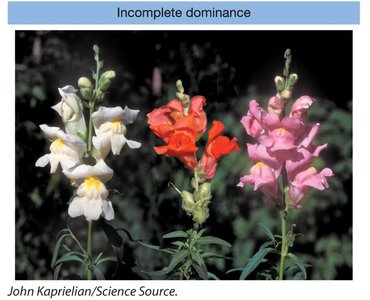
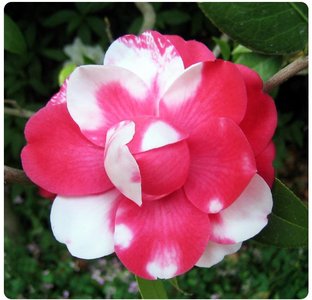
In incomplete dominance, the heterozygote exhibits a phenotype intermediate between the two homozygotes. This is often observed in quantitative traits, such as flower color or timing of flowering.
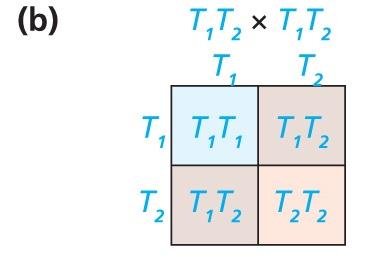
Example: Crossing pure-breeding red and white flowers produces pink F1 offspring. F2 generation shows a 1:2:1 ratio of red:pink:white.
Genotype-Phenotype Relationship: Each allele contributes a 'dose' to the phenotype.
Codominance
Codominance occurs when both alleles are fully expressed in the heterozygote, resulting in a phenotype that shows characteristics of both homozygotes.
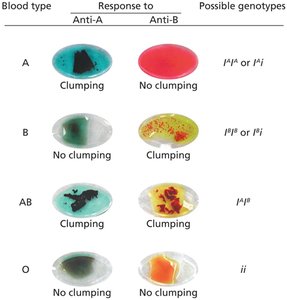
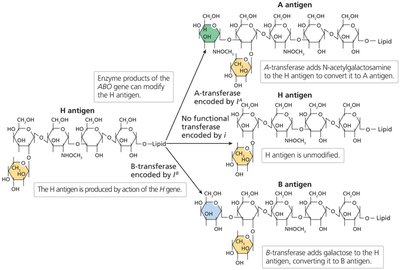
Example: Blood type AB in humans, where both A and B antigens are present.
Genotype-Phenotype Relationship: IA and IB alleles are codominant; i is recessive.
Multiple Alleles and Allelic Series
Coat Color in Rabbits
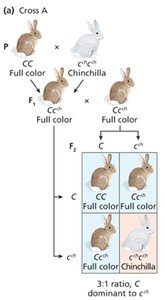
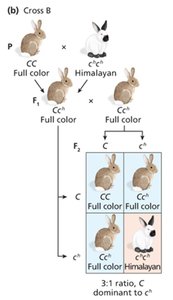
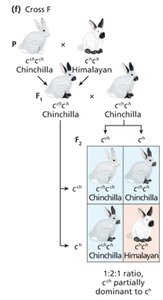
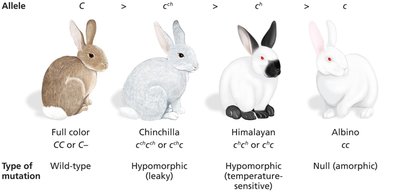
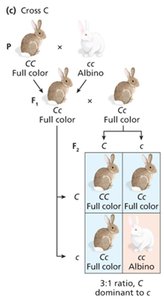
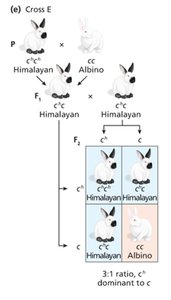
Some genes have more than two alleles, forming an allelic series. The C gene in rabbits determines coat color, with several alleles exhibiting a hierarchy of dominance.
Wild-type (C): Full color.
Chinchilla (cch): Dilute color.
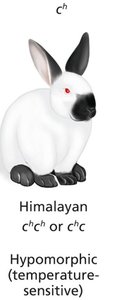
Himalayan (ch): Pigment only on extremities; temperature-sensitive.
Albino (c): No pigment; null allele.
Temperature-Sensitive Alleles
Some alleles, such as the Himalayan allele in rabbits, are functional only at certain temperatures. This results in pigment production on cooler body parts (ears, paws, tail) but not on warmer areas (trunk).
Lethal Alleles and Their Effects
Embryonic and Gametophytic Lethals
Lethal alleles can cause death at embryonic or gametophytic stages, affecting genotypic ratios in offspring.
Embryonic lethals: Homozygous individuals do not survive; observed as a 3:1 ratio of living:dead seeds.
Gametophytic lethals: Gametes carrying the lethal allele fail; observed as a 1:1 ratio of living:dead seeds.
Dominant Lethal Alleles with Late Onset
Dominant lethal alleles may persist in populations if their effects are not apparent until after reproductive age. Huntington disease is a classic example, with symptoms appearing in adulthood.
Huntington Disease: Fatal neurodegenerative disorder; symptoms begin in late thirties or forties.
Summary of Non-Mendelian Dominance
Non-Mendelian dominance includes incomplete dominance, codominance, multiple alleles, and lethal alleles. These variations arise from molecular differences in gene expression and protein function, and are essential for understanding complex inheritance patterns in genetics.
Key Terms and Concepts
Allele: Variant form of a gene.
Genotype: Genetic makeup of an organism.
Phenotype: Observable traits of an organism.
Homozygous: Two identical alleles for a gene.
Heterozygous: Two different alleles for a gene.
Null Mutation: Mutation resulting in no functional gene product.
Leaky Mutation: Mutation resulting in reduced gene product.
Dominant Negative Mutation: Mutant allele interferes with wild-type allele.
Hypermorphic Mutation: Mutation resulting in increased gene activity.
Neomorphic Mutation: Mutation resulting in novel gene activity.
Example Table: Blood Type Genotypes and Phenotypes
Blood Type | Response to Anti-A | Response to Anti-B | Possible Genotypes |
|---|---|---|---|
A | Clumping | No clumping | IA/IA or IA/i |
B | No clumping | Clumping | IB/IB or IB/i |
AB | Clumping | Clumping | IA/IB |
O | No clumping | No clumping | i/i |
Example Table: Rabbit Coat Color Allelic Series
Allele | Phenotype | Type of Mutation |
|---|---|---|
C | Full color | Wild-type |
cch | Chinchilla (dilute color) | Hypomorphic (leaky) |
ch | Himalayan (temperature-sensitive) | Hypomorphic (temperature-sensitive) |
c | Albino (no pigment) | Null (amorphic) |
Key Equations
Genotypic ratios for incomplete dominance:
Phenotypic ratios for incomplete dominance:
Red : Pink : $\frac{1}{4}$ White
Blood type inheritance:
Possible genotypes:
Additional info: These notes expand on the original content by providing definitions, examples, tables, and equations to ensure completeness and academic quality for genetics students.
