 Back
Backchap 17 pt 2
Study Guide - Smart Notes
 Tailored notes based on your materials, expanded with key definitions, examples, and context.
Gene Regulation in Eukaryotes
Transcription Initiation as a Critical Regulatory Step
Regulation of gene expression in eukaryotes is a complex process, with transcription initiation often serving as the most critical and rate-limiting step. This is because the assembly of transcriptional machinery at the promoter determines whether a gene will be transcribed.
Transcription initiation is frequently the main control point for gene expression.
Once initiation occurs, elongation of the RNA transcript generally proceeds efficiently.
Regulatory proteins and epigenetic modifications can enhance or inhibit the recruitment of RNA polymerase and associated factors.
Genomic Equivalence and Cellular Differentiation
Nearly every cell in a multicellular organism contains the same set of genes, a concept known as genomic equivalence. However, cells differentiate and perform specialized functions by expressing different subsets of genes.
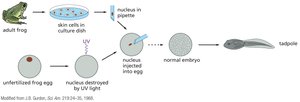
Experiments have shown that the nucleus from a differentiated cell can direct the development of an entire organism, demonstrating that all genetic information is retained.
Cell type-specific gene expression is regulated by transcription factors, enhancers, and epigenetic modifications.
Example: Briggs and King (1952) demonstrated that nuclei from skin cells of frogs could generate a normal embryo when transferred into an enucleated egg, proving genomic equivalence.
Epigenetics: Heritable Regulation of Gene Expression
Definition and Mechanisms
Epigenetics refers to heritable changes in gene expression that do not involve alterations to the DNA sequence itself. These changes can be stable through cell divisions and, in some cases, across generations.
Epigenetic modifications include DNA methylation, histone modification, and non-coding RNAs.
These modifications can be influenced by environmental factors such as nutrition, chemicals, and stress.
Epigenetic changes are crucial for development, cellular differentiation, and adaptation to environmental changes.
DNA Methylation and Gene Silencing
DNA methylation involves the addition of a methyl group to the cytosine base, typically in CpG dinucleotides. This modification is catalyzed by DNA methyltransferase enzymes and is associated with transcriptional repression.
Methylation of promoter regions, especially at CpG islands, inhibits transcription by preventing the binding of transcription factors.
Housekeeping genes and cell-specific genes often have unmethylated CpG islands, allowing for active transcription.
Genes not required in a particular cell type are often methylated and silenced.
Environmental Induction of Epigenetic Change
Environmental factors can induce epigenetic changes that affect gene expression and phenotype. For example, maternal care in rats influences the methylation status of the glucocorticoid receptor (GR) gene promoter, affecting stress responses in offspring.
Low maternal care leads to increased promoter methylation and reduced GR expression, resulting in poor stress adaptation.
High maternal care results in low promoter methylation, higher GR expression, and better stress adaptation.
Epigenetics and Human Health
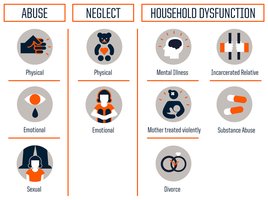
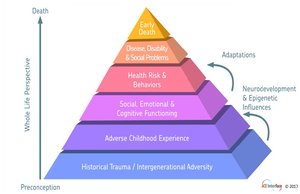
Epigenetic changes have been implicated in human health and disease. For instance, prenatal exposure to famine or adverse childhood experiences (ACEs) can lead to increased risk of metabolic and cardiovascular diseases in subsequent generations.
Children of mothers exposed to famine during pregnancy have higher risks of obesity, diabetes, and heart disease.
Adverse childhood experiences are associated with intergenerational transmission of health risks.
Gene Regulation: Case Studies and Mechanisms
Regulation of the Human Metallothionein 2A (MT2A) Gene
The MT2A gene encodes a protein that binds heavy metals and protects cells from oxidative stress. Its expression is tightly regulated to allow low basal levels in all cells and high expression in response to heavy metals or stress.
Multiple enhancer elements and transcription factors (e.g., SP1, AP1-3) contribute to basal expression.
Upon exposure to heavy metals, the metal-inducible transcription factor MTF-1 greatly increases transcription.
The glucocorticoid receptor (GR) is involved in the stress response and can modulate MT2A expression.
A repressor protein (PZ120) can bind near the transcription initiation site to inhibit expression.
Tissue-Specific Gene Expression: The pax6 Gene
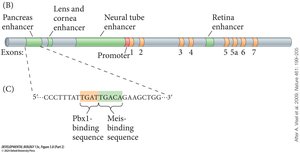
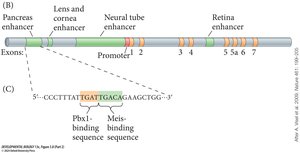
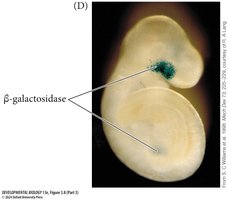
The pax6 gene is a key regulator of eye and pancreas development. Its expression is controlled by multiple enhancers and transcription factors, allowing for tissue-specific expression.
Enhancers located in different regions of the gene direct expression in the pancreas, lens/cornea, neural tube, and retina.
Transcription factors such as Pbx1 and Meis bind to specific sequences within these enhancers to activate pax6 in the appropriate tissues.
Transcription Factors: MITF and Tyrosinase Gene Regulation
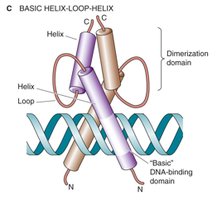
Microphthalmia-associated transcription factor (MITF) is a basic helix-loop-helix protein that regulates the expression of tyrosinase genes, which are essential for melanin synthesis.
MITF binds to enhancer regions of tyrosinase genes and recruits histone acetyltransferase proteins, leading to chromatin relaxation and increased gene expression.
Loss of MITF function results in decreased expression of tyrosinase and related proteins, affecting pigmentation.
Experimental Evidence: MITF and Tyrosinase Expression
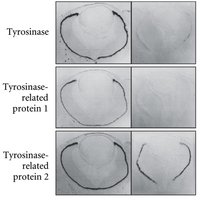
Studies using mouse embryos show that loss of MITF leads to reduced expression of tyrosinase and related proteins, as visualized by gene expression assays.
Wild-type embryos show normal expression patterns of tyrosinase genes.
MITF knockout embryos (Mitf -/-) exhibit greatly reduced or absent expression of these genes.
Summary Table: Key Epigenetic and Regulatory Mechanisms
Mechanism | Description | Effect on Gene Expression |
|---|---|---|
DNA Methylation | Addition of methyl groups to cytosine in CpG islands | Usually represses transcription |
Histone Modification | Acetylation, methylation, phosphorylation of histone tails | Can activate or repress transcription depending on the modification |
Transcription Factors | Proteins that bind DNA and regulate transcription | Activate or repress gene expression in a context-dependent manner |
Enhancers/Silencers | DNA elements that increase or decrease transcription from a distance | Control tissue-specific and temporal gene expression |
