 Back
BackGenetic Analysis of Biological Processes: Cell Cycle Regulation and Flower Development
Study Guide - Smart Notes
 Tailored notes based on your materials, expanded with key definitions, examples, and context.
Genetic Analysis of Biological Processes
Introduction to the Genetic Approach
The genetic approach is a powerful method for studying biological processes by identifying and analyzing mutants with defective phenotypes. Unlike biochemical or cell biological methods, genetics focuses on the consequences of gene mutations to infer gene function and regulatory mechanisms.
Mutants: Organisms with altered phenotypes due to changes in their DNA.
Mutagenesis: The process of inducing mutations, either spontaneously or by exposure to mutagens such as X-rays, UV light, or chemicals like EMS.
Mutant Screen: Systematic search for mutants affecting a specific biological process.
Phenotype: Observable characteristics resulting from gene expression.
Mutagenesis and Mutant Screening
Mutagenesis is used to generate a population of mutants, which are then screened for defects in the process of interest. This approach has been foundational in understanding metabolic pathways and regulatory networks.
Spontaneous Mutations: Occur naturally due to errors in DNA replication.
Induced Mutations: Created by exposing organisms to mutagens, increasing mutation frequency.
Screening: Identifying mutants with specific phenotypes, such as auxotrophy or defective cell cycle progression.
Classic Mutant Screens: Beadle and Tatum, Jacob and Monod
Early genetic screens, such as those by Beadle and Tatum (auxotrophic mutants in Neurospora) and Jacob and Monod (lac operon mutants in E. coli), established the principle that gene mutations can reveal the function of genes in metabolic and regulatory pathways.
Auxotrophic Mutants: Unable to synthesize essential compounds, requiring supplementation.
Lac Operon Mutants: Revealed classes of mutants affecting lactose metabolism and gene regulation.
Genetic Analysis of the Eukaryotic Cell Cycle
Model System: Saccharomyces cerevisiae (Brewer's Yeast)
Yeast is a single-celled eukaryote used as a model organism to study fundamental cellular processes, including the cell cycle. Its simplicity and genetic tractability make it ideal for mutagenesis and genetic screens.
Haploid and Diploid States: Yeast can exist as haploid or diploid, facilitating genetic analysis.
Conservation: Many yeast genes are conserved in higher eukaryotes, including humans.
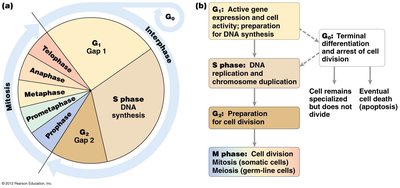
Cell Cycle Overview
The cell cycle consists of distinct phases: G1, S, G2, and M. Each phase is regulated by specific genes and proteins, ensuring proper cell division and DNA replication.
G1 Phase: Cell growth and preparation for DNA synthesis.
S Phase: DNA replication.
G2 Phase: Preparation for mitosis.
M Phase: Mitosis and chromosome separation.

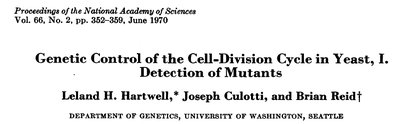
Hartwell's Mutant Screen for Cell Cycle Genes
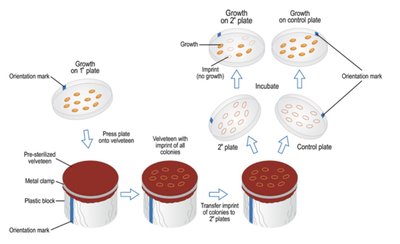
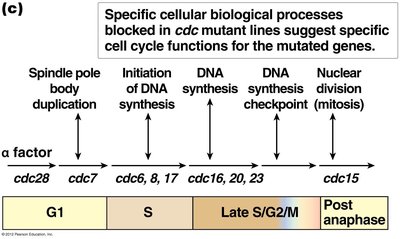
Hartwell and colleagues performed mutagenesis in yeast and screened for temperature-sensitive mutants that could not complete the cell cycle. These mutants, called cdc (cell division cycle) mutants, arrested at specific points in the cell cycle, revealing genes essential for progression through each phase.
Temperature-sensitive Mutants: Grow at permissive temperature but arrest at restrictive temperature.
Replica Plating: Technique used to identify mutants by transferring colonies to plates at different temperatures.
Characterization of cdc Mutants
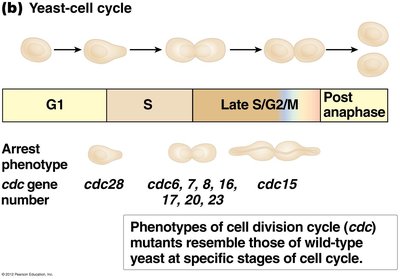
Each cdc mutant arrested at a specific stage, indicating the function of the mutated gene. Complementation tests and phenotypic analysis allowed identification of multiple genes involved in cell cycle regulation.
Arrest Phenotypes: Mutants resemble wild-type cells at the stage where the gene is required.
Gene Identification: Mutants were mapped to specific genes, many of which encode conserved proteins.
Conservation and Model Systems
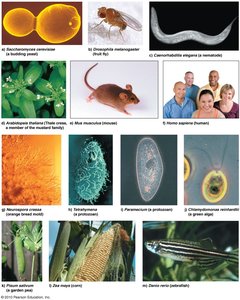
The cdc genes identified in yeast are conserved across eukaryotes, including humans. Studying simpler model organisms provides insights into complex biological processes relevant to all species.
Homologous Genes: Genes present in different species due to common ancestry.
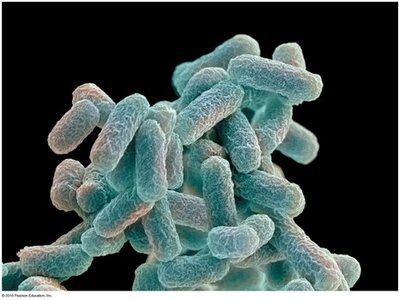
Model Organisms: Used to study conserved processes; examples include yeast, E. coli, and Arabidopsis thaliana.
Genetic Analysis of Flower Development in Arabidopsis thaliana
Model System: Arabidopsis thaliana
Arabidopsis thaliana is a small annual plant widely used as a model for plant genetics and development. Its rapid life cycle and genetic tractability make it ideal for mutant screens.
Meristems: Regions of active growth; shoot, root, and flower meristems.
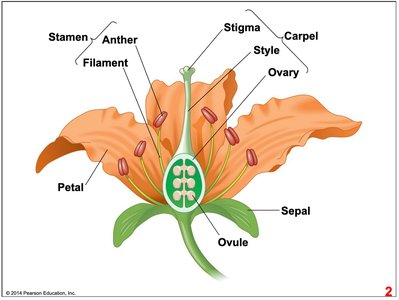
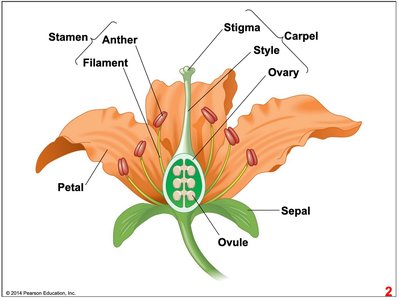
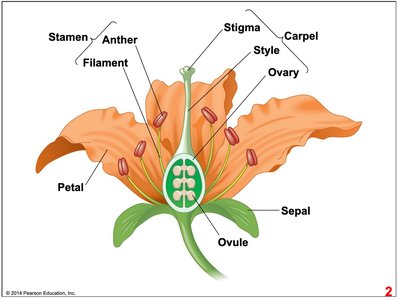
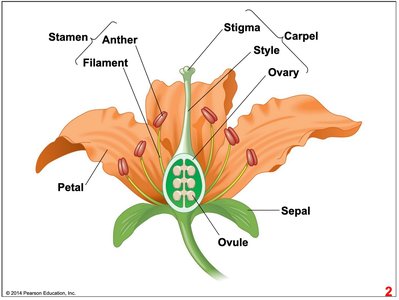
Flower Structure: Organized in four whorls, each giving rise to specific organs.
Mutant Screens and the ABC Model of Flower Development
Mutagenesis and screening in Arabidopsis identified mutants with abnormal flower development. Most mutants fell into three classes, affecting specific whorls and organ identities. This led to the formulation of the ABC model.
Class A Mutants: Affect whorls 1 and 2 (sepals and petals).
Class B Mutants: Affect whorls 2 and 3 (petals and stamens).
Class C Mutants: Affect whorls 3 and 4 (stamens and carpels).
The ABC Model of Flower Development
The ABC model explains organ identity in each whorl based on the combination of gene expression:
Whorl 1: Class A genes → Sepal
Whorl 2: Class A + B genes → Petal
Whorl 3: Class B + C genes → Stamen
Whorl 4: Class C genes → Carpel
Gene Expression and Combinatorial Control
Genes are expressed in specific domains, and their protein products form complexes that regulate downstream targets, specifying organ identity. The ABC genes encode transcription factors that repress each other's expression, ensuring proper organ development.
Transcription Factors: Proteins that regulate gene expression.
Combinatorial Control: Organ identity is determined by combinations of gene expression.
Mutant Analysis: Double mutants and expression studies confirmed the ABC model.
Summary Table: Model Systems in Genetics
Model Organism | Process Studied | Key Genes |
|---|---|---|
Saccharomyces cerevisiae | Cell cycle regulation | cdc genes |
Arabidopsis thaliana | Flower development | ABC genes |
Escherichia coli | Gene regulation (lac operon) | lac genes |
Key Equations and Concepts
Mutagenesis Rate:
Complementation Test:
Conclusion
Genetic analysis using model organisms and mutant screens has been instrumental in elucidating the molecular basis of cell cycle regulation and flower development. The principles and methods described here are foundational for understanding gene function and regulation in all eukaryotes.
Additional info: The ABC model is a classic example of combinatorial gene regulation, and the conservation of cell cycle genes across species highlights the universality of genetic mechanisms.
