 Back
BackGenetic Engineering, Genome Editing, and Functional Genomics: Study Notes for Genetics Students
Study Guide - Smart Notes
 Tailored notes based on your materials, expanded with key definitions, examples, and context.
Gene Targeting and Germ Line Transformation in Mice
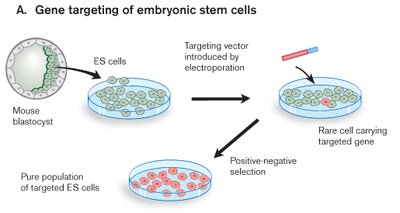
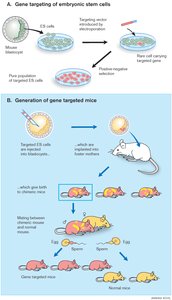
Electroporation and Gene Targeting in Embryonic Stem Cells
Gene targeting in mice is a foundational technique for studying gene function and creating genetically modified organisms. Electroporation is used to introduce exogenous DNA into embryonic stem (ES) cells, enabling precise genetic modifications.
Electroporation: Uses electric shock to facilitate DNA uptake by cells.
Blastocyst: Early-stage embryo where ES cells are injected.
Transformation: Introduction of DNA into the genome of mouse ES cells.
Positive-negative selection: Used to isolate ES cells carrying the targeted gene modification.
Generation of Transgenic Mice
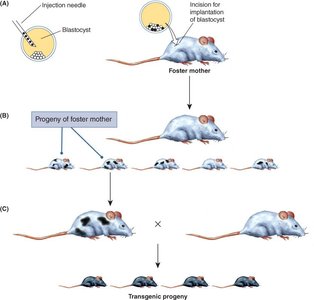
Transgenic mice are produced by injecting genetically modified ES cells into a blastocyst, which is then implanted into a foster mother. The resulting progeny are mosaics, and if the modification is present in the germline, subsequent generations will be fully transgenic.
Mosaic progeny: Carry both modified and unmodified cells.
Germline transmission: Ensures the modification is inherited by future generations.
Homologous Recombination-Based Gene Targeting
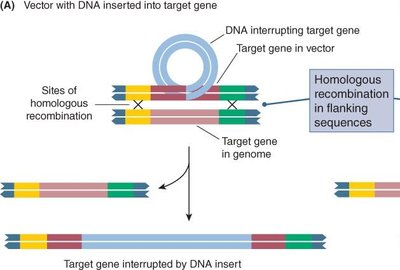
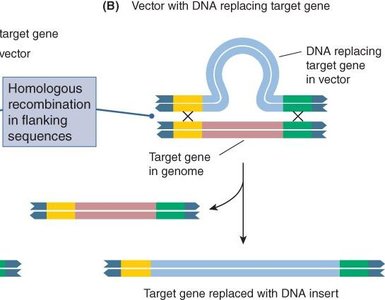
Gene targeting in ES cells relies on homologous recombination (HR) to introduce specific changes into a gene. Two main strategies are used: gene insertion and gene replacement.
Gene insertion: Vector contains sequences within the target gene, leading to DNA insertion at the target site.
Gene replacement: Vector contains sequences flanking the target gene, leading to replacement of the target sequence.
CRISPR-Cas9 Genome Editing
Natural CRISPR Pathway
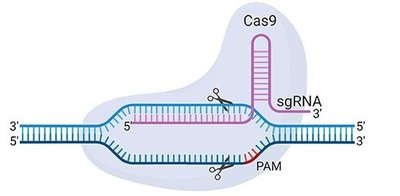
The CRISPR-Cas9 system is a bacterial defense mechanism against foreign DNA, now repurposed for genome editing in various organisms. It uses a guide RNA to direct the Cas9 endonuclease to a specific DNA sequence, where it creates a double-stranded break (DSB).
CRISPR array: Stores sequences from invading DNA.
Guide RNA: Directs Cas9 to the target DNA.
Cas9 activation: Cleaves the target DNA, enabling editing.
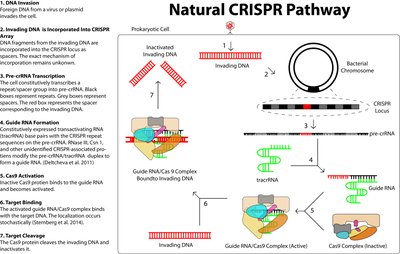
Mechanism of CRISPR-Cas9 Genome Editing
CRISPR-Cas9 enables precise genome editing by creating a DSB at a specific site. The break can be repaired by two pathways:
Non-homologous end joining (NHEJ): Error-prone, often results in insertions/deletions (indels).
Homology-directed repair (HDR): Uses a template to incorporate precise changes.
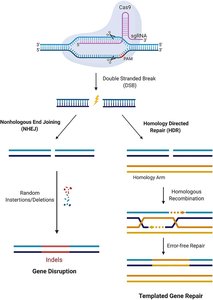
CRISPR Editing in Model Organisms
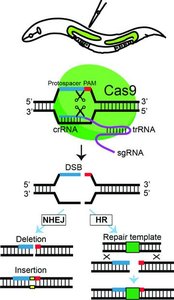
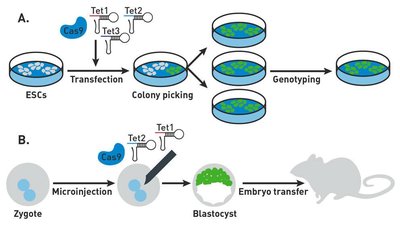
CRISPR-Cas9 can be used to create knockout alleles, precise base changes, or insert tags in model organisms such as worms and mice. The process involves designing a guide RNA, delivering Cas9 and guide RNA, and screening progeny for the desired genotype.
Guide RNA design: 20nt complementary region followed by NGG (PAM site).
Delivery: Cas9 and guide RNA are introduced into the organism.
Screening: PCR and sequencing are used to confirm the genotype.
Advantages of CRISPR-Based Gene Editing
CRISPR-based editing offers several advantages over traditional transgenic and homologous recombination methods:
Target flexibility: Can edit any endogenous location with a nearby PAM sequence.
Efficiency: Faster and less labor-intensive than ES cell-based methods.
Direct delivery: Can be delivered directly into fertilized embryos, bypassing ES cell culture.
Applications of Genetic Engineering
Agricultural Products
Genetic engineering is widely used in agriculture to improve crop traits and animal growth.
Pest and herbicide resistance: Engineered crops such as maize, cotton, and soybeans.
GMO salmon: Engineered to grow faster by carrying an extra copy of a growth hormone gene.
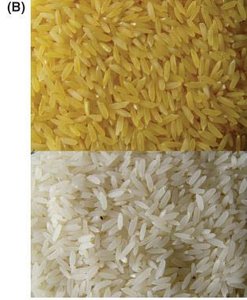
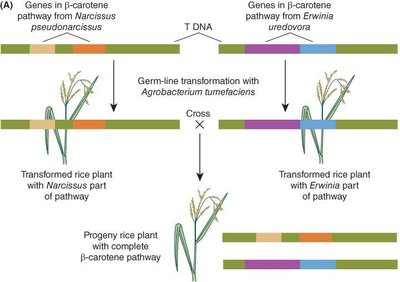
Golden rice: Engineered to produce beta-carotene, a precursor to vitamin A, addressing vitamin A deficiency.

Gene Therapy
Gene therapy involves delivering functional genes to treat genetic disorders. Examples include:
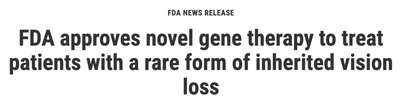
Vision loss: Delivering a normal copy of the RPE65 gene via viral vectors.
Sickle cell disease: Delivering a modified hemoglobin gene to reduce sickling of red blood cells.

CRISPR-Based Therapy
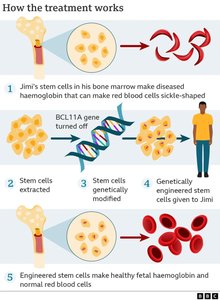
CRISPR-based therapies are now approved for treating sickle cell disease and β-thalassaemia. These therapies modify stem cells to express fetal hemoglobin, alleviating symptoms.
Casgevy: CRISPR-based therapy for sickle cell disease.
Mechanism: Knockout of BCL11A enhancer allows expression of fetal hemoglobin.


Ethical Considerations in Genetic Engineering
Clinical and Societal Issues
Ethical concerns include safety, distinction between somatic and germline engineering, and the purpose of genetic modifications (disease treatment vs enhancement).
Safety: Potential risks of off-target effects and unintended consequences.
Somatic vs germline: Somatic modifications affect only the individual; germline modifications are heritable.
Enhancement: Ethical debate over using genetic engineering for non-therapeutic enhancements.
Genomics and Functional Genomics
Human Genome Project and Sequencing Technologies
Genomics is the study of the entire genome. The Human Genome Project aimed to sequence the human genome and develop genetic methodologies.
Genome size: Human genome contains 3 billion base pairs.
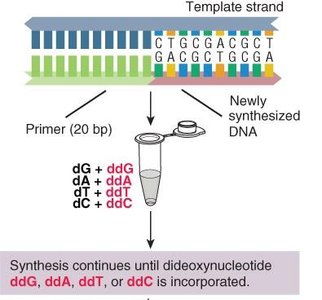
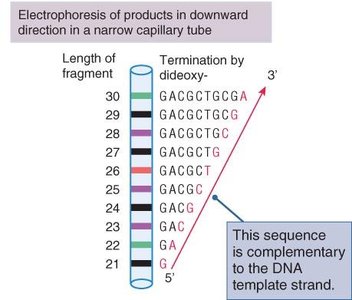
Sanger sequencing: Uses dideoxynucleotides to terminate DNA synthesis, enabling sequence determination.
Next-generation sequencing: High-throughput, short reads, rapid and cost-effective.
Genome Annotation
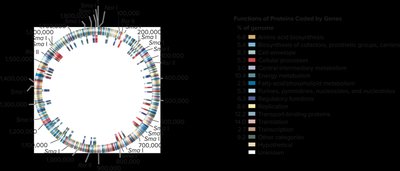
After sequencing, annotation identifies functional elements such as exons, introns, regulatory elements, and transposable elements.
Exons and introns: Coding and non-coding regions of genes.
Regulatory elements: Promoters, enhancers, silencers, and binding motifs for transcription factors.
Regulatory RNAs: Includes smallRNAs, miRNAs, tRNAs, rRNAs.
Functional Genomics
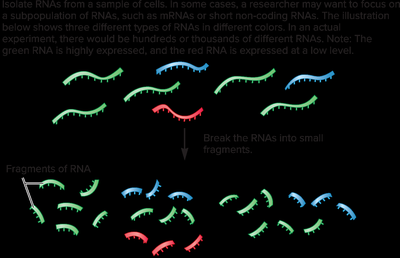
Functional genomics studies genome-wide patterns of gene expression and coordination mechanisms. The transcriptome is the complete set of transcribed RNAs in a cell under specific conditions.
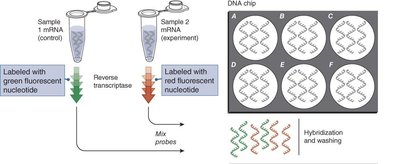
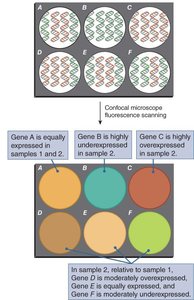
Gene expression profiling: Determines which genes are expressed, transcript structures, and abundance.
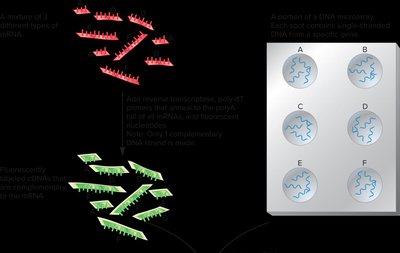
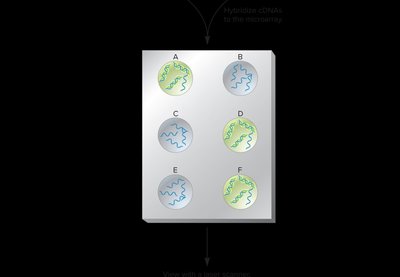
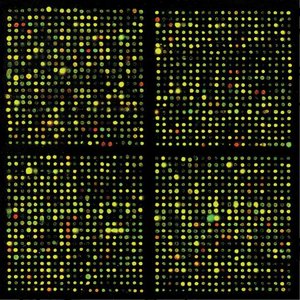
DNA microarray: Identifies transcribed genes and compares transcriptomes between samples.
RNA sequencing (RNA-seq): Newer method for identifying expressed genes.
Chromatin Immunoprecipitation Sequencing (ChIP-seq)
ChIP-seq identifies protein binding sites across the genome by cross-linking proteins to DNA, extracting and sequencing the bound DNA, and aligning it to the reference genome.
Cross-linking: Proteins are chemically linked to DNA.
Immunoprecipitation: Antibody pulls down protein-DNA complexes.
Sequencing: Bound DNA is sequenced and mapped.
Summary Table: Genetic Engineering Technologies
Technology | Mechanism | Applications | Advantages |
|---|---|---|---|
Transposon-based | Random DNA insertion | Transgenic organisms | Simple, but not precise |
Homologous recombination | Targeted gene modification | Gene knockout, replacement | Precise, but labor-intensive |
CRISPR-Cas9 | Guide RNA-directed DSB | Gene editing, therapy | Flexible, efficient, precise |
Key Equations and Concepts
Homologous recombination:
CRISPR-Cas9 targeting:
Sanger sequencing:
Additional info:
CRISPR-based therapies are rapidly advancing, with regulatory approvals for sickle cell disease and β-thalassaemia.
Genome annotation and functional genomics are essential for understanding gene function and regulation.
