 Back
Genetic Mutations and Chromosomal Variations: Mechanisms, Consequences, and Repair
Study Guide - Smart Notes
 Tailored notes based on your materials, expanded with key definitions, examples, and context.
Chapter 14: Mutation
Definition and Types of Mutation
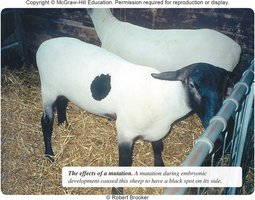
Mutation refers to a heritable change in genetic material, which can occur at the gene level (altering the base pair sequence) or at the chromosomal level (affecting structure or number, thus impacting multiple genes). Mutations are fundamental to genetic diversity and can have a range of effects from benign to severe.
Gene Mutations: Changes in the DNA sequence of a single gene.
Chromosomal Mutations: Structural or numerical changes affecting multiple genes.
Gene Mutations: Point Mutations
Gene mutations change the DNA sequence. A point mutation is a change in a single base pair, often involving a base substitution. Point mutations are classified as:
Transition: Change of a pyrimidine (C, T) to another pyrimidine or a purine (A, G) to another purine.
Transversion: Change of a pyrimidine to a purine or vice versa.
Transitions are more common than transversions.
Classification of Mutations
Mutations can be classified based on:
Change in nucleotide sequence
Change in amino acid sequence
Change in function
Location
Cause
Consequences of Point Mutations
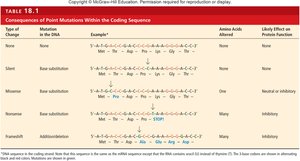
Point mutations within the coding sequence can have various consequences, including silent, missense, nonsense, and frameshift mutations. These affect the amino acid sequence and the function of the protein.
Type | Mutation in DNA | Amino Acid Change | Likely Effect on Protein Function |
|---|---|---|---|
None | None | None | None |
Silent | Base substitution | None | Neutral or inhibitory |
Missense | Base substitution | One | Neutral or inhibitory |
Nonsense | Base substitution | Many | Inhibitory |
Frameshift | Addition/deletion | Many | Inhibitory |
Example: Sickle Cell Disease
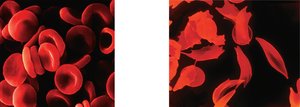
Sickle cell disease is caused by a missense mutation in the β-globin gene, resulting in abnormal hemoglobin and sickled red blood cells.
Normal: Glutamic acid in the sixth position of β-globin.
Sickle cell: Valine replaces glutamic acid, altering cell shape and function.
Gene Mutation Consequences Outside Coding Sequence
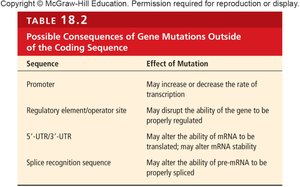
Mutations outside the coding sequence can affect gene regulation, mRNA stability, and splicing.
Sequence | Effect of Mutation |
|---|---|
Promoter | May increase or decrease the rate of transcription |
Regulatory element/operator site | May disrupt the ability of the gene to be properly regulated |
5'-UTR/3'-UTR | May alter the ability of mRNA to be translated; may alter mRNA stability |
Splice recognition sequence | May alter the ability of pre-mRNA to be properly spliced |
Germ-line vs. Somatic Mutations
Mutations can occur in germ-line cells (cells that give rise to gametes) or somatic cells (all other body cells).
Germ-line mutations: Occur in sperm or egg cells or their precursors; can be passed to offspring.
Somatic mutations: Occur in body cells; affect only the individual, not offspring.
Causes of Mutation
Mutations can be spontaneous (resulting from cellular processes) or induced (caused by environmental agents called mutagens).
Spontaneous: Depurination, deamination, tautomeric shift, oxidative damage, DNA polymerase slippage.
Induced: Mutagens such as chemicals and radiation.
DNA Polymerase Slippage and Trinucleotide Repeat Expansion
DNA polymerase slippage can lead to errors in DNA replication, especially in regions with trinucleotide repeats, resulting in expansion disorders.
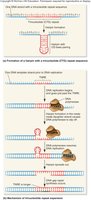
Trinucleotide Repeat Expansion (TNRE) Disorders
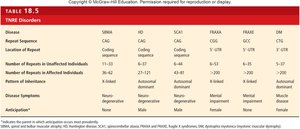
TNRE disorders are caused by expansion of trinucleotide repeats beyond a critical threshold, leading to diseases such as Huntington's disease and Fragile X syndrome.
Disease | Repeat Sequence | Location of Repeat | Number of Repeats in Unaffected Individuals | Number of Repeats in Affected Individuals | Pattern of Inheritance | Disease Symptoms | Anticipation |
|---|---|---|---|---|---|---|---|
SbMA | CAG | Coding | 13-36 | 27-121 | X-linked | Neurodegeneration | Yes |
HD | CAG | Coding | 6-35 | 36-121 | Autosomal dominant | Neurodegeneration | Yes |
SCA1 | CAG | Coding | 6-44 | 40-83 | Autosomal dominant | Neurodegeneration | Yes |
FRAXA | CGG | 5'-UTR | 6-54 | 55-200 | X-linked | Mental impairment | Yes |
FRAXE | GCC | 5'-UTR | 6-25 | 25-200 | X-linked | Mental impairment | Yes |
DM | CTG | 3'-UTR | 5-37 | 50-1000 | Autosomal dominant | Muscle impairment | Yes |
Mutagens and Induced Mutations
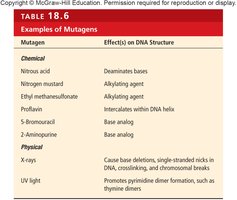
Mutagens are agents that cause permanent changes in DNA structure. They can be chemical or physical.
Mutagen | Effect(s) on DNA Structure |
|---|---|
Nitrous acid | Deaminates bases |
Nitrogen mustard | Alkylating agent |
Ethyl methanesulfonate | Alkylating agent |
Proflavin | Intercalates within DNA helix |
5-Bromouracil | Base analog |
2-Aminopurine | Base analog |
X-rays | Cause base deletions, single-stranded nicks, crosslinking, chromosomal breaks |
UV light | Promotes pyrimidine dimer formation |
DNA Repair Mechanisms
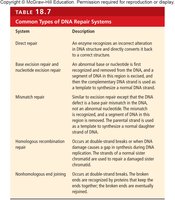
DNA repair is vital for organism survival. Multiple systems exist to fix different types of DNA alterations. Most repair processes involve detection, removal, and synthesis of normal DNA.
Direct repair: Recognizes and corrects abnormal DNA structure.
Base excision repair: Removes abnormal bases and replaces them.
Nucleotide excision repair: Removes bulky lesions, such as thymine dimers.
Mismatch repair: Corrects errors introduced during DNA replication.
Homologous recombination repair: Repairs double-strand breaks using a homologous template.
Nonhomologous end joining: Repairs double-strand breaks without a template.
Chapter 6: Chromosome Mutations – Variation in Number and Arrangement
Chromosomal Mutations: Structure and Number
Chromosomal mutations affect more than one gene and can cause disease, physical or biochemical differences, semisterility, or lethality. They are important in evolution and crop development.
Structural mutations: Deletions, duplications, inversions, translocations.
Numerical mutations: Aneuploidy and euploidy.
Types of Chromosomal Structural Mutations
Deletion: Loss of a chromosome segment; usually detrimental.
Duplication: Gain of a chromosome segment; can lead to new gene functions.
Inversion: Segment flipped in orientation; may have no effect or cause position effect.
Translocation: Segment moved to another chromosome; can be simple or reciprocal.
Gene Duplication and Evolution
Gene duplication is essential for the origin of new genes and gene families, such as hemoglobin and T-cell receptor genes. Duplicated genes can acquire new functions over time, enhancing fitness.
Inversions and Position Effect
Inversions may not change the total genetic information but can alter gene expression if the gene is repositioned. This is known as the position effect.
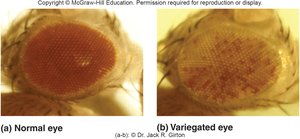
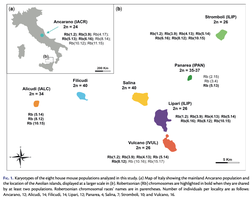
Chromosome Rearrangements and Speciation
Chromosome rearrangements can lead to speciation by creating reproductive barriers and new chromosomal races.
Variation in Chromosome Number: Aneuploidy and Euploidy
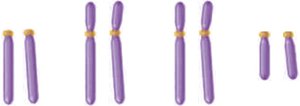
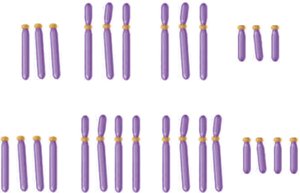
Chromosome number variations are classified as:
Aneuploidy: Variation in the number of particular chromosomes within a set (e.g., trisomy, monosomy).
Euploidy: Variation in the number of complete sets of chromosomes (e.g., triploid, tetraploid).
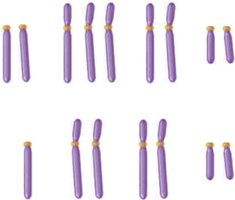
Effects of Aneuploidy
Aneuploidy often causes atypical phenotypes due to imbalance in gene products and is usually detrimental to survival.
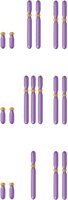
Mechanisms of Chromosome Number Variation
Meiotic nondisjunction: Failure of chromosomes to segregate properly during anaphase, leading to abnormal gametes.
Mitotic nondisjunction: Occurs after fertilization, resulting in mosaicism.
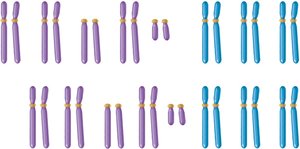
Alloploidy: Interspecies crosses leading to new chromosome sets.
Polyploidy in Plants
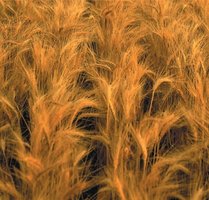
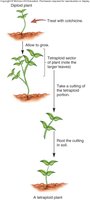
Polyploidy is common in plants and can be induced by chemicals such as colchicine, which promotes nondisjunction. Polyploidy can lead to speciation and is used in agriculture to develop new crop varieties.

Summary
Mutations and chromosomal variations are central to genetics, affecting gene function, phenotype, and evolution. Understanding their mechanisms, consequences, and repair systems is essential for studying genetic diseases, evolutionary biology, and agricultural genetics.
