 Back
Genetic Mutations and Chromosome Variations: Mechanisms, Consequences, and Repair
Study Guide - Smart Notes
 Tailored notes based on your materials, expanded with key definitions, examples, and context.
Chapter 14: Mutation
Definition and Types of Mutation
Mutation refers to a heritable change in genetic material, which can occur at the gene or chromosomal level. Gene mutations involve changes in the base pair sequence, while chromosomal mutations affect the structure or number of chromosomes, impacting multiple genes.
Gene Mutation: Change in the DNA sequence of a single gene.
Chromosomal Mutation: Structural or numerical changes in chromosomes, affecting several genes.
Point Mutation: Change in a single base pair, often through base substitution.
Transition: Substitution of a purine for another purine (A ↔ G) or a pyrimidine for another pyrimidine (C ↔ T).
Transversion: Substitution of a purine for a pyrimidine or vice versa.
Classification: Mutations can be classified by nucleotide sequence, amino acid sequence, function, location, and cause.
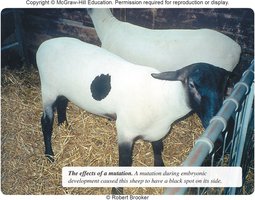
Example: A mutation during embryonic development caused a sheep to have a black spot on its side.
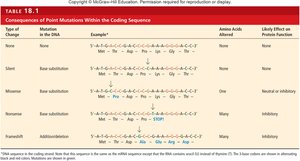
Consequences of Point Mutations
Point mutations within the coding sequence can have varying effects on protein function, depending on the type and location of the mutation.
Type | Mutation in DNA | Amino Acid Change | Likely Effect on Protein Function |
|---|---|---|---|
Silent | Base substitution | None | Neutral |
Missense | Base substitution | One | Neutral or inhibitory |
Nonsense | Base substitution | Many | Inhibitory |
Frameshift | Addition/deletion | Many | Inhibitory |
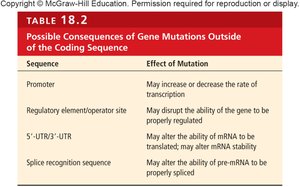
Gene Mutation Consequences Outside Coding Sequence
Mutations outside the coding sequence can affect gene regulation and mRNA processing.
Sequence | Effect of Mutation |
|---|---|
Promoter | May increase or decrease the rate of transcription |
Regulatory element/operator site | May disrupt the ability of the gene to be properly regulated |
5'-UTR/3'-UTR | May alter the ability of mRNA to be translated; may alter mRNA stability |
Splice recognition sequence | May alter the ability of pre-mRNA to be properly spliced |
Mutation Examples: Sickle Cell Disease
Mutations can lead to significant changes in phenotype, such as sickle cell disease, which is caused by a single base substitution in the β-globin gene.
Normal red blood cells: Disc-shaped, flexible.
Sickled red blood cells: Crescent-shaped, less flexible, leading to blockages in blood vessels.
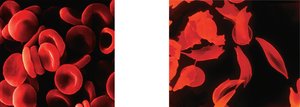
Example: The amino acid sequence in sickle cell β-globin differs from the normal sequence, resulting in altered cell shape and function.
Germ-line vs. Somatic Mutations
Mutations can occur in germ-line cells (which give rise to gametes) or somatic cells (all other body cells). Germ-line mutations are heritable, while somatic mutations affect only the individual.
Germ-line mutation: Present throughout the body; half of gametes carry the mutation.
Somatic mutation: Affects only a patch of cells; not passed to offspring.
Causes of Mutation
Mutations can be spontaneous (arising from natural cellular processes) or induced (caused by environmental agents known as mutagens).
Spontaneous: Depurination, deamination, tautomeric shift, oxidative damage, DNA polymerase slippage.
Induced: Exposure to mutagens such as chemicals or radiation.
DNA Polymerase Slippage and Trinucleotide Repeat Expansion
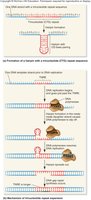
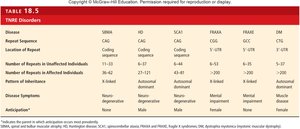
DNA polymerase slippage can lead to errors in DNA replication, especially in regions with trinucleotide repeats, resulting in expansion disorders.
Disease | Repeat Sequence | Location | Symptoms |
|---|---|---|---|
HD | CAG | Coding | Neurodegeneration |
SCA1 | CAG | Coding | Neurodegeneration |
FRAXA | CGG | 5'-UTR | Mental impairment |
FRDA | GAA | Intron | Neurodegeneration |
DM | CTG | 3'-UTR | Muscle impairment |
Mutagens and Their Effects
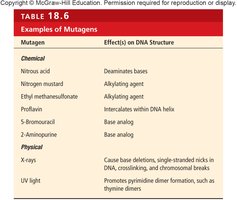
Mutagens are agents that cause mutations by altering DNA structure. They can be chemical or physical.
Mutagen | Effect(s) on DNA Structure |
|---|---|
Nitrous acid | Deaminates bases |
Nitrogen mustard | Alkylating agent |
Ethyl methanesulfonate | Alkylating agent |
Proflavin | Intercalates within DNA helix |
5-Bromouracil | Base analog |
2-Aminopurine | Base analog |
X-rays | Cause base deletions, single-stranded nicks, crosslinking, chromosomal breaks |
UV light | Promotes pyrimidine dimer formation |
DNA Repair Mechanisms
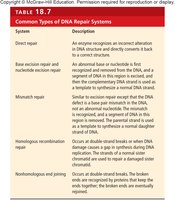
DNA repair is essential for organism survival. Multiple systems exist to correct different types of DNA damage.
Direct repair: Fixes abnormal DNA structures directly.
Base excision repair: Removes abnormal bases and replaces them.
Nucleotide excision repair: Removes bulky lesions that distort the double helix.
Mismatch repair: Corrects errors in DNA replication.
Homologous recombination repair: Repairs double-strand breaks using a homologous template.
Nonhomologous end joining: Repairs double-strand breaks without a template.
Chapter 6: Chromosome Mutations – Variation in Number and Arrangement
Chromosome Structure and Number Variations
Changes in chromosome structure or number typically affect multiple genes and can cause disease, physical or biochemical differences, semisterility, or lethality. These changes are important in evolution and crop development.
Types of structural mutations: Deletion, duplication, inversion, translocation.
Deletions: Usually detrimental; severity depends on size and genes deleted.
Duplications: May have phenotypic effects, especially if large; can lead to gene families and evolutionary innovation.
Inversions: Segment flipped in orientation; may have no effect or cause position effect.
Translocations: Piece of one chromosome attaches to another; can be simple or reciprocal, balanced or unbalanced.
Position Effect
Chromosomal rearrangements can affect gene expression if the breakpoint occurs within a gene or if the gene is relocated to a region with different chromatin structure.
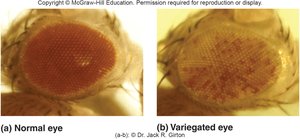
Chromosome Number Variations: Aneuploidy and Euploidy
Variation in chromosome number can be classified as aneuploidy (change in number of particular chromosomes) or euploidy (change in number of complete sets).
Aneuploidy: Trisomy (2n+1), monosomy (2n-1); often detrimental.
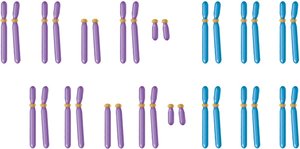
Euploidy: Triploid (3n), tetraploid (4n); common in plants.
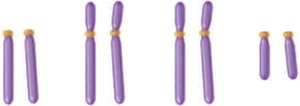
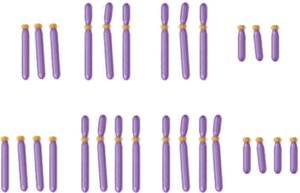
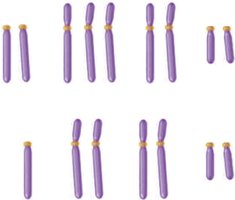
Mechanisms of Chromosome Number Variation
Chromosome number can change due to nondisjunction during meiosis or mitosis, or through interspecies crosses (alloploidy).
Meiotic nondisjunction: Failure of chromosomes to segregate properly, leading to abnormal gametes.
Mitotic nondisjunction: Occurs after fertilization, resulting in mosaicism.
Alloploidy: Interspecies crosses, often between closely related species.
Polyploidy in Plants
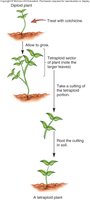
Polyploidy is common in plants and can be induced artificially using chemicals like colchicine, which promotes nondisjunction.

Chromosome Number in Agriculture and Evolution
Changes in chromosome number and structure are important for speciation and the development of new crop strains. Ploidy level changes are more common in plants and can lead to new species, while structural changes can have phenotypic consequences and also contribute to speciation.
Additional info: These notes cover the mechanisms, consequences, and repair of genetic mutations and chromosome variations, providing a comprehensive overview suitable for Genetics college students.
