 Back
BackGenetic Mutations: Mechanisms, Types, and Consequences
Study Guide - Smart Notes
 Tailored notes based on your materials, expanded with key definitions, examples, and context.
Genetic Mutations: Mechanisms, Types, and Consequences
Introduction to Genetic Mutations
Genetic mutations are rare, random changes in the DNA sequence that can alter gene function and contribute to genetic diversity and evolution. While most mutations are deleterious, some can be neutral or even beneficial, providing raw material for evolutionary change. Mutation rates vary among organisms and genes, and certain genes, known as mutation hotspots, are more prone to mutations due to factors such as large gene size.
Types of Mutations
Mutations can be classified based on their origin and the type of cells in which they occur:
Germ-line mutations: Occur in reproductive cells and can be passed to offspring.
Somatic mutations: Occur in non-reproductive cells and affect only the descendants of the mutated cell.
Gene Mutations and DNA Sequence Modification
Gene mutations can substitute, add, or delete one or more DNA base pairs. Localized mutations, or point mutations, occur at specific positions in a gene and can have varied consequences depending on the type and location of the sequence change.
Point Mutations: Classification and Consequences
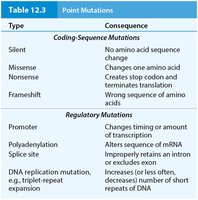
Point mutations are changes affecting a single nucleotide pair. They are classified as:
Base-pair substitutions: Replacement of one nucleotide pair by another.
Insertions/Deletions (Indels): Addition or removal of nucleotide pairs, potentially causing frameshifts.
Base-Pair Substitution Mutations
Base-pair substitutions are further divided into:
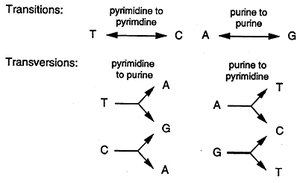
Transition mutations: Purine replaces purine (A ↔ G) or pyrimidine replaces pyrimidine (C ↔ T).
Transversion mutations: Purine replaces pyrimidine or vice versa (A or G ↔ C or T).
Functional Consequences of Base-Pair Substitutions
Base-pair substitutions can be categorized by their effect on the gene product:
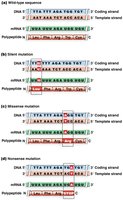
Silent mutations: Do not change the amino acid sequence due to genetic code redundancy.
Missense mutations: Change one amino acid in the protein, potentially altering function.
Nonsense mutations: Create a premature stop codon, truncating the protein.
Frameshift Mutations
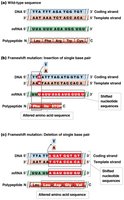
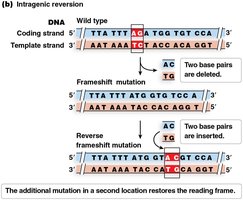
Frameshift mutations result from the insertion or deletion of nucleotides not in multiples of three, altering the reading frame and usually resulting in a nonfunctional protein (null allele).
Regulatory Mutations
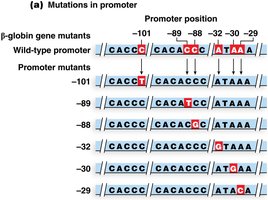
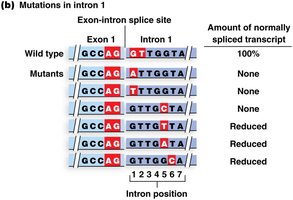
Regulatory mutations occur in non-coding regions and affect gene expression rather than protein sequence. These include mutations in promoters, splice sites, and polyadenylation signals.
Promoter mutations: Alter transcription initiation efficiency.
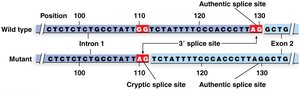
Splicing mutations: Affect removal of introns, potentially leading to abnormal mRNA and proteins.
Cryptic splice sites: Create new splice sites, leading to aberrant mRNA processing.
Polyadenylation mutations: Disrupt mRNA 3' end processing, reducing functional mRNA.
Forward and Reverse Mutations
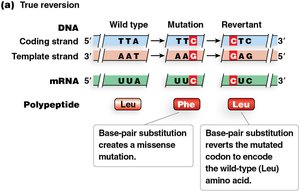
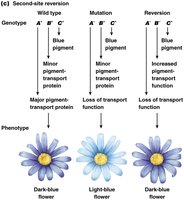
Mutations can change a wild-type allele to a mutant form (forward mutation) or revert a mutant allele back to wild-type or near wild-type (reverse mutation). Reversions can occur at the original site (true reversion), elsewhere in the same gene (intragenic reversion), or in a different gene (second-site/suppressor mutation).
Spontaneous Mutations
Spontaneous mutations arise without external mutagens, primarily due to errors in DNA replication or spontaneous chemical changes in nucleotides.
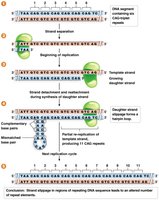
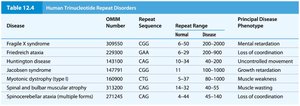
DNA replication errors: High-fidelity DNA polymerases and mismatch repair minimize errors, but repeat sequences are prone to strand slippage, leading to repeat expansions or contractions.
Trinucleotide Repeat Disorders
Expansion of trinucleotide repeats beyond a threshold can cause hereditary diseases, such as Fragile X syndrome and Huntington disease.
Spontaneous Nucleotide Base Changes
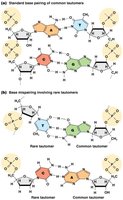
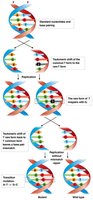
Tautomeric shifts: Temporary changes in base structure can cause mispairing during replication, leading to transition mutations.
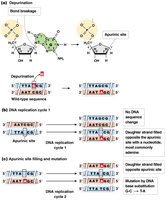
Depurination: Loss of a purine base creates an apurinic site, often filled by adenine during replication.
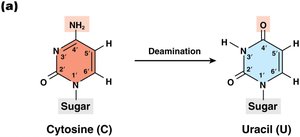
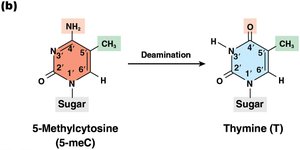
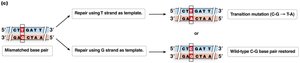
Deamination: Loss of an amino group from cytosine produces uracil, which is usually repaired, or from methylated cytosine produces thymine, potentially causing mutations if unrepaired.
Induced Mutations
Induced mutations result from exposure to physical, chemical, or biological agents (mutagens) that interact with DNA to cause specific sequence changes.
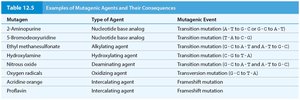
Chemical mutagens: Include base analogs, deaminating agents, alkylating agents, oxidizing agents, hydroxylating agents, and intercalating agents.
The Ames Test for Mutagenicity
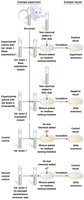
The Ames test uses Salmonella typhimurium strains with known mutations to assess the mutagenic potential of chemicals. Reversion to wild-type (his+) indicates mutagenicity, especially if the reversion rate is significantly higher than controls.
DNA Repair Systems
Organisms have evolved multiple DNA repair systems to maintain genomic integrity. These include:
Direct repair: Reverses DNA damage directly.
Mismatch repair: Corrects replication errors.
Nucleotide excision repair: Removes bulky DNA lesions.
UV repair: Repairs UV-induced photoproducts.
DNA damage signaling systems detect DNA damage and initiate repair responses throughout the cell cycle.
DNA Damage Repair Disorders
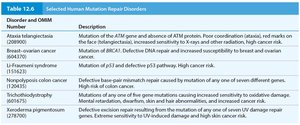
Mutations in DNA repair genes can cause hypersensitivity to mutagens and increased cancer risk. Examples include:
Li-Fraumeni syndrome (p53 mutation)
Ataxia telangiectasia (ATM gene mutation)
Hereditary breast/ovarian cancer (BRCA1 mutation)
Summary of Essential Ideas
Gene mutations are rare and random, altering DNA sequence and polypeptide function.
Spontaneous and induced mutations contribute to genetic variation and disease.
DNA repair systems are crucial for maintaining genetic stability and preventing disease.
