 Back
BackGenetic Variation Nomenclature, Mutation Types, and Mendelian Inheritance: A Study Guide
Study Guide - Smart Notes
 Tailored notes based on your materials, expanded with key definitions, examples, and context.
Genetic Variation Nomenclature
Standardized Nomenclature for Sequence Variants
Accurate and standardized nomenclature is essential for describing genetic variants at the DNA, RNA, and protein levels. The Human Genome Variation Society (HGVS) provides internationally accepted guidelines to avoid misinterpretation and ensure clear communication in clinical and research settings.
DNA Level: Variants are described using the 'c.' prefix for coding DNA (e.g., c.67A>T), 'g.' for genomic DNA, 'm.' for mitochondrial DNA, and 'r.' for RNA.
Protein Level: Variants are described using the 'p.' prefix (e.g., p.Ala67Thr).
Reference Sequences: Each gene may have multiple transcripts and reference sequences, each with a unique accession number and version (e.g., NM_000143.3).
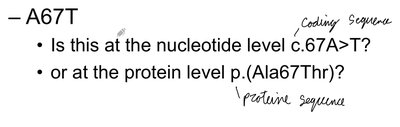
Example: The variant A67T could refer to a nucleotide change (c.67A>T) or a protein change (p.Ala67Thr). It is crucial to specify the level for clarity.
Reference Sequence Selection
Reference sequences are curated by organizations such as the HUGO Gene Nomenclature Committee and the MANE project, which harmonize transcript annotations for clinical reporting.
Nucleotide Numbering and Variant Description
Nucleotide 1 is the A of the ATG start codon.
Positions 5' to the start codon are numbered as -1, -2, etc.
Positions 3' to the stop codon are numbered as *1, *2, etc.
Intronic positions are described relative to the nearest exon (e.g., c.77+1G for the first nucleotide in the intron after exon 77).
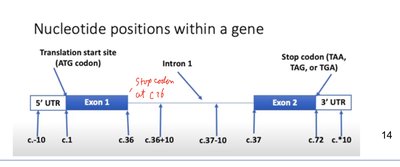
Types of Sequence Variants
Variants are classified by their effect and described using specific terms:
Substitution: One nucleotide is replaced by another (e.g., c.76A>C).
Deletion: One or more nucleotides are removed (e.g., c.76_78del).
Insertion: One or more nucleotides are added (e.g., c.76_77insT).
Duplication: A nucleotide or sequence is duplicated (e.g., c.76dupT).
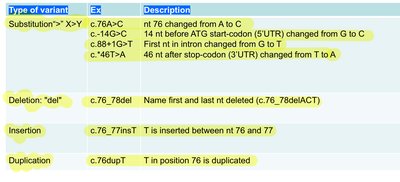
Variant Effects at the Protein Level
Variants can have different consequences at the protein level:
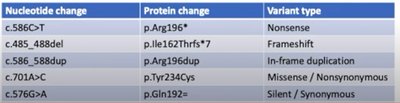
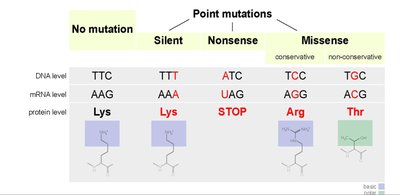
Missense: Changes one amino acid to another (e.g., p.Gly144Val).
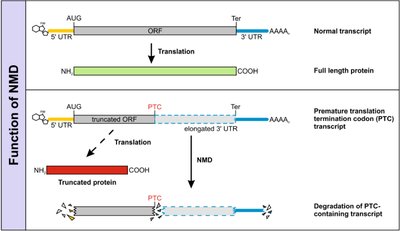
Nonsense: Introduces a premature stop codon (e.g., p.Arg196*).
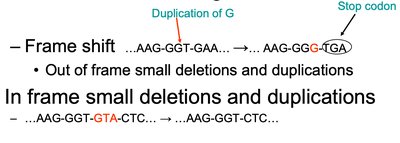
Frameshift: Alters the reading frame, often leading to a premature stop (e.g., p.Ile162Thrfs*7).
Silent: Does not change the amino acid (e.g., p.Gln192=).
Splicing Variants
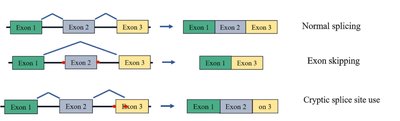
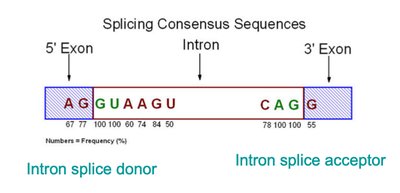
Variants can affect RNA splicing, leading to exon skipping or activation of cryptic splice sites, which may result in abnormal proteins.
Frameshift and In-Frame Variants
Insertions or deletions not divisible by three cause frameshifts, while those divisible by three are in-frame and may have milder effects.
Classification of Variants
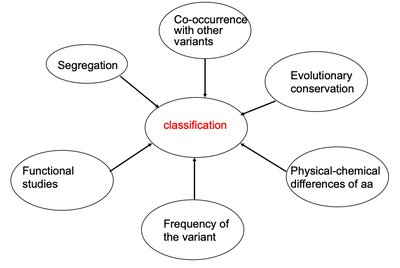
Variants are classified based on their predicted effect, frequency, segregation, evolutionary conservation, and functional studies.
Mendelian Inheritance and Pedigree Analysis
Mendel's Laws
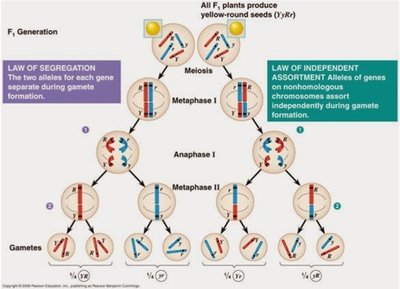
Mendelian inheritance describes how traits are transmitted from parents to offspring through genes. Mendel's laws include:
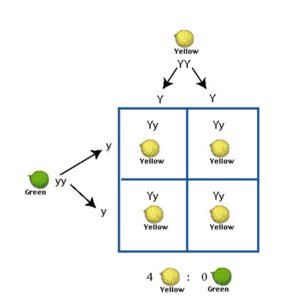
Law of Segregation: Each individual has two alleles for each gene, which segregate during gamete formation.
Law of Independent Assortment: Alleles of different genes assort independently during gamete formation, except for linked genes.
Pedigree Analysis
Pedigrees are graphical representations of family relationships and are used to determine inheritance patterns of genetic traits.
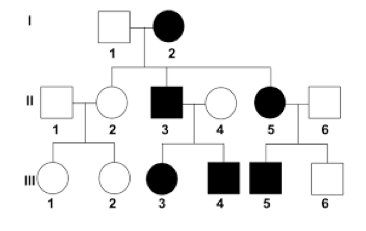
Modes of Inheritance
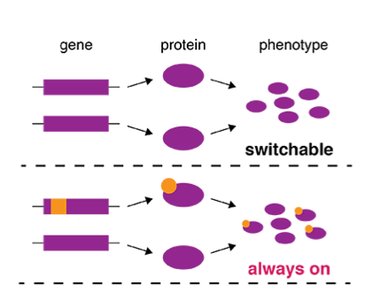
Autosomal Dominant: Trait appears in every generation; affected individuals have at least one affected parent.
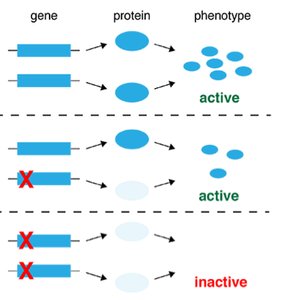
Autosomal Recessive: Trait can skip generations; affected individuals often have unaffected carrier parents.
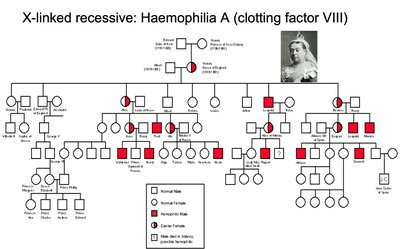
X-linked Recessive: Primarily affects males; females are usually carriers.
X-linked Dominant: Rare; affected males pass the trait to all daughters but no sons.
Y-linked: Only males are affected; passed from father to all sons.
Special Inheritance Patterns
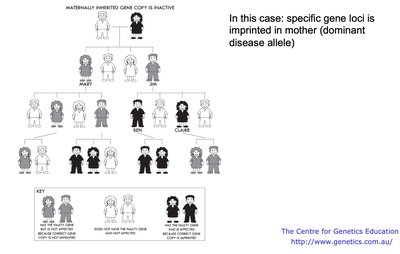
Imprinting: Expression depends on the parent of origin.
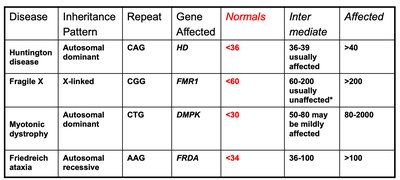
Unstable Repeat Expansions: Diseases caused by expansion of nucleotide repeats (e.g., Huntington disease, Fragile X).
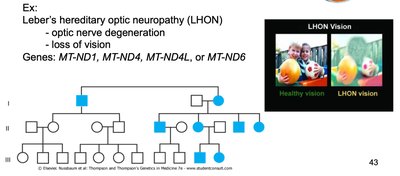
Mitochondrial Inheritance: Passed from mother to all offspring; affects high-energy tissues.
Penetrance and Expressivity
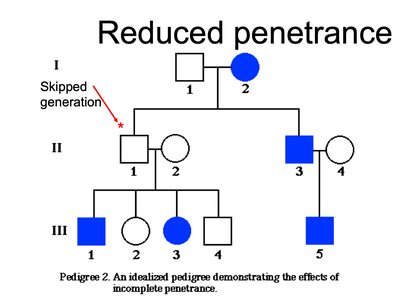
Penetrance is the proportion of individuals with a genotype who express the phenotype. Expressivity is the degree to which a trait is expressed. Both can be influenced by genetic, environmental, and stochastic factors.
Summary Table: Variant Types and Effects
Nucleotide Change | Protein Change | Variant Type |
|---|---|---|
c.586C>T | p.Arg196* | Nonsense |
c.485_488del | p.Ile162Thrfs*7 | Frameshift |
c.586_588dup | p.Arg196dup | In-frame duplication |
c.701A>C | p.Tyr234Cys | Missense / Nonsynonymous |
c.576G>A | p.Gln192= | Silent / Synonymous |
Key Takeaways
Use standardized nomenclature to describe genetic variants at the DNA, RNA, and protein levels.
Understand the types and consequences of sequence variants, including their effects on gene function and inheritance patterns.
Apply Mendelian principles and pedigree analysis to determine inheritance patterns and assess genetic risk.
