 Back
BackGenetics: Foundations, Central Dogma, and Cystic Fibrosis Case Study
Study Guide - Smart Notes
 Tailored notes based on your materials, expanded with key definitions, examples, and context.
Introduction to Genetics
Genetics in Modern Biology
Genetics is a fundamental discipline within biology, providing the framework for understanding how traits are inherited, how diseases arise, and how organisms function at the molecular level. The study of genetics is essential for scientists, healthcare professionals, and informed citizens alike.
Definition: Genetics is the study of heredity and variation in living organisms.
Applications: Genetics impacts fields such as medicine, agriculture, biotechnology, and evolutionary biology.
Example: Recent news highlights gene therapy for sickle cell disease, legal decisions about embryos, and genetic risk assessment for cancer.


Course Structure and Resources
Units and Textbook
The course is organized into four major units, each covering a foundational aspect of genetics. The primary textbook is Essentials of Genetics (Klug, 10th edition), which provides comprehensive coverage of genetic principles.
Unit 1: Introduction to DNA and chromosomes
Unit 2: Gene expression
Unit 3: Regulation of gene expression and recombinant DNA technology
Unit 4: Transmission genetics and genomics

The Central Dogma of Molecular Biology
Overview and Mechanisms
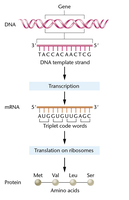
The central dogma describes the flow of genetic information within a biological system. It explains how DNA is transcribed into RNA, which is then translated into proteins. These proteins carry out essential cellular functions.
DNA: The hereditary material that stores genetic information.
Transcription: The process by which DNA is copied into messenger RNA (mRNA).
Translation: The process by which mRNA is decoded to synthesize proteins.
Proteins: The functional molecules responsible for cellular structure and activity.
Equation:
Cellular Machines and Gene Expression
Proteins and RNA in Cellular Function
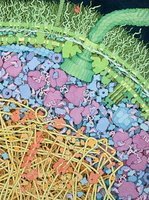
Cells contain complex molecular machines, primarily proteins and some RNA-based structures, that perform diverse tasks necessary for life. Understanding how these machines are encoded and regulated is a major goal of genetics.
Protein Machines: Examples include ion channels, receptors, and enzymes.
RNA Machines: Ribosomes and other RNA molecules play critical roles in gene expression.
Gene Expression: The process by which information from a gene is used to synthesize a functional gene product (protein or RNA).
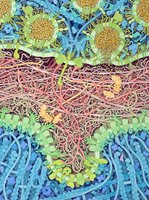
Mutations and Human Disease: Cystic Fibrosis Case Study
Genetic Basis of Cystic Fibrosis
Cystic fibrosis is a common genetic disease caused by mutations in the CFTR gene, which encodes a chloride ion channel. Mutations can disrupt protein folding and function, leading to disease symptoms.
CFTR Protein: A multi-span transmembrane protein forming an ion channel in lung cells.
Common Mutation: The ΔF508 mutation deletes a single amino acid (phenylalanine) at position 508, affecting protein folding.
Genotype and Phenotype: The presence of wildtype or mutant alleles determines whether functional protein is produced and whether disease symptoms develop.
Equation:
Dominant and Recessive Alleles
Geneticists use the terms "dominant" and "recessive" to describe how alleles affect phenotype. In cystic fibrosis, the wildtype allele is considered dominant because it produces functional protein, while the mutant allele is recessive and only causes disease when homozygous.
Heterozygous: One wildtype and one mutant allele; functional protein is produced, and disease symptoms are absent.
Homozygous Mutant: Two mutant alleles; no functional protein is produced, and disease symptoms develop.
Predicting Inheritance and Disease Risk
Genetic crosses can be used to predict the probability that a child will inherit cystic fibrosis. If both parents are carriers (heterozygous), there is a 25% chance their child will have the disease, a 50% chance the child will be a carrier, and a 25% chance the child will be unaffected.
Genotype | Proteins Produced | Phenotype |
|---|---|---|
CFTR wildtype / CFTR wildtype | Functional protein | No disease |
CFTR wildtype / CFTR ΔF508 | Functional protein | Carrier, no disease |
CFTR ΔF508 / CFTR ΔF508 | No functional protein | Cystic fibrosis |
Complexity of Phenotypes
Multifactorial Traits and Environmental Influence
Most phenotypes are not determined by a single gene. Disease severity in cystic fibrosis varies due to differences in other genes and environmental factors. This highlights the importance of quantitative genetics and multifactorial traits.
Allelic Variation: Other genes can modify disease severity.
Environmental Factors: External influences can affect phenotype expression.
Summary
Genetics provides the foundation for understanding biological inheritance, gene expression, and the molecular basis of disease. Through the central dogma, we learn how DNA encodes proteins, and through case studies like cystic fibrosis, we see how mutations impact health. The study of genetics is essential for predicting disease risk, understanding complex traits, and advancing medical science.
