 Back
BackGenetics of Cancer: Mechanisms, Genes, and Genomic Approaches
Study Guide - Smart Notes
 Tailored notes based on your materials, expanded with key definitions, examples, and context.
Cancer Basics
What is Cancer?
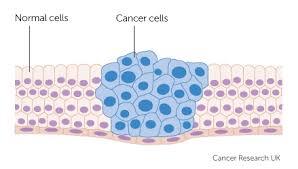
Cancer is a disease characterized by the uncontrolled division of genetically abnormal cells in a part of the body. This abnormal growth can invade surrounding tissues and spread to distant sites (metastasis). The term 'cancer' originates from the Greek word karkinos (crab), reflecting the invasive nature of tumors.
Sustained cell proliferation: Cancer cells remain in a chronic state of division.
Evasion of growth suppression: Growth-suppressing proteins become nonfunctional.
Resistance to cell death: Apoptosis mechanisms are disrupted.
Cellular immortality: Cancer cells avoid normal aging processes.
Angiogenesis induction: Tumors recruit blood vessels to supply nutrients.
Activation of invasion and metastasis: Cancer cells invade other tissues.
Reprogramming of energy metabolism: Tumors increase energy supply for growth.
Immune system avoidance: Cancer cells evade immune detection.
Tumor-promoting inflammation: Inflammation supports tumor growth.
Genome instability and mutation: High mutation rates promote selection for rapidly dividing cells.
Progression of Cancer
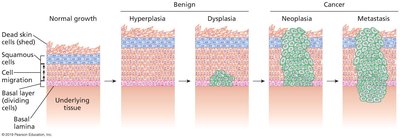
Cancer development typically follows a sequence of stages:
Hyperplasia: Excessive tissue growth.
Dysplasia: Disorganized cell growth.
Neoplasia: High levels of disorganized cellular proliferation.
Metastasis: Invasion of surrounding or distant tissues.
Classification of Cancers
Cancers are named based on their tissue or organ of origin, such as breast, prostate, or lung cancer. Other types include:
Leukemia: Originates in bone marrow.
Lymphoma: Affects the lymphatic system.
Sarcoma: Arises from connective or supportive tissues.
Prevalence and Distribution
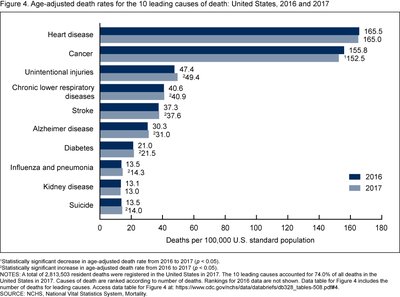
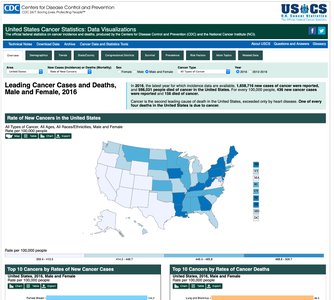
Cancer is the second leading cause of death in the United States, responsible for 1 in every 6 deaths. Its incidence varies by geography, sex, race/ethnicity, and other factors.
The Genetics of Cancer
Origins of Cancer
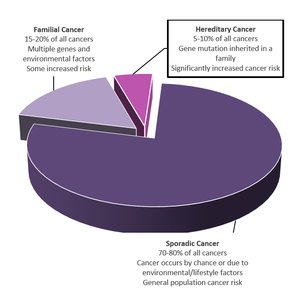
The majority of cancer cases (70-80%) are sporadic, arising from spontaneous mutations. The remainder are due to inherited (germ-line) mutations, classified as hereditary or familial cancers.
Sporadic Cancer: Occurs by chance or due to environmental/lifestyle factors.
Familial Cancer: Combination of genetic and environmental risk factors; elevated occurrence in family pedigree without a clear inheritance pattern.
Hereditary Cancer: Altered gene passed from parent to child; often involves the same or related cancer types, earlier onset, and multiple cancers in affected individuals.
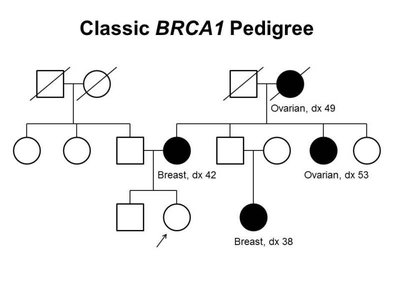
Hereditary Cancer: BRCA1 Example
BRCA1 mutations are associated with hereditary breast and ovarian cancer. Clues include early onset, multiple affected relatives, and specific cancer types (e.g., male breast cancer, triple negative breast cancer).
Genome Sequencing Approaches in Cancer
Technological Advances
Next-generation sequencing (NGS) has revolutionized cancer genomics, enabling high-throughput, cost-effective analysis of tumor genomes.
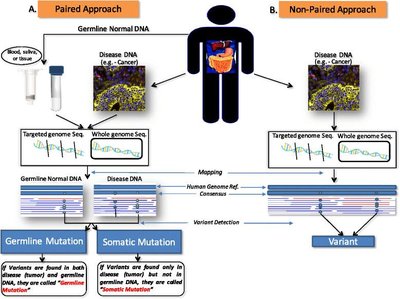
Sequencing Strategies
Paired Approach: Compares DNA from normal and tumor tissue of the same patient to identify somatic mutations.
Non-Paired Approach: Sequences tumor DNA only, identifying variants without a matched normal reference.

Major Cancer Genomics Databases
The Cancer Genome Atlas (TCGA): Over 20,000 matched tumor-normal genome sequences.
COSMIC: Catalog of somatic mutations in cancer, with millions of entries from tumor samples.
Cancer as a Genetic Disease
Driver Genes
Cancer results from the accumulation of mutations, particularly in certain genes known as driver genes. These genes confer a selective growth advantage to cancer cells.
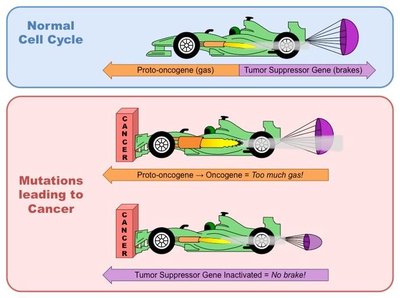
Proto-oncogenes: Normally promote cell division; mutations convert them to oncogenes ("too much gas").
Tumor Suppressor Genes: Inhibit cell division or promote apoptosis; mutations inactivate them ("no brakes").
Types of Driver Gene Mutations
Amplification: Increased gene copy number leads to overexpression.
Point Mutation: Single nucleotide changes alter gene function.
Translocation: Genes are relocated, often under new regulatory control.
Examples of Amplified Genes
ERBB2 (HER2): Implicated in breast, ovarian, lung, and stomach cancers.
EGFR: Associated with lung and colorectal cancer.
AR (Androgen Receptor): Implicated in prostate cancer.
Point Mutations and Hotspots
Recurrent point mutations (hotspots) are found in many tumors, but their functional consequences can vary. Some hotspots are shared across cancer types, while others are unique.
Genome Structural Variants (SV) in Cancer
Types of Structural Variants
Chromothripsis and Chromoplexy: Massive chromosomal rearrangements due to clustered breakpoints.
Microhomology-Mediated Break-Induced Replication (MMBIR): Template switching during DNA replication, often increasing copy number.
Insertions/Translocations: Movement of transposable elements, genes, or external DNA.
Detection Methods
Hi-C: Detects large (>1 Mb) structural variants.
Optical Mapping: Detects variants >1 kb.
Whole-Genome Sequencing (WGS): High-resolution detection of small variants.
Key Cancer-Associated Genes
TP53 (Tumor Protein 53)
TP53 is the most frequently mutated gene in human cancers, earning the title "guardian of the genome." It encodes the P53 protein, which regulates cell cycle, apoptosis, DNA repair, and more. Most mutations occur in the DNA binding domain, leading to loss of tumor suppressor function and sometimes gain of oncogenic properties (mutP53).
Located on chromosome 17, short arm.
Encodes a 53 kD protein with at least 9 isoforms.
Directly regulates over 900 genes.
BRCA1 and BRCA2
BRCA1 and BRCA2 are tumor suppressor genes involved in DNA repair, especially homologous recombination. Mutations in these genes greatly increase the risk of breast, ovarian, and other cancers. Inherited mutations are common in certain populations (founder mutations).
BRCA1: Chromosome 17, 24 exons, 1,860 amino acids.
BRCA2: Chromosome 13, 27 exons, 3,418 amino acids.
Women with BRCA1/2 mutations have a 45–65% risk of breast cancer by age 70 (vs. 13% in the general population).
Both genes are essential for viability; loss of both copies is lethal in mice.
Gene Therapy in Cancer
Gene Therapy Approaches
Gene Augmentation: Introducing a functional gene to replace a mutated one.
Gene Suppression: Silencing malfunctioning genes using RNA interference or knockout strategies.
Genome Editing: Directly correcting mutations using technologies like CRISPR/Cas9.
Example: Theoretical gene therapy for mutated TP53 involves targeted delivery, CRISPR-mediated replacement, and regulated expression to restore tumor suppressor function and induce apoptosis in cancer cells.
Summary Table: Types of Cancer-Associated Mutations
Mutation Type | Description | Example Genes |
|---|---|---|
Amplification | Increased gene copy number and expression | ERBB2, EGFR, AR |
Point Mutation | Single nucleotide change alters gene function | TP53, KRAS |
Translocation | Gene moved to new location/regulatory context | BCR-ABL (CML) |
Key Equations and Concepts
Penetrance: The proportion of individuals with a mutation who exhibit clinical symptoms.
Relative Risk: The risk of disease in mutation carriers compared to non-carriers.
Conclusion
Cancer is fundamentally a genetic disease driven by mutations in key genes that regulate cell growth, division, and death. Advances in genome sequencing have enabled the identification of driver mutations and structural variants, paving the way for personalized medicine and targeted therapies. Understanding the roles of genes like TP53, BRCA1, and BRCA2 is essential for both risk assessment and the development of novel treatments, including gene therapy.
