 Back
BackGenetics of Cancer: Mechanisms, Mutations, and Cellular Pathways
Study Guide - Smart Notes
 Tailored notes based on your materials, expanded with key definitions, examples, and context.
Genetics of Cancer
Introduction to Cancer Genetics
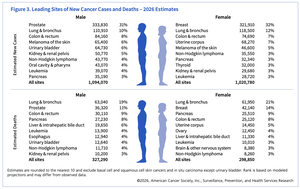
Cancer is a group of genetic disorders characterized by the uncontrolled and inappropriate growth of cells. It can affect nearly all organ systems and cell types, and is the second leading cause of death in the United States. The study of cancer genetics focuses on the mutations and cellular mechanisms that drive the transformation of normal cells into malignant ones.
Cancer incidence: Over 2 million new cases and over 600,000 deaths annually in the US.
Leading causes of death: Cancer is second only to heart disease.
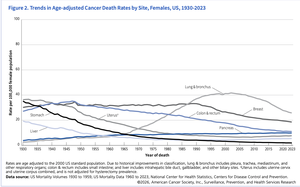
Advancements: Since the 1980s, cancer deaths have decreased by more than 25% due to improved screening, research, and treatment.
What is Cancer?
Definition and Types of Tumors
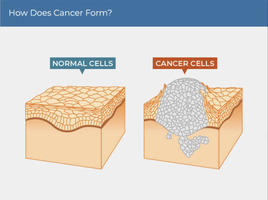
Cancer arises from the uncontrolled and inappropriate growth of cells. Tumors can be classified as:
Benign tumor: Remains localized and is usually not dangerous unless it compresses vital organs.
Malignant tumor: Invades surrounding tissues and can spread to other parts of the body.
Metastatic tumor: Forms when cancer cells travel from the primary site to colonize new locations.
Properties of Cancer Cells
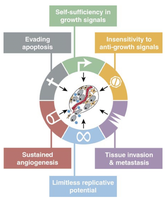
Cancer cells share several hallmark properties that distinguish them from normal cells:
Self-sufficiency in growth signals
Insensitivity to anti-growth signals
Evading apoptosis (programmed cell death)
Sustained angiogenesis (formation of new blood vessels)
Tissue invasion and metastasis
Limitless replicative potential (immortalization)
Metastasis
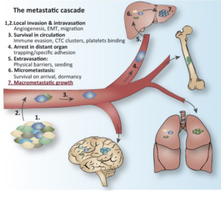
Metastasis is the process by which cancer cells spread from the primary tumor to distant sites in the body, often leading to secondary tumors. This is responsible for approximately 90% of cancer deaths.
Steps in metastasis: Local invasion, intravasation, survival in circulation, arrest in distant organs, extravasation, micrometastasis, and macrometastatic growth.
Genetic Basis of Cancer
Somatic vs. Hereditary Mutations
Most cancers are caused by mutations in the genome. These mutations can be:
Somatic mutations: Occur in non-germline cells; account for ~90% of cancers (sporadic).
Germline mutations: Present in all cells of the body, inherited from a parent; account for ~10% of cancers (hereditary).
Clonal Origin and the Multi-Hit Model
Tumors are typically clonal, meaning all cells originate from a single progenitor cell that has accumulated multiple mutations in key cancer-causing genes. The multi-hit model states that several genetic alterations are required for a cell to become cancerous.
Environmental and Lifestyle Factors
Both genetic predisposition and environmental exposures contribute to cancer risk. Environmental factors such as chemicals, radiation, and infectious agents can act as mutagens and carcinogens, increasing mutation rates in the genome.
Carcinogen: Any agent that causes cancer (e.g., tobacco, UV radiation, certain viruses and bacteria).
Mutagen: An agent that increases the frequency of mutations.
Viruses and Bacteria in Cancer
Some cancers are associated with viral or bacterial infections. For example, human papillomavirus (HPV) is linked to cervical cancer, and Helicobacter pylori infection increases the risk of stomach cancer.
Hereditary Cancer Syndromes
Germline mutations in certain genes can greatly increase cancer risk. Examples include mutations in BRCA1 and BRCA2 (breast and ovarian cancer) and the RB1 gene (retinoblastoma).

Types of Genes Mutated in Cancer
Oncogenes
Oncogenes are mutated forms of normal genes (proto-oncogenes) that promote cell division. Gain-of-function mutations in these genes act dominantly; only one mutated copy is needed to drive cancer progression.
Example: The Ras gene, which encodes a signaling protein, is mutated in about 30% of human tumors. A single point mutation (e.g., G12V) can cause Ras to remain active, continuously signaling the cell to divide.
Tumor Suppressor Genes
Tumor suppressor genes normally inhibit cell division or promote apoptosis. Loss-of-function mutations in these genes contribute to cancer in a recessive manner; both copies must be inactivated.
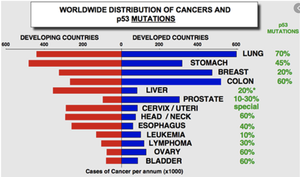
Example: p53 is the most commonly mutated tumor suppressor gene in cancer, lost or mutated in about 55% of tumors. It acts as the "guardian of the genome," mediating DNA damage checkpoints and apoptosis.
DNA Repair Genes (Mutator Genes)
Genes involved in DNA repair, such as BRCA1, BRCA2, and those mutated in xeroderma pigmentosum (XP), are crucial for maintaining genomic integrity. Mutations in these genes lead to increased mutation rates and cancer susceptibility.
Telomerase and Immortalization
Normal somatic cells have a limited capacity to divide due to telomere shortening. Most cancer cells reactivate the telomerase gene, allowing them to divide indefinitely (immortalization).
Cellular Mechanisms and Checkpoints
Cell Cycle Checkpoints
Checkpoints in the cell cycle ensure that cells do not divide with damaged DNA. The p53 protein is central to these checkpoints, activating DNA repair or apoptosis in response to damage. Loss of checkpoint control leads to the accumulation of mutations and cancer progression.
Summary Table: Types of Genes Mutated in Cancer
Gene Type | Normal Function | Mutation Effect | Inheritance Pattern | Example |
|---|---|---|---|---|
Oncogene | Promote cell division | Gain-of-function (overactive) | Dominant (one allele) | Ras |
Tumor Suppressor | Inhibit cell division, promote apoptosis | Loss-of-function (inactive) | Recessive (both alleles) | p53, RB1 |
DNA Repair | Repair DNA damage | Loss-of-function (defective repair) | Recessive (both alleles) | BRCA1, BRCA2, XP genes |
Telomerase | Maintain telomere length | Gain-of-function (immortalization) | Dominant (one allele) | TERT |
Key Equations
Probability of two independent mutations (Knudson's two-hit hypothesis):
Probability if one allele is already mutated (hereditary):
Conclusion
Cancer is fundamentally a genetic disease resulting from the accumulation of mutations in key regulatory genes. Both inherited and environmental factors contribute to cancer risk. Understanding the molecular and genetic basis of cancer is essential for developing effective prevention, diagnostic, and therapeutic strategies.
