 Back
Genomics and Genome Annotation: Structure, Function, and Evolution
Study Guide - Smart Notes
 Tailored notes based on your materials, expanded with key definitions, examples, and context.
Genomics & Genome Annotation
Overview of Genome Sequencing and Annotation
Genome annotation is the process of identifying the locations and functions of genes and other important features within a sequenced genome. This process is essential for understanding the genetic blueprint of organisms and involves several steps, including sequencing, experimental and computational annotation, functional experimentation, and evolutionary analysis.
Whole genome shotgun sequencing: A method where the entire genome is broken into small fragments, sequenced, and then reassembled computationally.
Experimental annotation: Uses laboratory techniques to identify gene features, such as expressed sequence tags (ESTs) and cDNA.
Computational annotation: Employs bioinformatics tools to predict genes, regulatory elements, and other features.
Functional experimentation: Tests gene function through expression studies and mutational analysis.
Evolutionary analysis: Compares genomes across species to identify conserved elements and evolutionary changes.
Creating cDNA from mRNA and Transcript Sequencing
cDNA is synthesized from mRNA to capture the expressed genes in a cell. Sequencing cDNA molecules allows researchers to annotate genomes by identifying which genes are actively transcribed.
cDNA: Complementary DNA made from mRNA, representing the transcriptome.
Transcript sequencing: Reveals gene expression patterns and helps annotate coding and non-coding regions.
Experimental Annotation: ESTs and cDNA Mapping
Experimental annotation involves comparing ESTs and full-length cDNA sequences with genomic DNA to identify exons, introns, and regulatory regions. This helps define gene boundaries and functional elements.
ESTs (Expressed Sequence Tags): Short DNA sequences from cDNA, used to map gene locations.
Splice site consensus sequences: Conserved sequences at exon-intron boundaries, such as GT-AG.
Start and stop codons: ATG (start), TAA/TAG/TGA (stop) mark the beginning and end of coding regions.
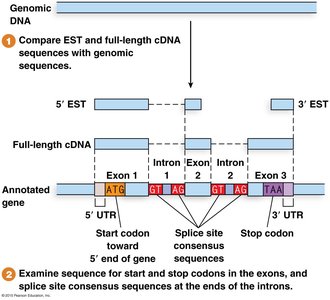
Computational Annotation: Predicting Open Reading Frames (ORFs)
Computational annotation uses algorithms to predict open reading frames (ORFs), which are stretches of DNA that could encode proteins. This process involves scanning nucleotide sequences for start and stop codons and translating them into possible amino acid sequences.
Open Reading Frame (ORF): A sequence of DNA that starts with a start codon and ends with a stop codon, potentially encoding a protein.
Gene prediction: Identifies likely protein-coding regions based on sequence features.
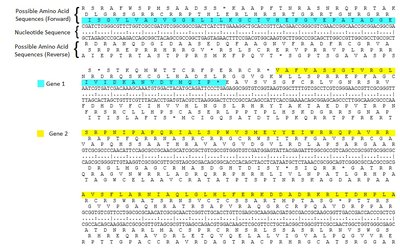
Genome Annotation Features
Annotated genomes include various features such as protein-coding sequences, transcribed non-coding RNAs, transcriptional regulatory sequences (e.g., enhancers), and evidence of evolutionary conservation.
Protein-coding sequence: Regions that encode proteins.
Transcribed non-coding RNAs: Functional RNAs that do not encode proteins (e.g., rRNA, tRNA, miRNA).
Transcriptional regulatory sequence: DNA elements that control gene expression.
Evolutionary conservation: Sequences preserved across species, indicating functional importance.
Genomic Analysis: Structure and Function
Comparing Genome Sizes and Gene Numbers
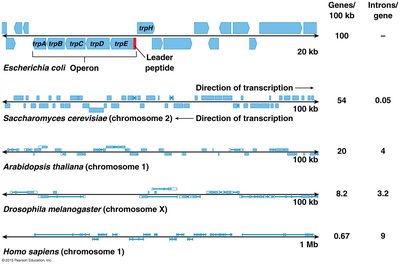
Different organisms have varying genome sizes and numbers of genes, but the density of genes and the number of introns per gene can differ significantly. This comparison helps understand genome complexity and organization.
Gene density: Number of genes per megabase (Mb) of DNA.
Introns per gene: Average number of introns within each gene, varies by organism.
RNA-Sequencing and Gene Expression Analysis
RNA-sequencing (RNA-seq) is a high-throughput method to measure the expression levels of all genes in a genome. It aligns sequences to the genome and quantifies expression based on coverage, allowing researchers to study gene regulation throughout processes like the cell cycle.
Gene expression: The process by which information from a gene is used to synthesize functional gene products (RNA or protein).
Cell cycle regulation: Expression levels of genes change as cells progress through different stages of the cell cycle.
Genome Organization and Evolution
Conserved Synteny and Chromosome Organization
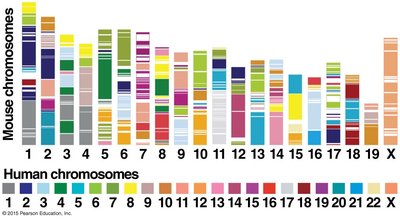
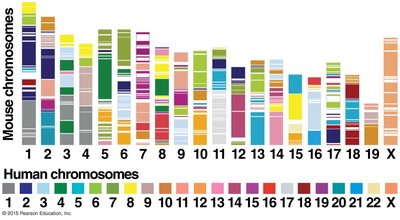
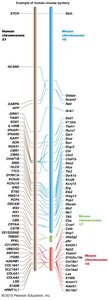
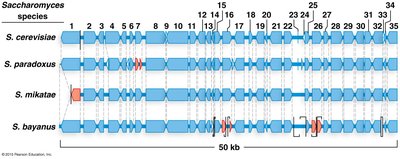
Gene order and genome organization evolve over time, but some regions remain conserved between species. Conserved synteny refers to genes that are located on the same chromosome in different species, indicating evolutionary relationships.
Synteny: The physical co-localization of genes on the same chromosome.
Conserved synteny: Genes remain together on the same chromosome across species.
Gene Order Evolution and Inversions
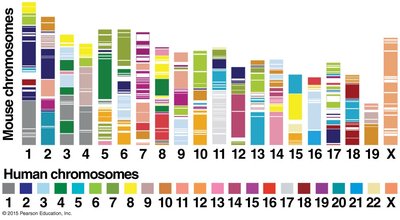
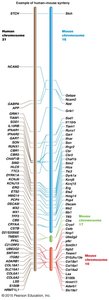
Gene order can change through evolutionary events such as inversions, duplications, and losses. These changes can be tracked by comparing gene maps across species.
Inversion: A segment of a chromosome is reversed end to end.
Gene duplication: A gene is copied, resulting in multiple copies within the genome.
Gene loss: A gene is deleted or rendered nonfunctional.
Gene Duplication and Evolutionary Relationships
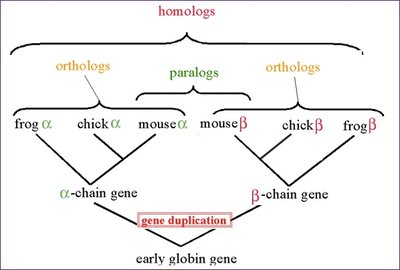
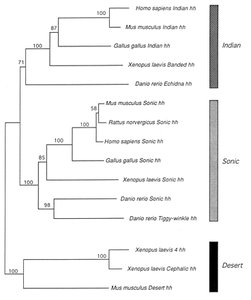
Genes are duplicated and lost throughout evolution, leading to families of related genes. Evolutionary relationships among genes can be represented with phylogenetic trees, distinguishing between homologs, orthologs, and paralogs.
Homologs: Genes related by descent from a common ancestor.
Orthologs: Genes in different species that evolved from a common ancestral gene by speciation.
Paralogs: Genes related by duplication within a genome.
Phylogenetic tree: Diagram showing evolutionary relationships among genes or species.
Genomic Variation Within and Across Species
Types of Genomic Variation
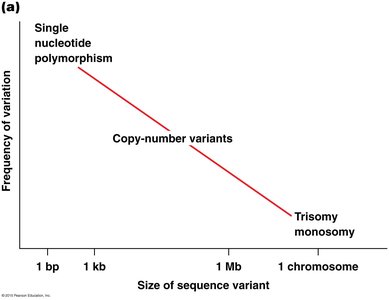
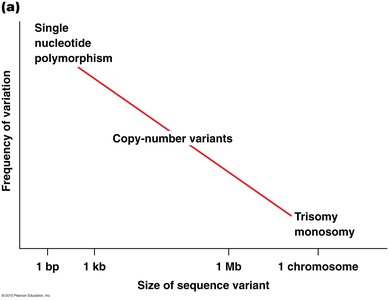
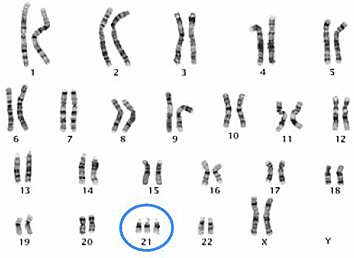
Genomic variation within a species includes single nucleotide polymorphisms (SNPs), copy number variants (CNVs), and larger chromosomal changes. These variations contribute to genetic diversity and can be surveyed across populations.
SNPs: Single nucleotide changes in the DNA sequence, occurring approximately every 1/1000 base pairs.
CNVs: Variations in the number of copies of a particular gene or genomic region.
Chromosomal variants: Large-scale changes such as trisomy or monosomy.
Surveying Genomic Variation Across Human Populations
Genomic variation can be studied across human populations to understand genetic diversity, disease susceptibility, and evolutionary history. High-throughput sequencing technologies enable large-scale surveys of SNPs, CNVs, and other variants.
Population genomics: The study of genetic variation within and between populations.
Applications: Disease gene mapping, ancestry analysis, evolutionary studies.
Additional info: These notes cover key concepts from Genomics, Genome Annotation, and Genomic Analysis, directly relevant to college-level Genetics courses, including topics from Ch. 16 (Genomics: Genetics from a Whole-Genome Perspective), Ch. 17 (Organelle Inheritance and the Evolution of Organelle Genomes), and Ch. 20 (Population Genetics and Evolution at the Population, Species, and Molecular Levels).
