 Back
BackHomologous Recombination and Transposable Elements: Mechanisms and Genetic Impact
Study Guide - Smart Notes
 Tailored notes based on your materials, expanded with key definitions, examples, and context.
Homologous Recombination and Holliday Junctions
Introduction to Homologous Recombination
Homologous recombination is a critical process in genetics that repairs double-strand breaks (DSBs) in DNA and facilitates genetic diversity during meiosis. This process involves the exchange of genetic material between homologous DNA molecules, ensuring genome stability and proper chromosome segregation.
Mechanism of Homologous Recombination Repair (HRR)
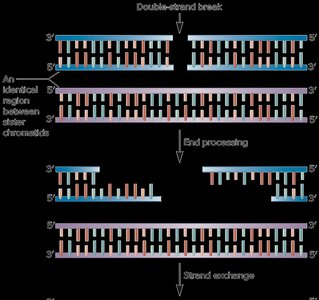
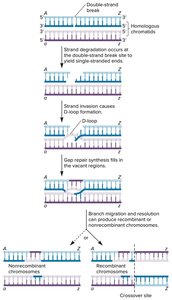
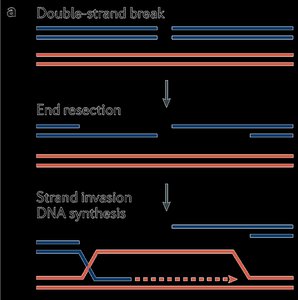
Double-Strand Break (DSB): The process begins with a break in both DNA strands.
End Resection: The broken DNA ends are processed to produce single-stranded 3' overhangs.
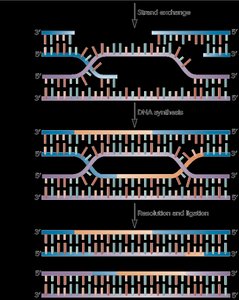
Strand Invasion: One single-stranded end invades a homologous DNA duplex, forming a displacement loop (D-loop).
DNA Synthesis: The invading strand uses the homologous template to synthesize new DNA, restoring the missing information.
Resolution: The resulting joint molecule (Holliday junction) is resolved by specific endonucleases, leading to crossover or non-crossover products.
Holliday Junctions: Structure and Resolution
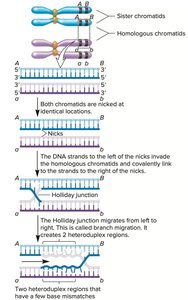
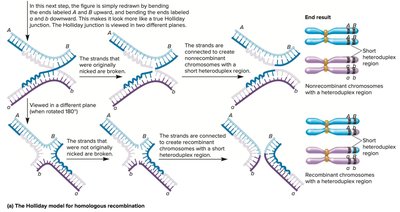
A Holliday junction is a cross-shaped DNA structure that forms during homologous recombination. It consists of four DNA strands and is a key intermediate in the exchange of genetic material.
Branch Migration: The junction can move along the DNA, extending the region of heteroduplex DNA.
Resolution: The junction is cleaved by resolvase enzymes in two possible orientations, resulting in either crossover (exchange of chromosome arms) or non-crossover (patch repair) outcomes.
Pathways of Homologous Recombination Repair
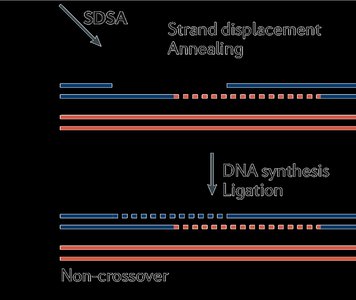
Synthesis-Dependent Strand Annealing (SDSA): The invading strand is displaced after DNA synthesis and anneals back to the original strand, resulting in non-crossover products.
Double-Strand Break Repair (DSBR): Involves the formation of two Holliday junctions, which can be resolved to produce either crossover or non-crossover products.
Transposable Elements (TEs)
Introduction to Transposable Elements
Transposable elements (TEs), also known as "jumping genes," are DNA sequences that can move within and between chromosomes. They are found in all organisms and constitute a significant portion of many genomes, including humans.
TEs can cause mutations by inserting into genes or regulatory regions, potentially disrupting gene function or expression.
They can also induce chromosomal rearrangements such as inversions, deletions, and duplications.
Categories of Transposable Elements
DNA Transposons (Class II): Move directly as DNA via a "cut-and-paste" mechanism, mediated by the enzyme transposase.
Retrotransposons (Class I): Move via an RNA intermediate using a "copy-and-paste" mechanism, involving reverse transcription.
Key Structural Features of DNA Transposons
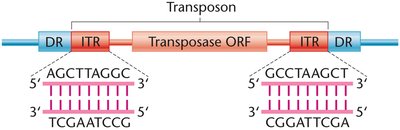
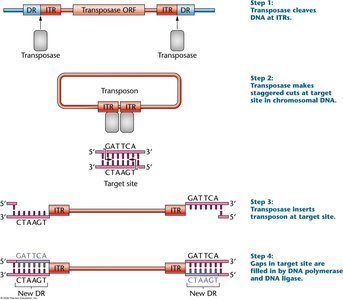
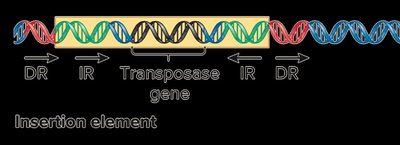
Open Reading Frame (ORF): Encodes transposase, the enzyme responsible for excision and integration.
Inverted Terminal Repeats (ITRs): Short, palindromic sequences at both ends, recognized by transposase.
Direct Repeats (DRs): Short, identical sequences flanking the inserted transposon, generated during integration.
Mechanism of DNA Transposon Movement (Cut-and-Paste)
Transposase cleaves DNA at ITRs, excising the transposon.
Staggered cuts are made at the target site in the genome.
The transposon is inserted into the new site.
Gaps are filled by DNA polymerase and ligase, creating new DRs flanking the transposon.
Examples of DNA Transposons
Insertion elements: Simplest form, containing only the transposase gene and ITRs.
Composite transposons: Larger elements that may carry additional genes, such as antibiotic resistance.
Retrotransposons (Class I): Mechanism and Types
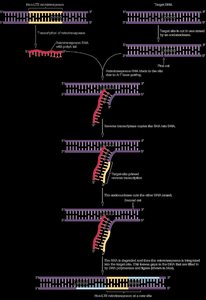
Retrotransposons move via an RNA intermediate, which is reverse transcribed into DNA and integrated into a new genomic location. This process increases the copy number of the element.
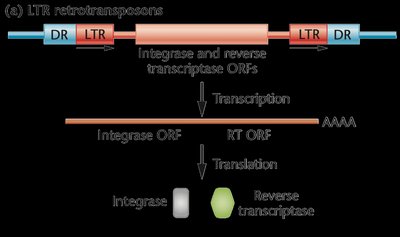
Long Terminal Repeat (LTR) Retrotransposons: Contain LTRs similar to retroviruses; encode reverse transcriptase and integrase.
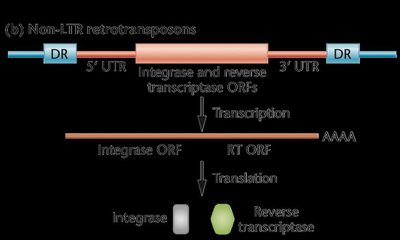
Non-LTR Retrotransposons: Include LINEs (autonomous, encode reverse transcriptase) and SINEs (non-autonomous, rely on LINE machinery).
Mechanism of Retrotransposition
Transcription of the retrotransposon to RNA.
Reverse transcription of RNA to cDNA by reverse transcriptase.
Integration of cDNA into a new genomic site by integrase.
Impact of Transposable Elements on Genes and Genomes
Insertion into coding regions can cause frameshifts or premature stop codons.
Insertion into regulatory regions can alter gene expression.
TEs can mediate chromosomal rearrangements through recombination between identical elements.
TEs contribute to genome evolution by generating genetic diversity and novel regulatory elements.
Examples and Applications
LINE-1 (L1) in Humans: Responsible for some cases of hemophilia due to insertional mutagenesis.
Copia Elements in Drosophila: Insertion into the white gene causes the white-apricot eye color mutation.
Transgenic Mice: The Sleeping Beauty transposon system is used for gene insertion and functional genomics studies.
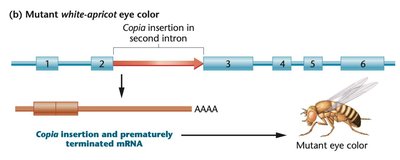
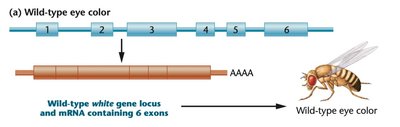
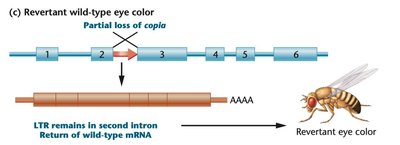
Table: Major Types of Transposable Elements in Humans
Element Type | Length | Copies in Genome | % of Genome |
|---|---|---|---|
SINEs (non-LTR) | 100-500 bp | 1,500,000 | 13 |
LINEs (non-LTR) | 1-10 kb | 850,000 | 21 |
LTR elements | 6-5 kb | 443,000 | 8 |
DNA transposons | 80-300 bp | 294,000 | 3 |
Unclassified | - | 3,000 | 0.1 |
Summary
Homologous recombination and transposable elements are fundamental to genome maintenance, evolution, and diversity. Understanding their mechanisms and consequences is essential for genetics, molecular biology, and biotechnology applications.
